We spend a significant portion of our lives sleeping, yet how much thought do we give to our positioning? Throughout the day, our spines—the intricate stack of 33 vertebrae—absorb the brunt of our activity, stress, and posture. Sleep is our critical 8-hour window for recovery.
Did you know an average person shifts their sleep position about 20 times a night? This natural movement is vital, but understanding the ‘default’ settings of our four basic positions—back, side (left and right), and prone—can be the difference between waking up refreshed or waking up with aches.
The Blueprint for Recovery: Spinal Alignment
The goal of any sleep position is simple: Relax the spine. A properly supported spine recharges your muscles, ligaments, and bones. If this doesn’t happen, you risk waking with aches and sprains in your neck, back, and hips.
The Positions: Pros, Cons, and Adjustments
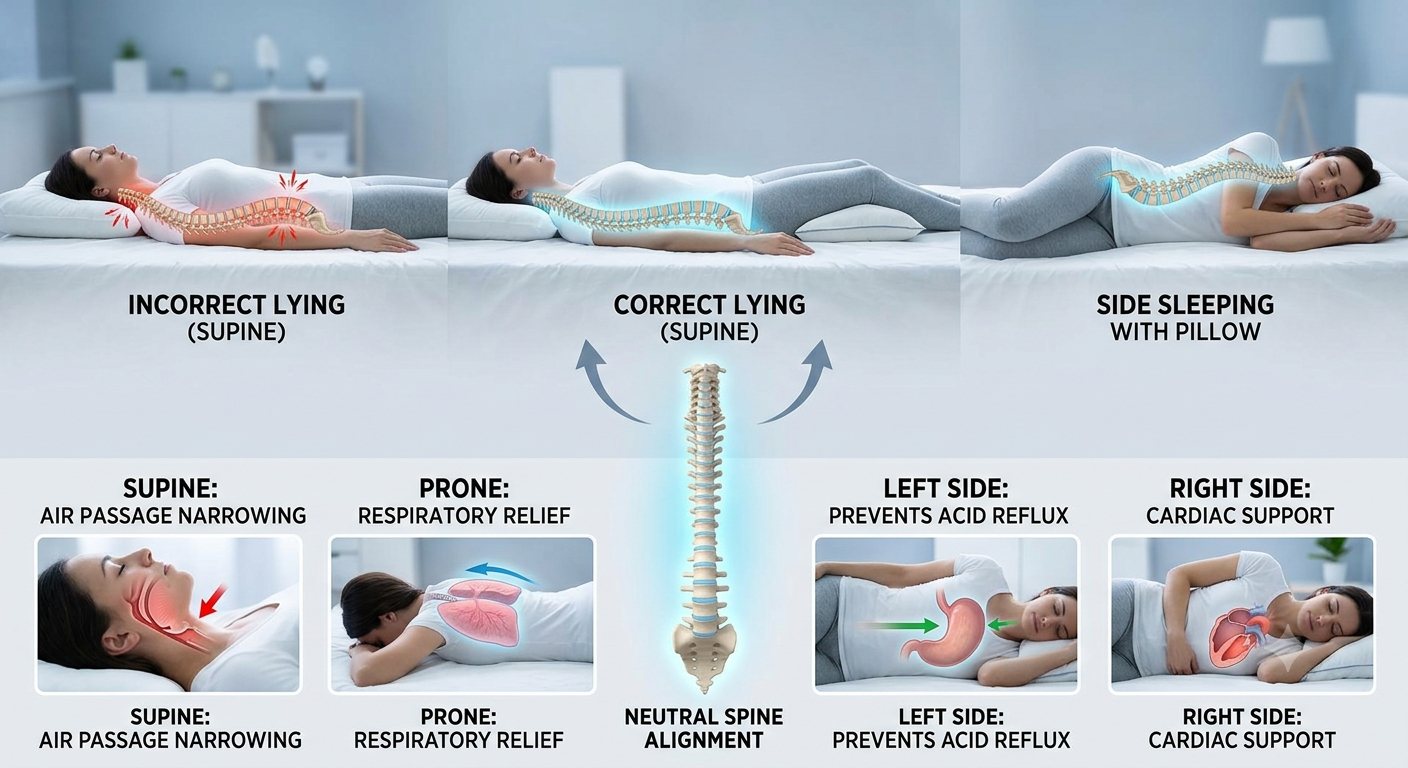
1. Supine (Back) Position
- The Neutral Spine Hack: The best way to align your 33 vertebrae is by placing a thin pillow below your knees. This flexes your hips 15-20 degrees, achieving that perfect neutral posture.
- The Pro: When done correctly, this position provides maximum rest, ensuring ligaments and muscles are soreness-free.
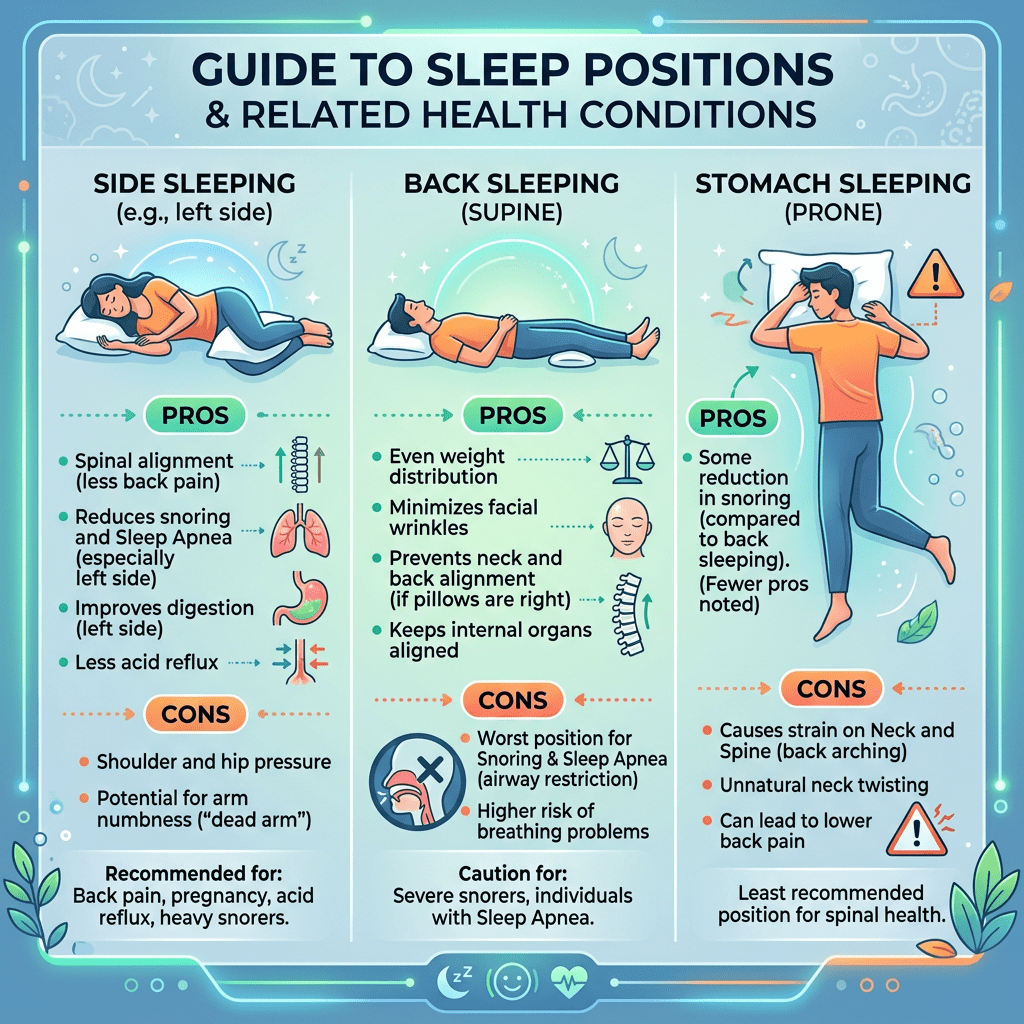
- The Con: This position allows the soft tissue of the throat and tongue to relax backward, potentially narrowing the airway. This is the main cause of snoring and can significantly aggravate sleep apnea, especially in obese individuals.
2. Side Position
- The Essential Adjustment: To relax the pelvis and lower back on your side, always place a pillow between your knees. This keeps the hips squared and supported.
- Left Side Position:
- The Stomach’s Friend: This is optimal for digestive health. It effectively prevents acid reflux and heartburn by keeping the stomach lower than the esophagus.
- The Heart Consideration: In this position, the left heart sits atop the stomach.
- Right Side Position:
- The Cardiovascular Choice: If you manage heart conditions like failure or an enlarged left ventricle (cardiomyopathy), this is often the most comfortable side for your cardiovascular system.
3. Prone (Stomach) Position
- The Least Favored, with a Niche Use: Generally, this position is the least recommended for spinal health, but it has one specific respiratory advantage.
- The Respiratory Boost: Lying prone opens compressed areas in the posterior lungs, maximizing oxygen intake. This proved vital for patients with respiratory conditions and was a prescribed sleep position for COVID-19 recovery.
Ultimately, your ideal sleep position is the one that relaxes your entire spinal structure. By understanding these subtle shifts and utilizing a few key pillows, you can turn your 8 hours of rest into a powerful nightly reset.