Every drug works. But it doesn’t act the same way in every body.
If ten people with high blood pressure walk into a clinic, they might all leave with the exact same prescription. Yet, some will feel great, others will experience frustrating side effects, and a few might feel no difference at all. In medicine, we call these groups good responders and bad responders.
The truth is, when it comes to medication, one size rarely fits all. This is where pharmacogenomics comes in—a field that combines pharmacology (the science of drugs) with genomics (the study of your genes). Instead of guessing your way through the ten most common blood pressure medications, doctors can use your genetic blueprint to pick the exact right drug for your specific body on day one.
Speed Daemons vs. Slow Coaches: How You Process Medicine
When you swallow a pill, your liver uses specialized proteins called enzymes to break it down. By applying genomics to this process, we can map out your unique metabolic speed.
Some people are rapid metabolizers. Their bodies process a drug so quickly that it gets flushed out before it ever has a chance to work. Others are slow metabolizers; the drug lingers in their system for too long, building up to toxic levels and causing severe side effects.
The G6PD Example: This isn’t a new concept, just a newly automated one. For decades, doctors have known they must check a patient’s G6PD status before prescribing “sulpha” antibiotics. G6PD is an enzyme that protects red blood cells. If a person born with a G6PD deficiency takes a sulpha drug, it triggers a glitch that causes their red blood cells to rupture. Pharmacogenomics simply scales this kind of safety check across hundreds of other medications.
Because everyone processes chemicals differently, finding your perfect dose is traditionally a game of trial and error. This explains why it often takes your physician multiple sessions to “titrate”—gradually adjust and fine-tune—the right dose for you.
Everyday in our railway hospitals, thousand doses of PPI ( the so called gas medicines ( Pantop, Rabez and DSRs) are dispensed. These drug molecules are broken down by an enzyme called CYP2C19 inside the liver. The speed with which people degrade the drug inside their liver is different. The rapid metabolizers require significantly higher or more frequent doses to successfully cure stomach ulcers, while poor metabolizers clear the drug slowly, making normal over-the-counter doses highly effective for them. Therefore, 50% of our beneficiaries always complain that the supplied drug is substandard. The confusion resides not in the drug but in the genes of the recipient.
Genetics vs. Genomics: Zooming In on the Blueprint
While they sound similar, genetics and genomics look at your body through two very different lenses.
The Era of Genetics
Modern genetics took shape in the mid-1800s with the laws of inheritance discovered by Gregor Mendel. Mendel was an Austrian friar who spent years meticulously breeding thousands of pea plants in his quiet monastery garden. Driven by a passionate curiosity about why certain traits—like wrinkled seeds or purple flowers—skipped generations, he mapped the basic rules of heredity.
Yet, Mendel was working in the dark. He had absolutely no idea what physical molecule actually carried these traits to the next generation. For nearly a century, studying inheritance remained a brilliant but blind procedure.
The Dawn of Genomics
Everything changed in 1953. Sir James Watson and Francis Crick unraveled the double-helix structure of DNA—the twisted-ladder molecule that carries the genetic information of life across thousands of generations.
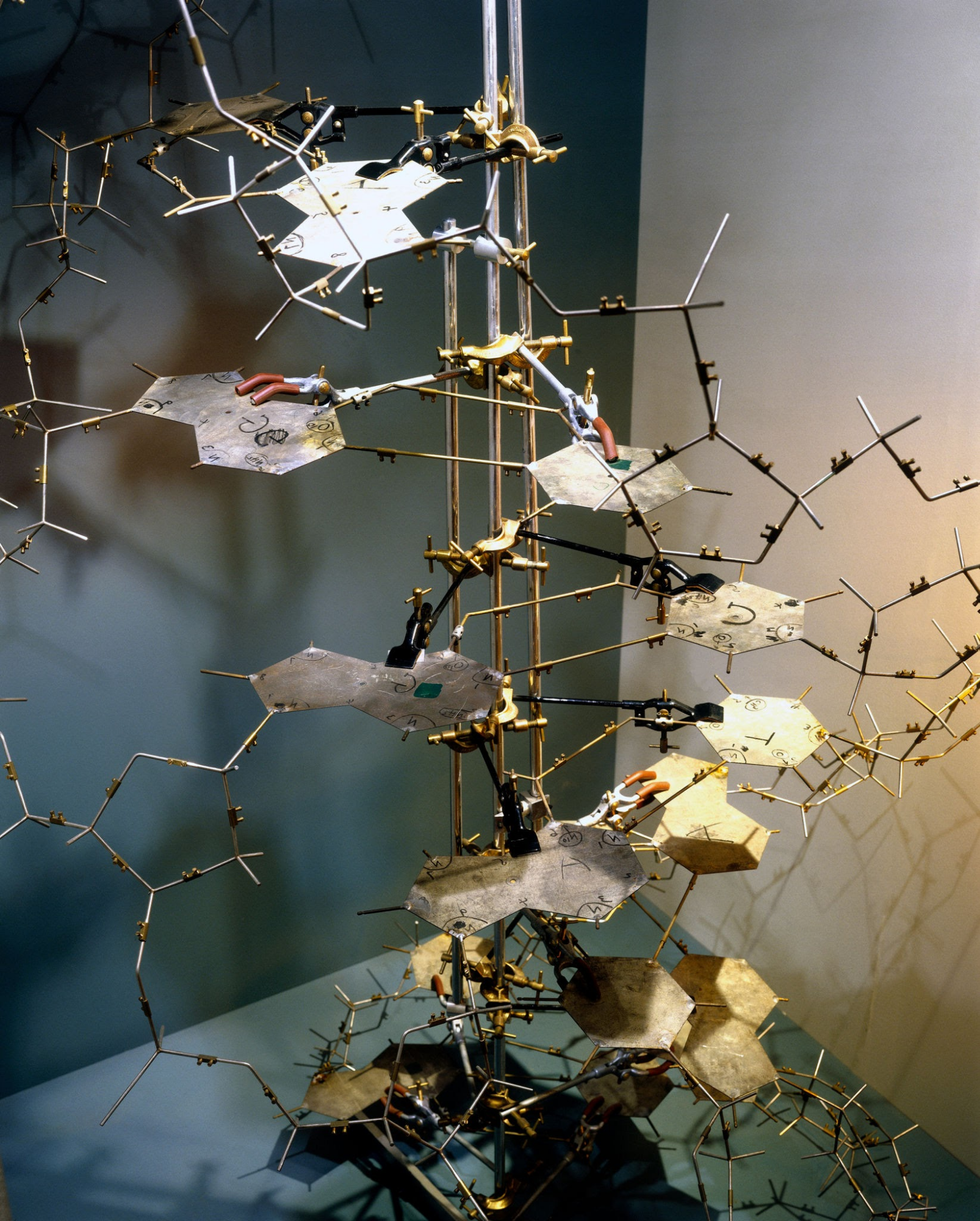
While genetics focuses on how single traits or diseases are passed down from your parents, genomics is the study of that entire information molecule within you. It is the big-picture view of your complete DNA sequence and how all your genes interact with each other and your environment.
Cancer Therapy: Shifting the Battleground
Perhaps the most revolutionary shift driven by genomics is happening in cancer therapy.
We are learning that cancer is not just one disease, but hundreds of distinct conditions. Historically, we have labeled a cancerous tumor based purely on the organ where it started—like “colon cancer” or “breast cancer.”
Now, doctors use histopathology—examining tumor tissue under a high-powered microscope—alongside genomic sequencing. This reveals something astonishing: a tumor cut from a patient’s colon can actually share the exact same genetic mutations as a specific type of breast cancer.
Because they share the same genetic flaws, they can be defeated by the same weapons. This allows doctors to design a treatment plan based on what a tumor is, rather than just where it lives.
Mapping the Blueprint of a Tumor
Advanced genomic tools have turned oncologists into molecular detectives. Instead of relying solely on invasive tissue surgeries, doctors can now use liquid biopsies—simple blood tests that catch tiny fragments of tumor DNA floating in the bloodstream.
Combined with rapid genomic sequencing, this intelligence allows modern oncologists to enter the fight with a complete, aggressive blueprint of the enemy tumor. It helps them chart out the total course of treatment with incredible precision:
- Selection: Choosing the exact drug designed to disable that specific tumor’s growth switch.
- Dosing: Pinpointing the maximum effective amount while minimizing toxic side effects.
- Monitoring: Detecting a relapse months or even years before a physical tumor shows up on a traditional scan.
This is the dawn of preventive oncology—stopping a cancer from returning before it even gets a chance to start. When medicine becomes this personal, “one size fits all” happily becomes a thing of the past. Isn’t it wonderful?

