Everyone has their heart on the left and their liver on the right. Always. Or so we assume. Have you ever imagined that your heart could easily have been on the right side?
Dextrocardia is a congenital condition where the heart is positioned on the right side of the chest instead of the left. Across the globe, half a million people may be walking around right now, completely unaware of it.
Today, we trace the exact moment when our heart decides to move to the left, and our liver to the right. Any disharmony in these 180 minutes leads to serious birth defects—structural chaos that no human hands or surgical skill can ever truly correct.

The Great Symmetry Breaker
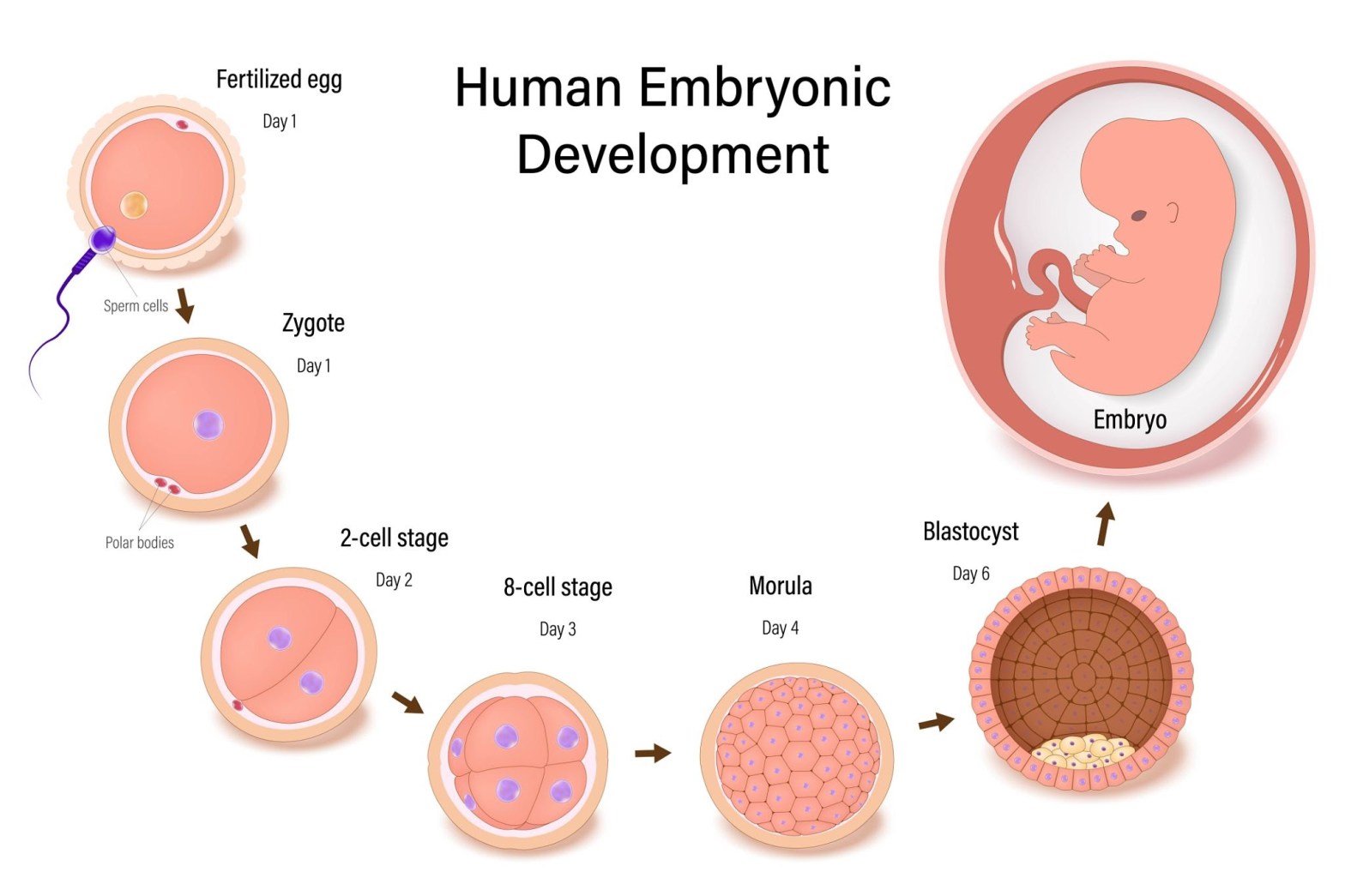
Life begins as a single cell.Two halves—a sperm from the father and an egg from the mother—fuse together to form the seed of a future human being. By the time a mother misses her period and senses that something inside her has changed, this tiny organism has become a flat, two-layered disc.
It has a top and a bottom. It has a front and a back. But it has no left and no right.
It is perfectly, beautifully symmetrical.Then, three magical hours happen. At a tiny, shallow depression in the center of this disc, a specialized cluster of cells sprouts single, hair-like projections called nodal cilia. Most of us know cilia as those microscopic hairs lining our nose and airways, sweeping back and forth like oars to clear out dust and mucus. But these embryonic cilia are different. They are tilted. And they spin.They rotate clockwise thousands of times a minute.
The River of Life
Because of their tilt, this clockwise spinning acts like a microscopic propeller, driving the surrounding fluid strictly from right to left. Embryologists call this nodal flow—a gentle, directional current inside a speck of life.
Consider another tilt: a cosmic one.
The twenty-three-degree tilt of the Earth’s axis determines how sunlight falls unequally across the globe, creating our seasons. This temperature gap transports 4,000 cubic kilometers of water from the sea, delivering 75% of our subcontinent’s rain in a single monsoon season. It dictates where forests thrive and where deserts form. Without that planetary slant, our world would be trapped in a static, featureless equilibrium.
A nearly identical miracle occurs at the microscopic level.
The Three Magical Hours
For roughly three hours, this tiny embryonic monsoon blows strictly toward the left. Sensory cilia on the left bank catch the current. Like wind turbines waking up in a sea breeze, they feel the mechanical push and ignite a master genetic switch.That single movement provides the permanent blueprint for “leftness.” It tells the primitive heart tube how to loop, ensuring its apex points to the left. It tells the spleen to settle on the left, and the liver to claim the right.
It tells the primitive heart tube how to loop, ensuring its apex points to the left. It tells the spleen to settle on the left, and the liver to claim the right.
If those microscopic propellers are paralyzed—if that tiny, intentional breeze never blows—the cellular weather remains dead calm. The embryo is forced to flip a coin.
It guesses.
Half the time it guesses right; the other half, it mirrors the entire internal universe. Forget about what can go wrong in those 180 minutes. It is a sheer miracle that for most of us, nothing ever does.

