
Thumbsucking in a child arouses strong reactions among parents, relatives, and pediatricians. Even child psychologists are not immune. They say that when a neonate or infant reflexively brings their thumb to their mouth, they are enacting their very first independent act of autonomy. In a way, the child is declaring, “I need some autonomy.”
Here comes our story from Mahabharat
The story of Mandhata.
King Yuvanashva was unable to father a child. He conducted a Putresti Yagna and a pot with the sacred potion appeared from the sacrificial fire.
Here comes the twist. Yuvanashva himself accidentally drank the fertility-inducing potion intended for his queens. It was so powerful that it made Yuvanashva pregnant. In right time, The king delivered a male child from his own flank.
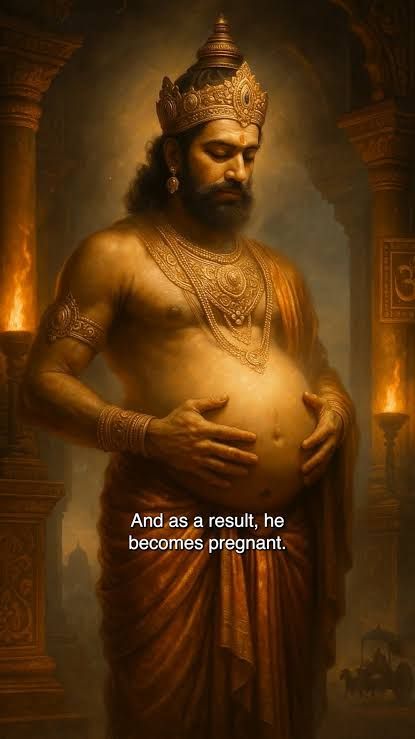
With no birth mother to nurse the newborn prince, the gods scrambled. Who would sustain this child?
Indra, the king of the devas, stepped forward. He placed his own thumb into the infant’s mouth and declared, “Mam Dhata“—”He shall be nourished by me.” From those words, the child was named Mandhata.
While the myth attributes the nourishment to a god, the modern pediatric truth is hidden in the etymology: _”Dhata means the nourisher. By drawing comfort from his own hand, the infant was asserting: “I am the nourisher of myself.” I’m independent.
Before it becomes a dental or behavioral hurdle at age four, thumbsucking is an evolutionary triumph. “Long before a baby can grab a toy, speak a word, or crawl toward comfort, they discover they carry the ultimate soothing architecture right on their own hand.“
It is humanity’s earliest lesson in self-preservation—the first divine mechanism that reminds us we are born with the power to calm our own storms.

