We are living through a quiet revolution in human health. Every few decades, a medical discovery comes along that shifts the foundation of therapeutics. First came antibiotics, then statins. Today, we have entered the era of glucagon-like peptide-1 receptor agonists (GLP-1 RAs).
What started as a better way to control blood sugar has evolved into something far grander. It is a story of astronomical wealth, ancient biology, pancreatic powerhouses, and a toxic desert lizard.
1. The Astronomical Financial Story
The numbers behind these drugs are staggering. Global demand for GLP-1 RAs has completely reshaped the pharmaceutical industry. The combined market capitalization of Eli Lilly and Novo Nordisk has crossed $1.1 trillion.
To understand what this means, let us look at a real-world comparison:
- The annual state budget of Odisha for the fiscal year 2026–27 is a historic ₹3,10,000 Crore.
- The estimated 2026 corporate revenue for Eli Lilly’s tirzepatide (Mounjaro/Zepbound) is ₹3,04,775 Crore.
- The estimated 2026 revenue for Novo Nordisk’s Semaglutide (Ozempic /Wegovy) is ₹3,67,400 Crore.
Two single drug molecules now command a financial value that eclipses the entire annual expenditure of a major state. Their combined revenue could fund Odisha’s entire public education system, agricultural economy, and healthcare apparatus nearly four times over.
Is such massive expenditure justified?
To answer that, we must look beyond the price tag and examine the biology
2. Pancreas: The Metabolic Powerhouse
To understand GLP-1, we must first visit the pancreas. This organ is a true metabolic engine. It functions by releasing three core digestive enzymes and four vital peptides.
Among these peptides, insulin from beta cells is the most famous. Glucagon from alpha cells acts as its opposing partner, raising blood sugar when needed. Somatostatin from delta cells acts as a local traffic controller, keeping the other hormones in check. Here is a ready reckoner:
| Cell Type | Secreted Peptide | Primary Physiological Role |
|---|---|---|
| Alpha Cells | Glucagon | Raises blood glucose levels during fasting |
| Beta Cells | Insulin | Lowers blood glucose levels post-meals |
| Delta Cells | Somatostatin | Acts as a local paracrine traffic controller |
| F-Cells | Pancreatic Polypeptide (PP) | The future target for metabolic regulation |
However, the future of metabolic medicine belongs to a lesser-known player: Pancreatic Polypeptide (PP), secreted by the pancreatic F-cells.
Nature loves symmetry. Deep in the distal gut, the ileum and colon contain identical mirror signaling systems. These tissues secrete Peptide YY (PYY) and GLP-1. These are not simple hormones; they are true neural messengers designed to manage how our bodies process energy.
3. The Nature of Flighty Messengers in biology,
Powerful signals in nature are designed to be short-lived. During the preparation of mRNA Vaccines we learnt how short lived are the RNA molecules. Native human GLP-1 is incredibly fragile. Its Half-life: approx 2 minutes.The molecule is immediately hunted down and destroyed by an enzyme called dipeptidyl peptidase-4 (DPP-4). Even when doctors use DPP-4 inhibitors ( Gliptins) to block this enzyme, the half-life of native GLP-1 only extends to about 4 to 6 minutes.This rapid clearance made native GLP-1 useless as a prescription medicine. Scientists needed a version that could survive the body’s defensive enzymes. For that, they had to look outside the mammalian kingdom.
4. The Gila Monster Story: A Lesson in Biomimicry
The breakthrough came from one of the most remarkable examples of biomimicry in modern pharmacology. In the 1990s, Dr. John Eng was working at the Bronx VA Hospital. He chose to study the venom of the Gila monster (Heloderma suspectum). This large, venomous lizard lives in the arid deserts of the southwestern United States and Mexico.

The Gila monster has a fascinating metabolic lifestyle. It can eat a meal equal to half its body weight in one sitting. Despite this massive intake, its blood sugar remains perfectly stable. It can then go for months without eating another bite. Dr. Eng discovered that the lizard’s venom contained a peptide called exendin-4. This reptile GLP-1 mimics human GLP-1, but it has a crucial structural change. The human DPP-4 enzyme cannot bind to it. The lizard peptide completely resists enzymatic destruction. This discovery led to the creation of Exenatide, the very first FDA-approved GLP-1 drug. It had a half-life of 2.4 hours and required twice-daily injections. This lizard peptide opened the floodgates, paving the way for modern, modified weekly injections like semaglutide.
5. The Gut-Brain Axis and the Microbe Connection
How do these molecules work inside us? The answer lies in the gut-brain axis, a complex communication network linking our digestive tract to our head. When we eat dietary fiber, our body cannot digest it directly. Instead, our healthy gut microbes ferment this fiber into short-chain fatty acids (SCFAs). These fatty acids act as chemical keys. They hit the brush border of our intestines, triggering enteroendocrine cells to release natural GLP-1 and PYY.
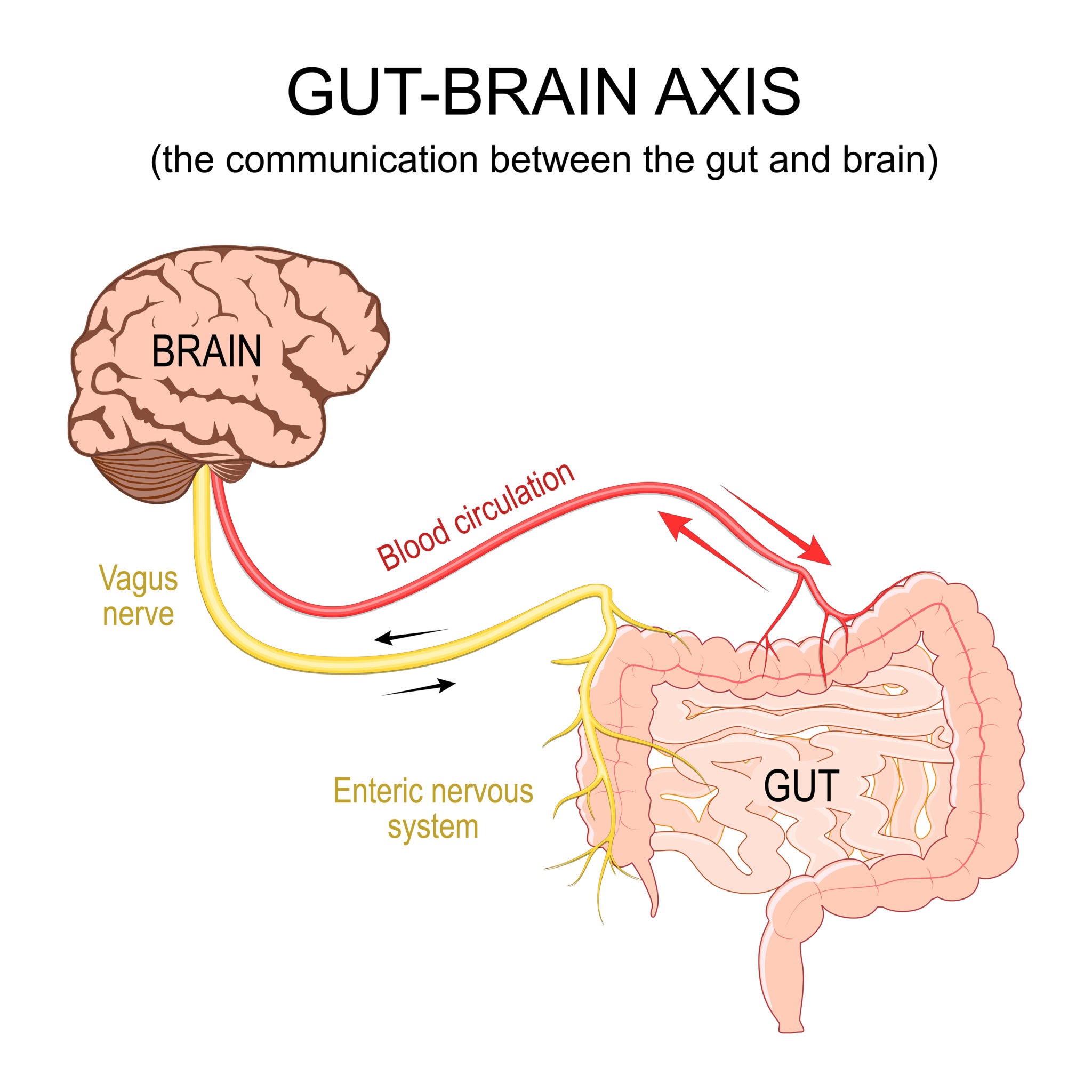
Once released, these molecules stimulate specialized sensory cells called neuropods. These neuropods form direct physical synapses with the vagus nerve.The vagus nerve acts as a high-speed data cable. It carries information straight to the brainstem, specifically targeting the Tractus Solitarius. This constant cross-talk acts as a master system for neuro-immune modulation, signaling our deep limbic system that the body is nourished, safe, and balanced.
6. The Wonder Molecule of the Future: GLP-1
This brings us to why GLP-1 RAs are truly the wonder molecules of the future. Their clinical benefits reach far beyond lowering blood sugar and reducing obesity. By interacting with multiple organ systems, they are fundamentally altering chronic disease management:
a. Silencing Food Noise:
They work deep inside the hypothalamus to switch off persistent food cravings and intrusive thoughts about eating.
b. Rewiring the Reward System:
They modulate neurotransmitter pathways within the mesolimbic dopamine system. Clinical trials are now demonstrating their power to assist with de-addiction from opioids, alcohol, and nicotine.
c. Systemic Anti-Inflammatory Actions:
They provide potent immune modulation. This pathway significantly reduces inflammation in debilitating conditions like Osteoarthritis (OA) and Inflammatory Bowel Disease (IBD).
d. Cardio-Kidney-Metabolic (CKM) Protection:
They protect endothelial linings, reduce cardiac stress, and preserve renal function.Neuroprotection: Emerging data shows they clear metabolic waste and reduce neuroinflammation, offering hope for neurodegenerative disorders like Parkinson’s and Alzheimer’s disease.
Conclusion: The New Frontier
What began as a curious investigation into desert lizard venom has opened up a new frontier in human health. GLP-1 receptor agonists are breaking down old clinical boundaries. They prove that metabolism, immunity, and neurology are not separate fields. They are chapters of the very same story.We are no longer just treating isolated symptoms. We are learning to speak the native language of the human body, using a molecular messenger that may redefine medicine for generations to come.

