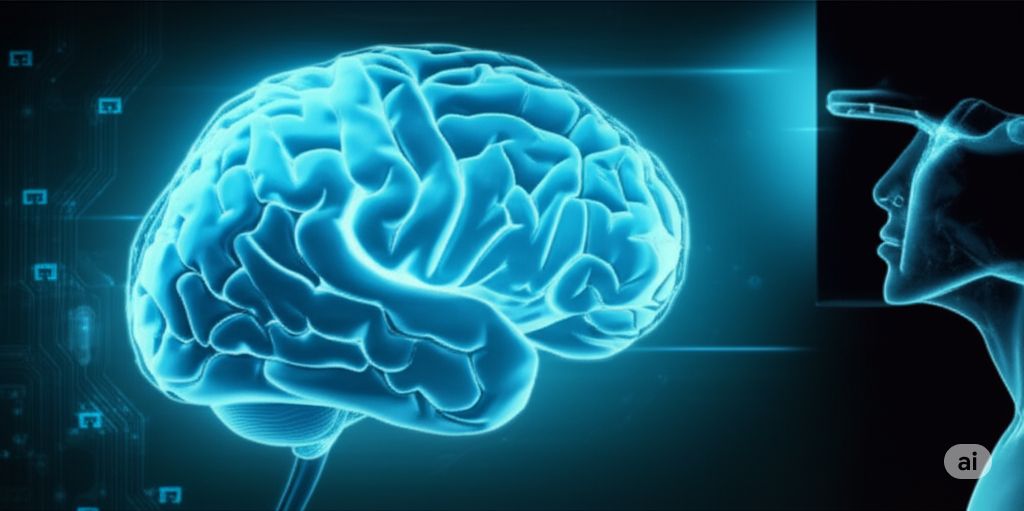
Brain-Computer Interfaces: That’s Rewriting Our Future.
We’ve become quite comfortable with the idea of enhancing our bodies with technology. Lenses for sharper vision, cochlear implants for the deaf, metallic implants for our knees and hips, even pacemakers to keep our hearts in rhythm – these are now relatively commonplace. But the notion of directly interfacing with our brains? That’s often relegated to the realm of science fiction.
“Neural implants? No, no, no… That’s impossible!” you might think. But is it really?
What sets a neural implant apart from other medical implants?
The key lies in the brain’s intricate organization. Unlike our eyes or ears, our brain is a highly territorial landscape. Specific regions are dedicated to controlling distinct functions – the movement of your hand has its own address, as does the formation of speech. This precise mapping makes direct interaction a delicate affair.
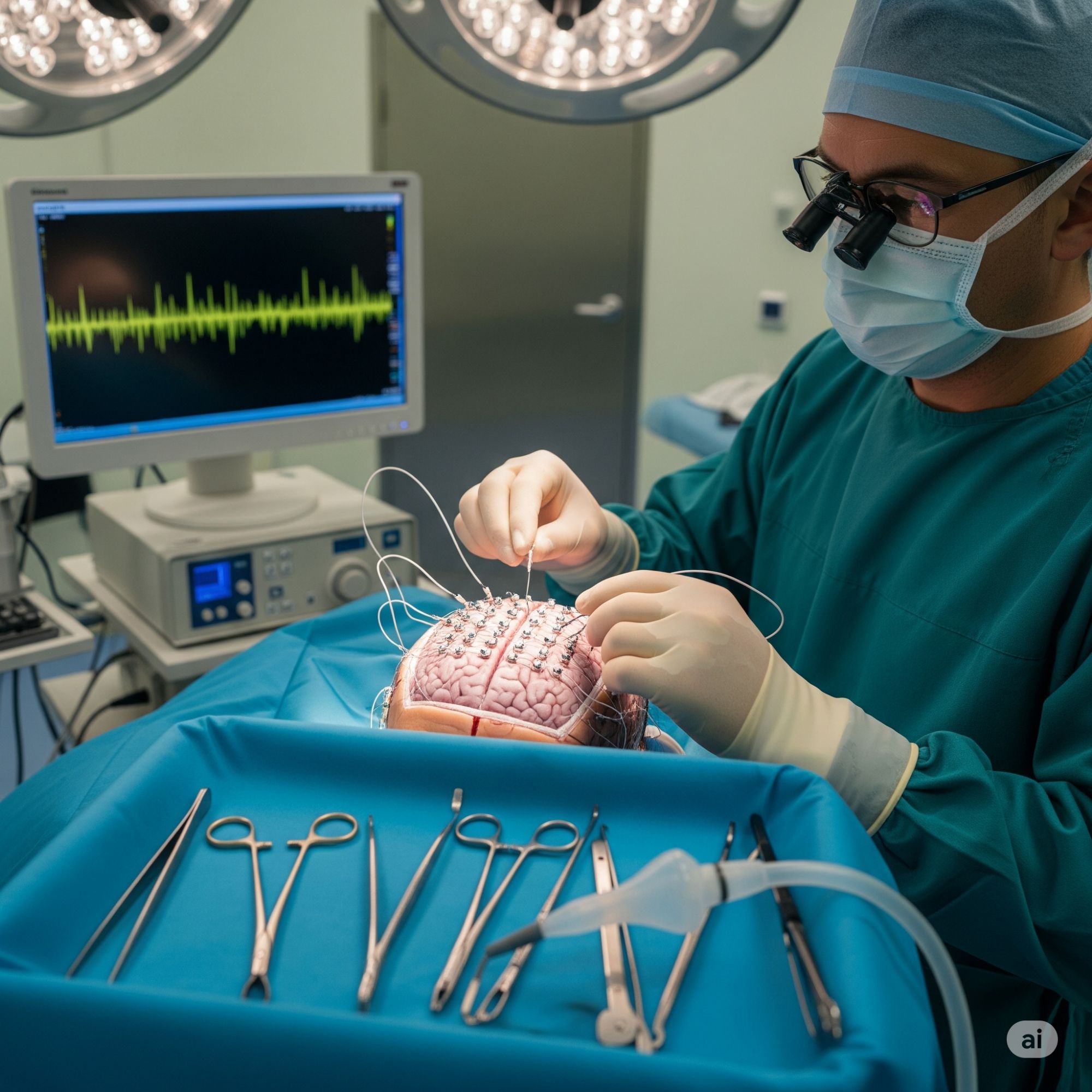
Yet, the fascinating truth is that we can eavesdrop on our thoughts. Each active region of the brain demands a dedicated blood supply. By carefully threading a sensor through a major blood vessel, like the carotid artery, we can position it over the specific brain area we want to monitor. This allows us to record the electrical symphony of our thoughts. The electrical impulses generated from our thought process can be transmitted to a computer system that can send an e mail or to a bionic hand that can pickup a cup of coffee. The user has to think and machines will take orders and carry out the task with precision.
And this brings us to a truly momentous occasion, a “Hello World” for the world of neurotechnology, embodied by an extraordinary individual named Philip. Philip lived with ALS, a cruel condition that relentlessly steals a person’s ability to move and speak. He was trapped within his own body, unable to utter a single word or make the slightest gesture, yet his mind remained perfectly intact. He could think, feel, yearn, and experience the profound frustration of complete isolation.
Then came a breakthrough. Doctors, with incredible precision, placed a tiny sensor, no larger than a matchstick, into Philip’s brain. This minuscule device was then wirelessly connected to a computer, much like pairing a Bluetooth mouse. This Brain-Computer Interface (BCI) began to detect the electrical signals firing in Philip’s neurons, decoding his very thoughts. And then, the unbelievable happened. The computer, guided solely by Philip’s mental activity, sent an email containing just two words: “Hello World.”
It was a transcendental moment in the history of neurology.
For Philip, locked in silence and immobility, this simple message was a lifeline. It was proof that his voice, though silenced by disease, could still reach the outside world. This wasn’t just about restoring communication; it was about restoring his very essence, his connection to humanity.
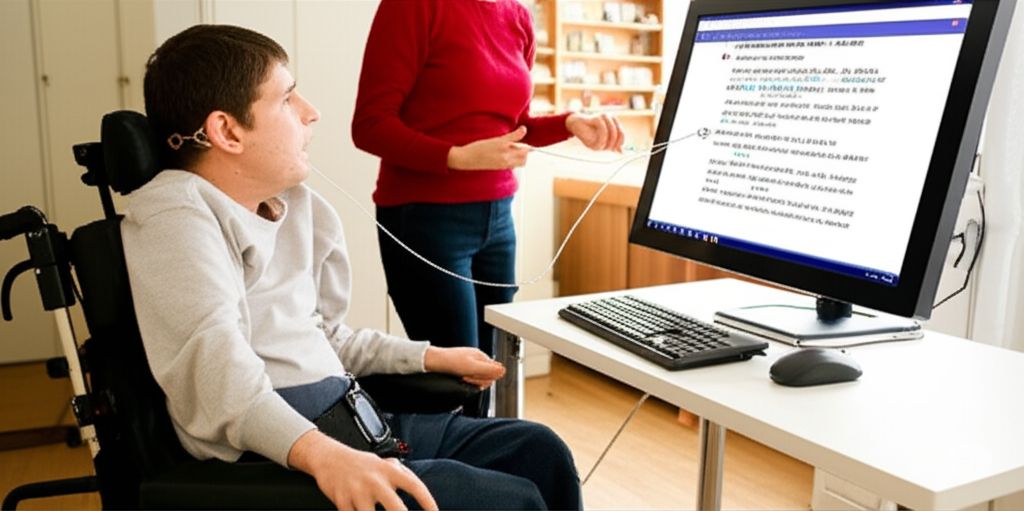
This “Hello World” moment is a beacon of hope for millions suffering from conditions like ALS, stroke, or spinal cord injuries. It opens the door to a future where individuals who have lost the ability to speak can engage in real-time conversations, their thoughts translated into speech with astonishing accuracy, even allowing them to control the nuances of their voice.
Of course, the journey to making neural implants widely accessible – safe, affordable, and truly effective – will span years, perhaps even decades. But Philip’s story is a powerful reminder that the future is not some distant dream; it’s being forged in the present, one thought at a time. This isn’t just about technological advancement; it’s about reclaiming voices, restoring independence, and redefining what it means to be connected. The age of neurotechnology has dawned, and its first message to the world is one of profound hope: “Hello World.”

