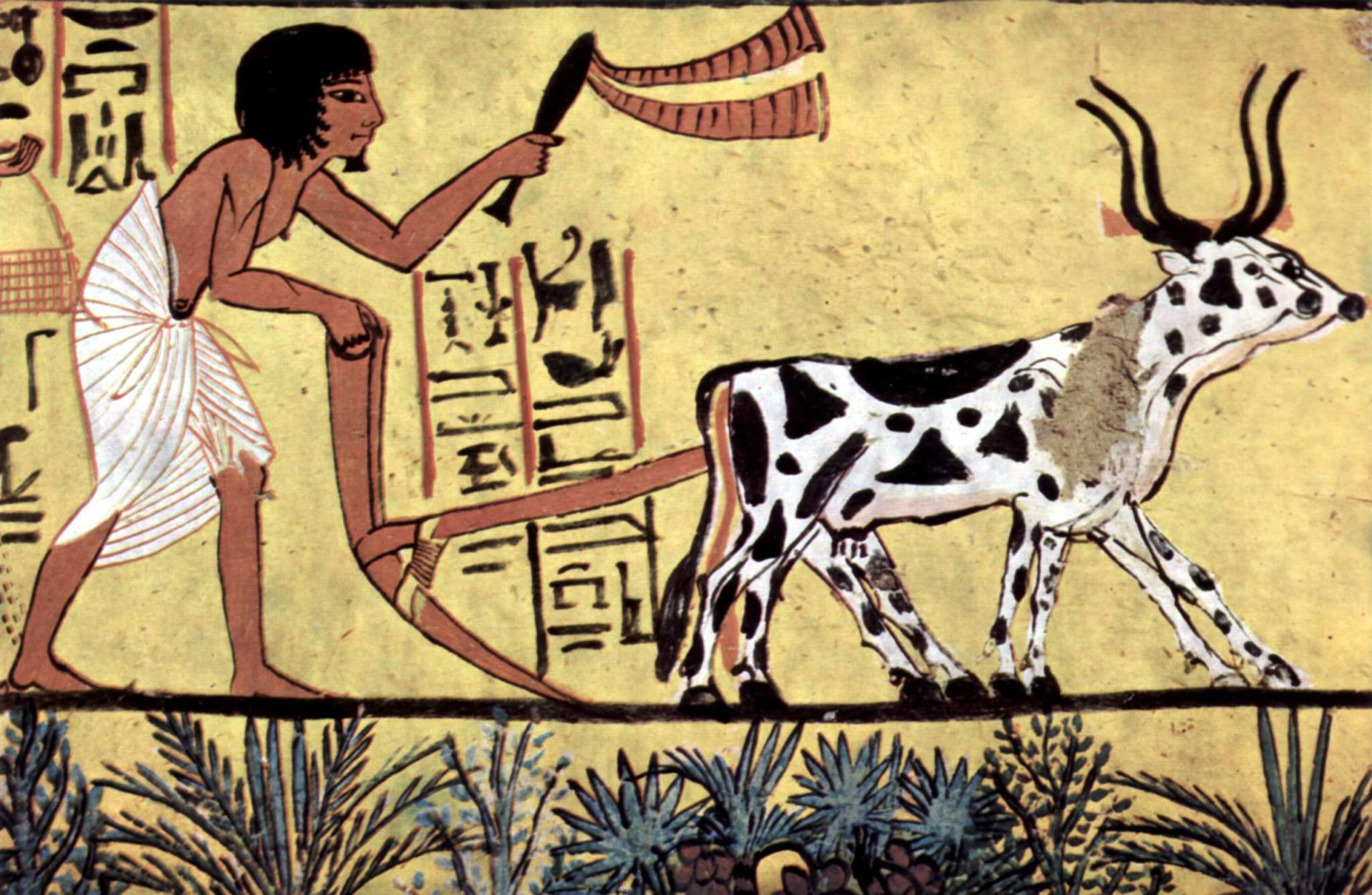
By the rivers of Babylon, the woman noticed a strange thing.
All the women of her Kabila had gone to pick up their evening rounds of fruits and berries and mushroom for their tribe. They were a small tribe of 20 odd people living in the Mesopotamia region. It was a story that happened long, long ago, more than 10,000 years before Christ would appear in the Levant. The ancient land was fertile and full of wild game animals. Tribes of 10s and 20s would move together chasing wild animals for protein and fruits and berries for carb and nutrition. They lacked any possessions. They also lacked any ambitions of future planning. They did not stay in a single place. They couldn’t. The moment the fruits and animals became scarce in one place, they would move to another virgin place in search of foods. They were Nomads, hunter gatherer ancestors of modern human beings.
The mothers would carry their babies on their bosom feeding them on breast for 5-6 years. The forest is not infant friendly. You didn’t grow baby food on the tree. This ensured that the Kabila of the natives couldn’t add a new member very often. Breast feeding is the best contraceptive in nature. The younger ones would be looked after by the tribe and the males would keep guard. There was always the fear of losing one member to the sabre teeth of the big animals of the forest. In the night, they would keep the fire burning and would roast meat in the fire. Unlike the humans, the trees would bear fruits every year unfailing. But the women of the tribe would bear new ones only once in 4-5 years only after the suckling baby had been weaned off their breast. Death from un natural causes was more common than birth of a new member in the Kabila. This way, the tribe never grew bigger than 20 or 30.
…
The woman had noticed that by the side of the river, in a swamp grew hemp like shrubs. It was laden with ears of golden things which today we call wheat. Cattle would graze on it. Importantly, unlike fruits and berries, it grew abundantly every year in the same place. She had picked up a satchel full of the cereal and had brought it home. It was neither tasty not filling like fruits. But on boiling, it made a nice porridge which was even good for her babies. She had to throw the better part of these wheat around her hut. After two years when the tribe came back to the same place ( as they would always after a gap when the fertility of the land had the time to regenerate), they were surprised to see that wheat had grown abundantly in the whole place they had left earlier. The amount of wheat can feed their tribes for the whole year.
That year the Kabila did not move out in search of a new terrain. Instead it settled down there and started cultivating this wheat plant in the low lands by the river. The harvest at the end of year was so abundant that they didn’t have to roam in search of food for the whole year. The babies could be weaned off their mother’s breast early for the porridge.
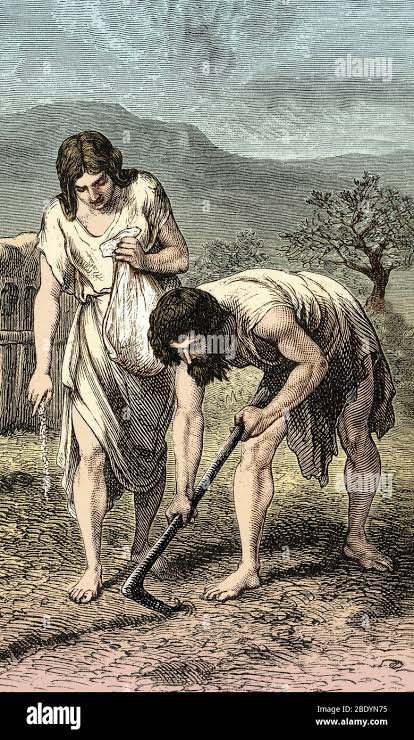
The elders didn’t have to go to the forest for game animals every day any more. Now had more time to sit together and chit chat. Some of the extra wheat had gone rancid. They had distilled them for the exotic liquid that was another good reason for settling down. Earlier the adult male would exhaust their time either chasing wild animals or fighting with each other. Now they settled down and planned to sow wheat, water them in time so that the harvest would be adequate for the whole tribe till the next season and more.
The tribe decided not to move from place to place in search of fresh fruits and animals anymore. Instead, they started planting wheat by the river in extensive places, water them in time, add animal dung for manure. Now their produce is so plentiful that they had to plan storage of extra wheat for future. They also had the extra job of protecting their store from theft and invaders.
…
As we know today-
Thus around 8500 BCE, by the side of the great Caspian Lake, in the valley at the foothill of the Zagros Mountain, the earliest hunter, forager Homo sapiens abandoned their nomadic life and settled down in small villages.
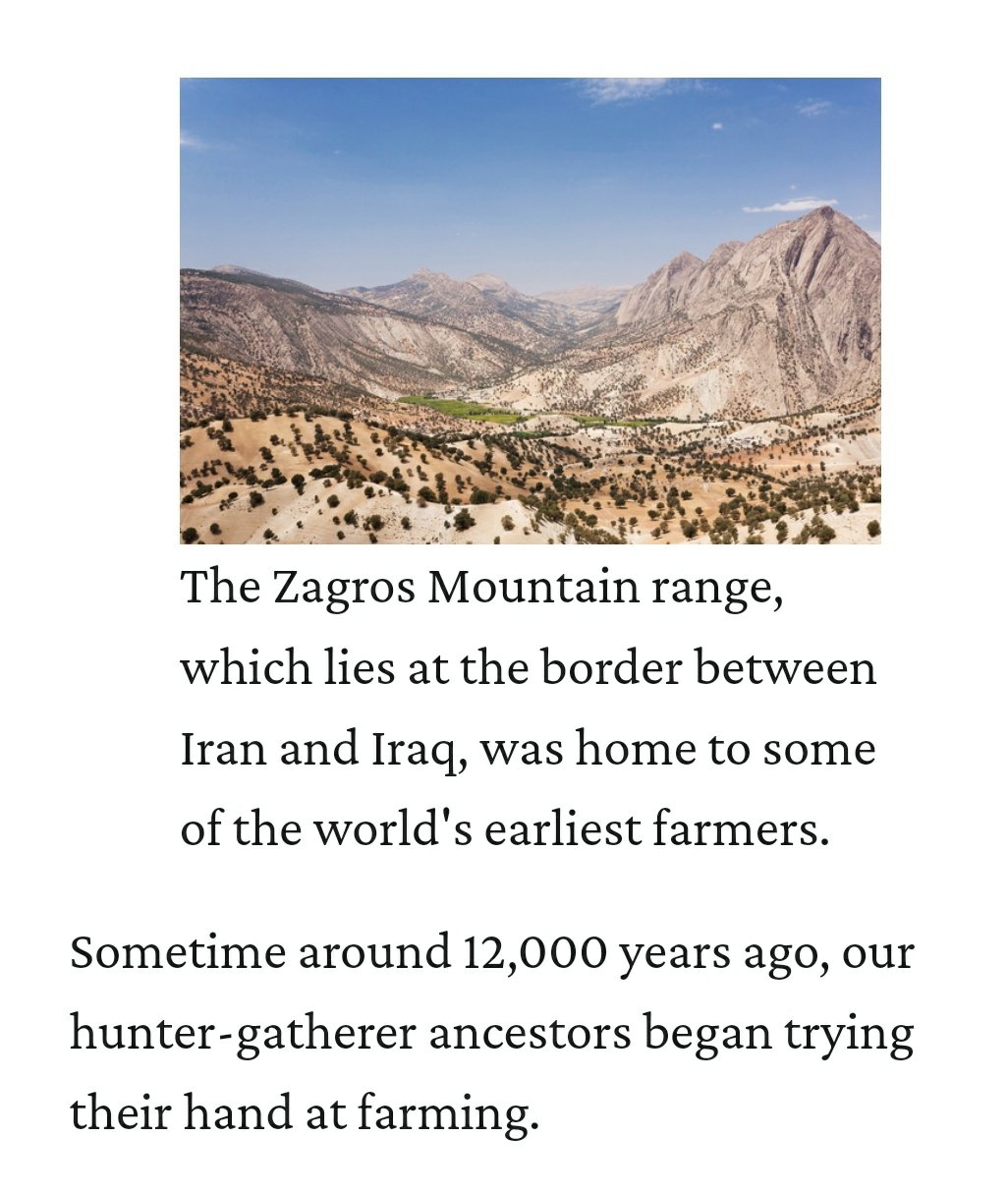
They started to cultivate the land and domesticate cattle for milk and horses for meat and transport. The sapiens started living in villages around their wheat fields. With animal milk and wheat readily available, the babies are no longer breast fed for years. Breast feeding is the best Contraceptive in the animal world. Now these pastoral community women started giving birth every year unlike their hunter gatherer ancestors. More and more people were engaged in agriculture and animal husbandry. Bronze and irons were invented to increase the productivity in agriculture as well as hunting. More and more members lived longer and longer. The earlier tribes of 10-20 now grew into villages of thousands staying together. In their spare time, they would think and narrate stories of their good fortune and attribute them to the mighty Sun, Fire, Rains and so on. They would offer Soma, distilled from extra cereals in the altar of fire to these gods.
In course of time, the numerous nomadic Kabila of 10-20 sapiens are replaced by villages of thousands. Settlements in the Mohenjo-Daro and Harappa by the Indus River were so vast that they could easily accommodate more than 50 to 60,000 people in one place.
Viruses were present on this earth much before the Sapiens. They affected the ancient human beings as much as they did today. For example, in the deepest forests of Central Africa, the Simian Immunodeficiency Virus (SIV) was thriving among the chimpanzees. It did not like to migrate to any other animals. Occasionally the African aborigines would kill an infected Chimp and feasted on it. The SIV would infect them. But it was limited to only to the 20 members of that one tribe. Either the virus killed all the folk thus spelling a dead end for itself. Or all the tribe members became immune to the virus in course of time. That would also be a full stop to the spread of that virus. There is no third option. This had kept the Epidemic under natural control till the modern days.
SIV is the precursor of HIV in humans and causes AIDS.
Just imagine, what must have happened when a deadly virus like Covid-19 had entered a gated settlement like Harappa or Nile civilisation. The virus would have had 50,000 hosts to multiply, mutate and spread. There is no possibility of achieving effective Herd immunity in a pastoral village community. (
We still don’t have any evidence how and why such an advanced civilisation came to an end. There is no evidence of war. It can be either draught or an epidemic.
Transport, Commerce and Epidemic.
Sumerian Coins as old as 8000 years old were found in the city of Lothal and Mohenjo-Daro. This also tells us that viruses from Sumerian city can access babies of Harappa.
Today, when a Corona virus originated in Wuhan, China it would spread to Milan, Italy, thousands of miles away before it could spread to its own capital, Beijing. Why ? Because all the weavers of the fashion industry of Milan belonged to the Chinese community of Wuhan.
Each forest on this earth harbours its distinct viruses. The transmission and course of this virus is limited to the flora, fauna and climate of that particular corner of the Earth. Sooner or later the people of that region would develop some amount of immunity to this virus. Both of them would live together, like Malaria in tropics. This is called Endemicity. But when a Congolese Virus gets a passage to Caribbean coast, the natives of Caribbean people will have no inherent immunity against this new virus. They will fell to the virus like the proverbial nine pins. Thus the Ebola virus which was endemic to central Africa when got an entry to the New York air port it immediately ran down the advanced medical system of America. No medical technology can stop a virus as efficiently as the natural immunity of a human being. And the Americans will have no immunity against the Congolese Virus.
Making of an Epidemic
Why did a simple virus like Covid-19 ran a Pandemic ?
Viruses live inside their Discrete Epidemiological Niches. Spread of human civilisation encroaches on their niches, dislodges them from their natural habitat and carry them rapidly to the other side of the globe. Believe me, the viruses are very reluctant to propagate inside an unaccustomed environment. The nomadic life of small hunter gatherer community of humans was an effective barrier against making of an epidemic. As the sapiens settled down to villages of thousands, the virus could get easy access to one thousand susceptible hosts to inhabit. Here it could multiply merrily and mutate to overcome early resistance.
As the human civilisation advanced, our medical knowledge increased, We also moved around the globe more frequently than our ancient ancestors. We dislodged HIV from the impenetrable forests of Congo and boarded them on a Canadian flight to Toronto. We helped the virus living in the bats inside the caves of Guangdong to the football stadium of Milan where one million spectators jostled and coughed while watching a football match.

(Spread of Covid 19 virus to Bergamo in Italy is linked to the Champions League match there.)
Earlier we would have one attack of Plague after only a couple of centuries. Today we are getting an epidemic of Bird Flu and a pandemic of Corona virus almost every alternate year. A virus that cannot hop beyond 6 feet on its own today can board a supersonic jet from the Changi airport of Singapore and touch down in John F Kennedy airport of New York in just one day. No wonder the viruses who are very fastidious in their habitat have become Globe trotters as the Sapiens who started as hunter gatherers roaming in the banks of the great rivers of ancient world had developed aeroplanes, and carried exotic pet animals of China to the living rooms of San Francisco. We are responsible for this Climate Changes. Epidemics and Pandemics are small prices for this advancement of technology.
The Homo sapiens who have swapped their hunter-gatherer life for the clustered urban conglomerates of the modern world had to bear the cost. Frequent pandemics are a small price for such a great misdeed.
Also in my blog:
ରମାକାନ୍ତ ମହାପାତ୍ର
 Dr Ramakanta's Ideas