
[ 1880s (the story of Microbes) and 1930s (the story of Vitamins) are two pivotal moments in medical history. The foundation of modern medicine was laid in these two moments which significantly improved human health and longevity. In the 5000 years of history of medical sciences, these two events have no parallel. ]
1880s- the story of Microbes
( “One disease, One bug”)
For thousand years, we thought that diseases are caused by God’s wrath. We would organise ritualistic Pujas and Yagnas to propritiate the angry gods and goddesses to release us from such afflictions. People will accept maggots growing on their raw wounds meekly as the punishment for their sins and do penance for their atonement.

But in the year of 1876, Robert Koch, A doctor with a small rural practice in Germany, isolated the Anthrax bacillus. He had a beautiful laboratory fitted with a good microscope. There he went on to isolate MYCOBACTERIUM as the cause of Tuberculosis and Vibrio Cholera as the cause of the devastating Pandemic. TB was the most dreaded killer in those days and is called the White death. His student Friedrich LÖFFELER was able to culture the DIPHTHERIA bacillus in his lab. In 1894, Alexandre Yersin (Louis Pasteur’s student) discovered the Plague bacillus in Paris. Rightly, it’s named YERSINIA PESTIS after him. Plague, the historical scourge known as the Black Death wiped out millions of people.
After these discoveries, the 4 greatest killers of mankind : Tuberculosis, Plague, Cholera and Diphtheria were no longer considered as the wrath of God or a visit of Devimata any more. Diseases stepped down from their lofty pedestal of divine interventions. Instead a lowly bug was attached to each of them. The new norm was- “Find the Bug, Develop a drug and Deliver the cure.” No more divine propitiation is needed. A new discipline was created- Microbiology.
Robert Koch was awarded the Nobel prize in 1905.
It may seem strange but is true that within 20 years of isolation of the first pathogen (Anthrax bacillus) most of the offending bugs that have defied detection for 5000 years of health care were isolated. “Find the germ and kill them” led to the development of all antibiotics, vaccines, sterilisation and Hygiene and a whole new department, the department of public health.
This also led to the hubris that we would be able to eradicate all the diseases from the face of earth simply by identifying the bug and killing them. It took a mere 50 years to shatter that confidence.
1930s- the story of Vitamins:
( Your food is your Medicine)
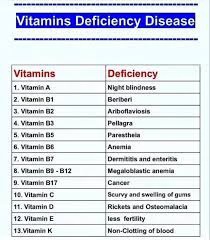
In the 1880s, the whole of the Dutch army in the Indonesian peninsula was down with an unknown neuritis. Young and healthy soldiers will be down with fatigue, nerve damage, heart issues, and paralysis. Today, we know that it was Beriberi and was caused due to the deficiency of Vitamin B1. But in the age of germ theory, it was unthinkable that anything other than a bug can cause such a fatal condition. So when Dr Eijkman was posted to Java as the medical director, he set himself on finding the offending germ that was causing the devastating nerve infection among his soldiers.. He would draw blood from the affected soldiers and inject it into chickens. As per Koch’s postulate, if he could transmit beriberi to the chickens in his lab, that would firmly establish an infective cause for Beriberi. Lo and behold! Soon these chickens displayed the symptoms of neuritis. Excited, Dr Eijkman drew blood from these symptomatic chickens and injected them to healthy ones. This of course failed. But very soon the whole flock of his chickens, both cases and controls were down with Beriberi. What a virulent bacteria!! he exclaimed.
Then the military cook brought a basket full of cooked rice to feed the chickens. Normally, the chickens were fed with the local cheap brown rice. Polished white rice was reserved for the officers’ mess. The cook explained that the consignment of chicken feed was delayed by one month. So he was feeding the birds with white rice from the officers mess.
As soon as the regular consignment of brown rice for chicken arrived, Eijkman observed that all the infected birds were cured. He was convinced that something ( ? a Bug) present in white polished rice was causing Beriberi in his chickens. And Brown rice appeared to be able to cure this condition of the birds. After several rounds of controlled trials, he failed to identify any bug that might have caused Beriberi. How could a bug that was not present in the whole rice, might have entered its polished version ? Eijkman was the first person who dented the invincibility of Germ theory of “One disease; one bug.”
This failure to identify a bug, earned him a Nobel prize in 1929.
20 years passed.
In 1920s, Dr Casimir Funk extracted Thiamin, an amine from the husk of rice. He went on to establish that the deficiency of Thiamin led to Beriberi. He called it a vital amine= which was later shortened to the word Vitamin. Vitamin B1 was the first of such vital amines to be discovered.
This broke down the 50 year concept of searching for an infective cause for each and every disease. It may seem strange but is true that within 10 years of identification of Vitamin B1, all 13 vitamins were discovered. Here is the list:
- 1932- Vitamin C (Ascorbic Acid): Albert Szent-Györgyi, a Hungarian biochemist, isolated vitamin C, the substance responsible for preventing scurvy.
- 1933- Vitamin B2 (Riboflavin): Paul Karrer, a Swiss chemist, isolated vitamin B2.
- 1935- Vitamin K: Henrik Dam, a Danish biochemist, discovered vitamin K which was essential for blood clotting.
- 1937- Vitamin B3 (Niacin): Conrad Elvehjem, an American biochemist, isolated niacin and found it to be effective in treating pellagra.
- In 1930s Advanced research helped elucidate the structure and mechanism of action of Vitamin B1 and Vitamin D:
Two new words were now added to our knowledge sphere- Nutrition, and Deficiency diseases. The discoveries made in the 1930s laid the foundation for modern nutritional science and led to the development of vitamin supplements, fortified foods, and public health programs aimed at preventing vitamin deficiencies.
While the 1880s saw Koch’s postulates lead to the rapid discovery of most bacterial causes of disease, the 1930s witnessed the identification of deficiency diseases. In the 5,000-year history of medical science, no two decades have had such a profound impact on modern medicine.
These two advancements have significantly improved human health and well-being. But are they enough ?
 Dr Ramakanta's Ideas
Nice history of infectious and deficiency diseases discovered through keen observation. All the comforts we are having now are contribution of science.
LikeLiked by 1 person