
Dantapuram, 1070 CE
The boy was on the run. His father had just been slain. His enemy was none other than his uncle the Powerful Chola king of Tanjore. They had killed his father Rajaraja, the king of Kalinganagar. Only a decade ago Rajaraja the king of Kalinga had attacked the Chola empire, looted the rich Venginadu, kidnapped Chola princess Rajasundari and married her. Of course, he had the silent support of the father of the princess of Vengi. But this had enraged the greatest of Chola king of Tanjore, Kulottunga Chola.
The powerful Cholas had subverted the Chalukyas of Vengi and had put one of their kins Rajendra Chola on the throne. The high handedness of Tanjore throne was not swallowed easily by Rajendra. Instead he conspired with the vanquished Chalukyas of Vengi and the Ganga king Rajaraja for retaliation. Rajaraj 1 apparently defeated the Chola chieftain in Vengi and forced Princess Rajasundari to marry him. They had a son.
Now the Old Chola king of Tanjore had died. His son Kulottunga Chola had ascended to the throne at Tanjore and immediately sent his great commander Tondaiman to teach Rajaraja a lesson. The Cholas looted everything en route, burnt down villages and killed Rajaraja in the battle. But all in vain. The Chola princess Rajasundari declined to go back to Tanjore. Instead the dowager queen took her orphan son and fled northward, beyond Dantapuram, beyond SriMukhalingam further north towards Utkal.
Sambhala, Oddiyan 747 CE
“ Guru Padmasambhava of Sambhala, Oddiyana ( Present Sambalpur, Odisha) had visited Tibet and established Lamaism there..”
Journal of Bhutan Studies, Vol.34, summer 2016
Just after the Buddha Sakyamuni had left his mortal remains, Buddhism in India had been divided into two ways- Theravada ( Hinayana) and Mahayana. Buddha had always preached monastic way of life, renunciation from the world and Theravada had preserved it. But in North India, Mahayana had allowed buddhist vikhyus to remain in society, dedicating their life for the betterment of the society. They had started preserving the relics of the Buddha in the sanctum sanctorum of stupas and Viharas and started offering ritualistic prayers to the form of the Buddha. 1200 years after the Dharmachakra Prabartana at Saranath, the prayer of physical form of Buddha abounded. It also was associated with Mantras, Tantras and Bhairav and Vajra. ( Tantrayana, Vajrayana)
King Indrabodhi ( Indrabhuti) of Sambhala, Odivisa ( Tibetan scriptures) was practising tantric Buddhism ( Vajrayana). His son Padmasambhava had gone out to spread this Buddhism in Nepal. Since then, Oddiyana which had always been a citadel of Buddha’s teachings had been taken over by Brahmanism. Buddhism had vanished from Odisha and had spread in Tibet. The proverbial Sambhala was lost and had today become a hidden land in the scriptures of Tibet and Lamas.
The limitation of brahminical religion was that it always had looked down upon the lower caste and the feminine genders of society. Buddhism had not. The great Sakyamuni had initiated his own mother into buddhism. Tantrayana ( Sahajayana) of Oddiyana had gone one step ahead by empowering the women of the lower caste. Thus around 1000 CE, we had some great Yoginis in Odisha. Nitei Dhobani, Gyan Dei Maluni, Gangi Gauduni, Sua Teluni, Luhukuti Luhurani, Sukuti Chamaruni and Patrapindhi Sauruni are advanced souls in tantric Buddhism. From Sambalpur to Puri, all the villages were aware of the occult powers of these seven. In Puri a village called Kuanri Patana was dedicated to them. They were the introducer of Sahaja Yana Yoga of Budhism.
One of them, Nitei Dhobani of washerwoman caste had excelled in the esoteric tantric practices. By the power of her Tantricism, She could make her Dhenki ( Husking paddle) fly. Riding on her flying Dhenki, She could reach any place anywhere in minutes at her sweet will. It is now her responsibility to stop the spread of Brahminism in Oddiyan itself. She left Sambhal for Puri.
Puri, 1078 CE
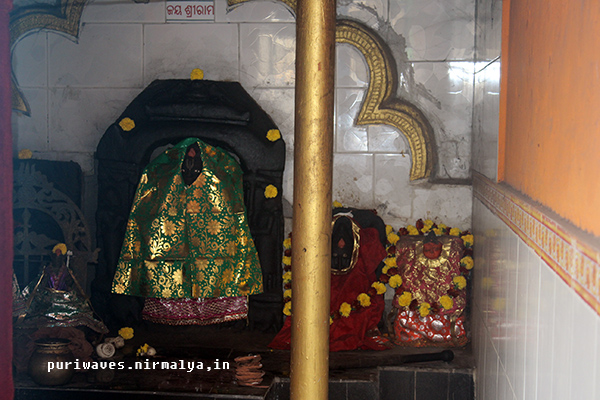
( In the Chudanga Sahi, in the place called Badu Mahapatra Jaga, there is a small temple with the image of Nitei Dhobani and Chodaganga Deva. Nitei Dhobani, here called Garedi Suni (“lady practicing witchcraft”), is sitting on a stool and operating the husking machine that was used for the contest. Chola Ganga is seated on a throne and armed with bow and arrows,)
Puri on the coast of the Bay of Bengal had always been a melting pot of many religions. There were the buddhists. There were the Sabars who prayed to the reclusive Nilamadhav. There were the Shaivites led by Someswara who prayed to Lokanatha. There were lots of Madhabas: Nilamadhaba, Nialimadhaba, Durga Madhab.
Nitei and her brigade of Seven Sisters had settled down in a place still known as the Kuanri Patana. Folk tales abound in their names.
The Boy had also arrived in Puri. He had to run till all the assassins following him had left him. They were more interested in looting and helping themselves with great wealth of odisha.
When the boy reached Puri, the city was under great excitement. A public contest was organised between Shaivism and the nascent Jagannath worship. The Keshari kings of Odisha were great Shiva devotees. They had worn the title such as Mahashiva Gupta and had their capital at Guheswarapatak. ( Jajpur ). They had built 1000 shiva temples in the Ekamra kanan. Yayati, the first mahasivagupta had brought 10,000 brahmins from Kanyakubj to conduct a Dasaswamedha Yagna by the holy river of Vaitarani. The name had struck: Yagnapur which was later known as Jajpur, a place of worship.
The last scion of the dynasty was a tyrant and religion intolerant. He had sent his Tantric Guru Acharya Someswara to win over the people of Puri into the fold of lord Shiva.
The people of Puri had always been independent in their religious outlook. From the ancient time, it was a place for Vishnu worship in the from of Madhav. Madhav is known as purushottam here. There was a very ancient temple also. But then the natives Adivasis would pray to their own gods. Most popular among them was Nilamadhav worshipped by Viswavasu sabara. Buddhism had its share of followers. All these existing religious belief had been melted into a separate belief the Jagannath Cult. It had tried to overcome the caste bar of Brahmanism by giving the untouchable Savaras the worship rites to lord Jagannath. It had included the annual Rathyatra of Buddhism. It is said that it had the tooth relic of the Buddha at the navipadma of the Daru lord. No wonder, the Jagannath cult was very popular. The greatest proponent of this cult were the Seven Sisters.
Now the Surya Keshari had sent his Rajguru to win over the people into Shaivism as in Bhubaneswar. The stage was set for the ultimate contest between Acharya Someswara, worshipper of Aghora Markandeya and Nitei Dhobani, devotee of Jagannath: The Great Husking Contest.
ଛାଡ଼ ଛାଡ଼ ବୋଲି କାହାର ଆଜ୍ଞା ?
Traditional Garudi of Utkal
ନିତେଇ ମା’ ଧୋବଣୀ, ପିତେଇ ମା’ ସଉରୁଣୀଙ୍କ
କୋଟି କୋଟି ଆଜ୍ଞା ।
During the esoteric Buddhism period of Oddiyana, Mantra, Yantra ( vajra) Guni and Garudi vidya flourished. The story of Laxminkara of Suvarnapur ( present Sonpur is one example.) Women of lower castes were able to ascertain their power in the society. it was a reaction to tyrannical caste system of Brahmanism. But subsequent proponents of Brahmnical order assimilated buddha into an avatar in the pantheon of hindu Gods.
Odia Folklore
Buddhism as an independent cult lost its relevance to the public. But the advanced souls of Nitei, Pitei still ruled in the rural minds. The proponents of Brahminism conveniently reduced all those advanced women folk into Witches. ( Dakinis, Pisachuni) to be burnt on stakes. However try they might have been, they couldn’t obliterate them from the minds of the rural public of Odisha. We have a number of such souls like Bhuasuni and Gram debati still revered in the every rural house holds till date. We have a host of folk lore telling enchanting stories about the seven sister. Nitei dhobani is remembered every where as the Chaiti Mangalbar Osha in Odia folks.
“ଚଇତି ମଙ୍ଗଳବାର କେହି ନ କରନ୍ତି ।ସ୍ୱର୍ଗର ନିତେଇ ଧୋବଣୀ କରେ । ମଞ୍ଚ ପୁରେ ଚଇତି ହାଡ଼ିଆଣୀ କରଇ ।”
Odia Folklore
The Husking Contest.
The Tantric Guru who had been supported by the Kesharis, Acharya Someshvar, was a worshiper of Aghora Shiva Markandeya. He challenged Nitei Dhobani, a staunch devotee of Jagannatha, to test her powers, and a date was fixed for a public test. Whoever was able to produce rice from dry rice husk in a dhenki or udukhalo (a pedal husking machine) would be the winner. Someshvar offered prayers to Shiva and bowed to the machine, but in spite of his efforts he was unable to produce any rice. Nitei Dhobani chanted her prayers to Jagannatha, offered respects to the machine, and immediately the rice started to flow out.
From that day onwards, Jagannath cult became the dominant religion in Puri. Another event will raise this as the court religion of the king.
Still today some people worship Nitei Dhobani as a powerful lady. Her lowly caste was forgotten.
Vahinipati meets Chola Ganga at Nitei’s place.
A regiment is known as a Chamu. The person who leads a chamu has the title of Champati. One who captains a larger regiment is called Senapati. One who is the chief of one wing of armed force is called a Vahinipati. Surya keshari had insulted Vasudev Ratha Vahinipati the captain of his chariot troop. Vahinipati was an influential person in his army. He had left Jajpur and came to Bhubaneswar to pray at Lord Lingaraja. There he gets inspiration to proceed to Chudanga Sahi, Puri. He would meet the boy in Puri, his future emperor.
The boy had turned up at Chudanga Sahi. He had heard about the husking contest with interest and the antagonism between surya Keshari and Nitei. He knew Nitei would support him in the coup against surya Keshari. Though the Gangas were Shiva devotees, he had made up his mind. To impress Nitei he would embrace Jagannath cult in addition to their family Deity Shiva.
Chudanga Sahi, Puri, January 1078
Vahinipati was depressed. After the huge insult by the king for which he had devoted all his life and skill, now he had no urge to live any more. All he thought of was revenge. All he knew that no-one in Utkal dared the Kesharis. He felt like killing himself in the rolling waves of the world famous beach of Puri. The wind had a rustle among the jhaun groves. He closed his eyes and prayed his family deity Lingaraj of Ekamra before taking out his life. As he opened his eyes, there stood the Boy. Was this the same face he had a vision during his Adhia in front of Lingaraj ? Shambhu! Was he the destined emperor who would deliver Utkal into unprecedented Glory and wealth? He didn’t know why but his whole being was overjoyed. He forgot about taking his life only moments ago.
The Boy respectfully asked him the road to Nitei. Vahinipati knew the answer. Vahinipati also knew that she was the solution to both of their problem.
Badu Mahapatra Jaga
“The first meeting between Ananta Varma and Nitei Dhobani was particularly interesting. When the boy went to meet the Garudi, she was cooking her noon meal by using her own legs as fuel, and carrying a baby on her lap. These folk tales still persist in Odisha. “
Folk tales of puri
On 17 February, 1978 Saturday, Chota Chola Ganga deposed the last scion of Keshari kings and ascended to the throne of Utkala. The 200 years old keshari dynasty, the creator of the majestic Lingaraj temple and one thousand shiva temples in Ekamra Bhubaneswara thus ended.
And the first thing he took up, is to build a huge temple for Lord Jagannath, in place of the ancient temple of Madhab, taller than Lingaraj, tallest of them all.
Chola Ganga Dev
history of ganga dynasty
What does History tell us ?
Chola Ganga Deva, 1078-1147.
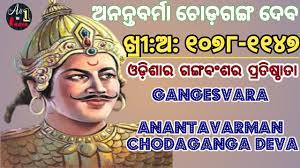
The orphan boy of a Dowager woman escaped from Kalinganagar ( Sri Mukhalingam in Srikakulum) when his father was slain by his uncle. Alone he reached Puri. Here with the help of Vasudev Rath Bahinipati a suspended General of the Keshari Clan and Nitei Dhobani, a powerful Tantric lady and Jagannath Devote to depose the last Keshari ruler.
On Feb 17, 1978 he ascended to the throne of Utkal and all the three Kalingas.
There was a small Vishnu temple in Puri dedicated to Madhav. In fact we had only Madav temples in and around Puri- Nilamadhav of the Sabara clans, Niali Madhav by the Prachi and Durga Madhab so on. Buddhism has been reduced to Tantric practices. Though the Gangas are devotees of Shiva, Cholaganga built a huge temple dedicated to Lord Jagannath in Puri. The stories around Lord Jagannatha was inclusive of all the religious practices prevailing in Puri: Buddhism, Tantricism, Sabari cult, Ramanandi Vaishnavism.
He organised Puri as a military township. It was divided into Sahis, each having its Jaga gharas where local youths were given training in military skills and were recruited during wars. He introduced Gosani Yatra and initiated Madala Panji. Much of the Puri town as we see today was initiated by Chola Ganga Dev.
The small temple dedicated to Cholaganga and Nitei still stands witness to his contribution in the Chudanga Sahi, though neglected these days.
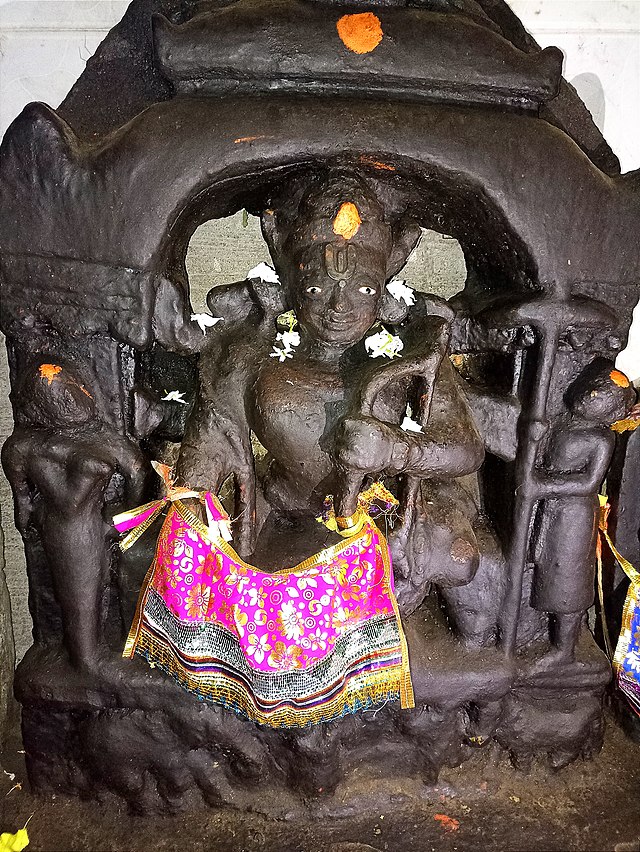
The Gangas went on to establish the City of Cuttack and the world famous Sun temple of Konarka.


Historical stories of odisha.
Nice collection.
LikeLike