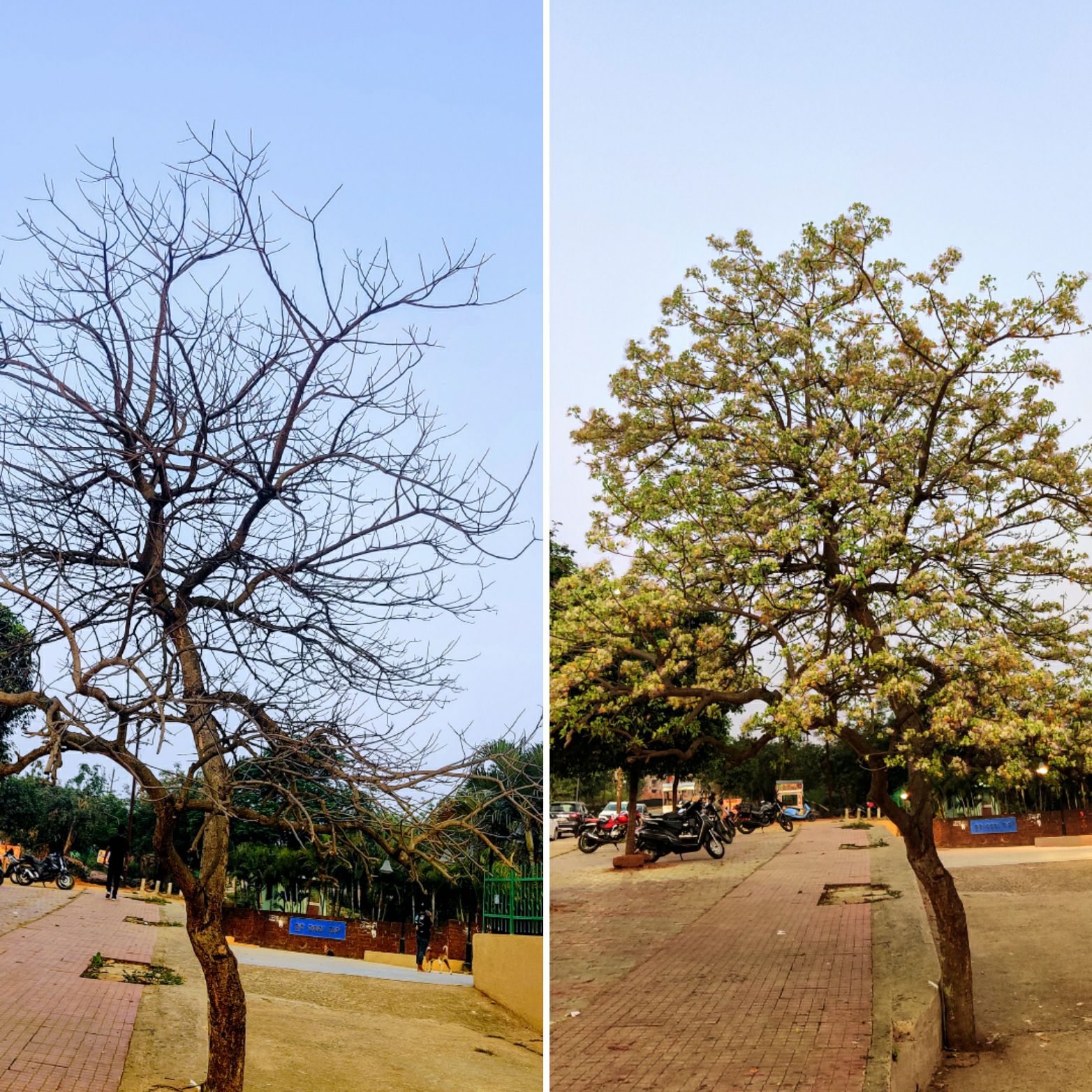
As you enter into the Buddha Park from the Lumbini Vihar side, there stands a lonely tree. It is a small but beautiful tree.
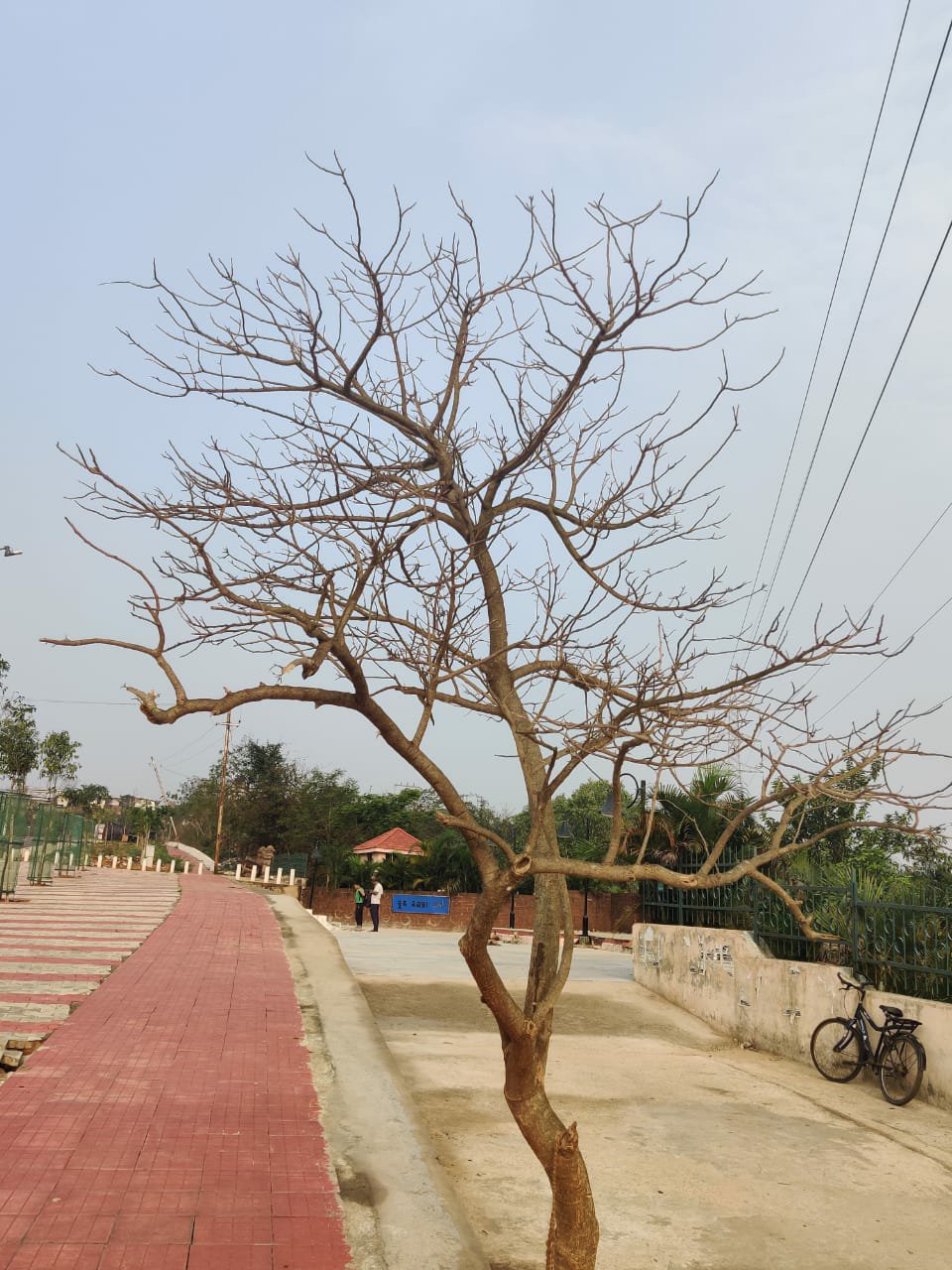
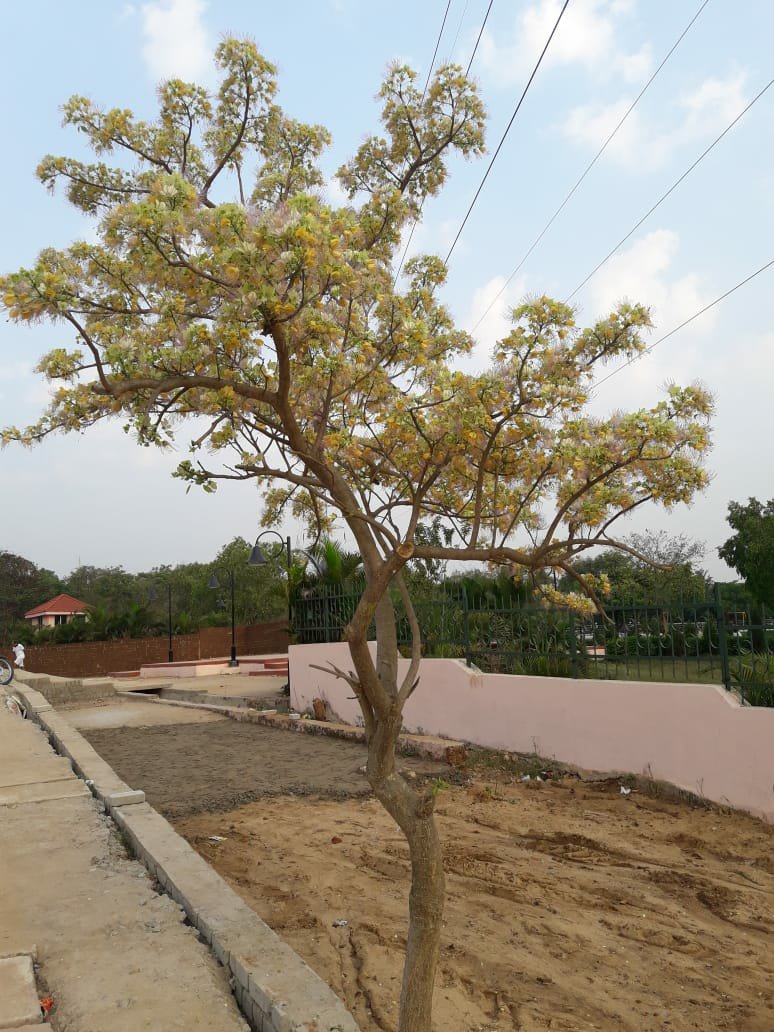
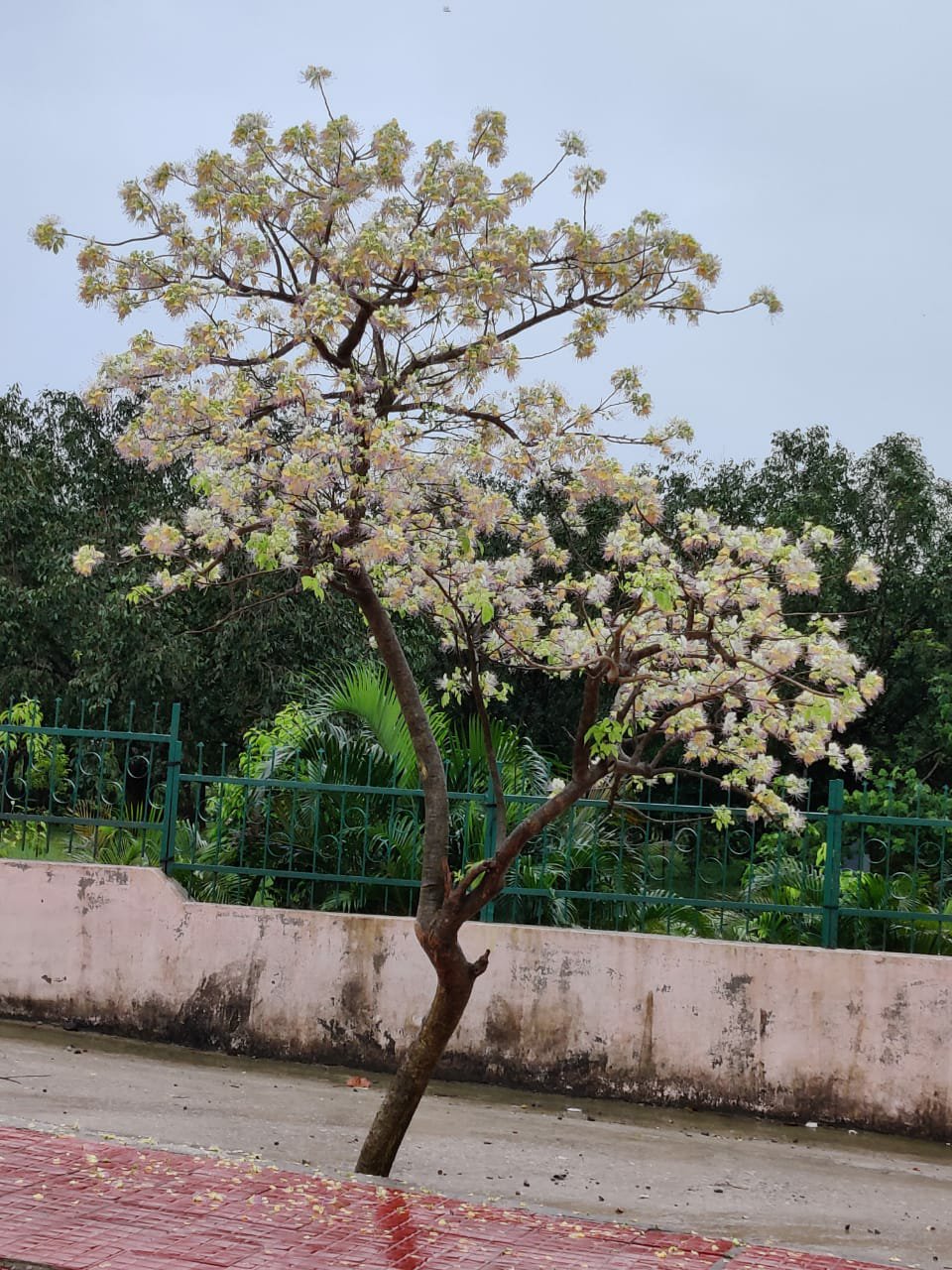
One fine morning, in the summer, I was surprised to find that the tree had gone completely bald. Not a single leave was to be seen.(pic-1) The masons of the park construction had started putting ceramic tiles around it. I thought the tree had died due to chemicals. I was so unhappy. Then rains came and lo and behold, the tree was again bedecked with a luxurious canopy of green foliage (pic-2). As the autumn glided in, I found that all its leaves are gone. In its place there was a tree full of luxuriant flowers of brilliant hues.(pic-3) Then the winter came and here is another pic of the tree.(pic-4)
The tree in the the Buddha Jayanti park teaches me a great lesson: “That everything will go away. Nothing is permanent. That which has gone away, will again comeback one day, like a wheel in motion. Just have some patience.
'There is a season for everything.
There is a reason for everything.'
Here are the four pictures of the one and the same tree that I had taken on these three occasions. These pictures so beautifully illustrate one of the immortal concept of our culture:
“Sukham-āpatitam Sevyam
Dukham āpatitam tathā |
Chakravat Parivartante
Dukhāni cha Sukhāni cha ||”
“सुखमापतितं सेव्यं दुःखमापतितं तथा।
चक्रवत् परिवर्तन्ते दुःखानि च सुखानि च।।”
- “Aapatitam Sukham Sebyam” = one should accept the happiness that has come.
- “Tathaa Aapatitam Duhkham ca” = similarly accept the sorrows that have befallen.
- Duhkhaani ca sukhaani ca = the sorrows and happiness
- Parivartante = repeat in turns
- Chakravat = like a wheel.”
We should accept the happiness and also the sorrows as they come to us with equanimity as both happiness and sorrows repeat in turns as the wheel.
This beautiful shloka is sometimes ascribed to the great sage: Bhartrāhari. ( I’m not sure though.)
Bhartrāhari was the king of Ujjain and is the elder brother of the famed King Vikramaditya.
He was deeply attached to his queen, to hunting and also to the Nagar-badhu ( court dancer) Rupalekha.
It was the time of Gorakhnath, the patriarch of Natha-panth.
Baba Gorakhnath wanted to teach the amorous king the lesson of vairagya. He gave him a fruit that will make a man immortal and give him eternal youth.
The king loved his wife so much that he gave her the fruit of immortality. The queen was in love of the commander of the state army. She gave the Amar fruit to the Senapati. The Senapati did not eat it. Instead he gave it to his wife who gave it to her lover Chandrachuda, the keeper of the horses. Chandrachuda took the king in his chariot to the dance house of Rupalekha the court dancer. As the night advanced, the King Bhartrhari dozed off under the influence of alcohol. Taking this opportunity, Chandrachuda courted the courtesan Rupalekha and gave her this fruit of immortality in return. In the morning, Rupalekha offered the fruit to the king while seeing him off to his chariot.
The effect of alcohol vanished as the king saw the Amar Fruit of his teacher Gorakhnath in the hands of the courtesan.
He found out all the characters in the incident and wanted to slay all the culprits from the queen to the courtesan when Gorakhnath appeared.
“ Mortals don’t deserve the fruit of immortality.”
“ Mortals don’t deserve the fruit of immortality.” So saying he stopped the king from committing further crime.
It is said King Bhartrāhari renounced the world then and there. But Gorakhnath had a condition. He sent the king to his palace to collect the first fistful of alms from his own wife addressing her as his mother.
Wearing saffron, the king Bhartrhari came to the doors of palace and uttered- “Alekh Niranjan, Mata Pingala, Bhikshyam dehi.” That was the beginning of the sub-sect of Nathpanth.
( It is said the queen in the story was Anangsena who committed suicide after being caught. In another story Pingala the chaste queen prevents the king from killing a deer during hunting. Instead she teaches vairagya to the king and sent him to baba Gorakhnath.)
While his successor Vikramaditya became a great king. the renouncer Bhrtrahari scaled higher peak. He has composed three great treatises: Shat-Traya: the Vairagya Shatak, the Neeti Shatak, and the Shringar Shatak.
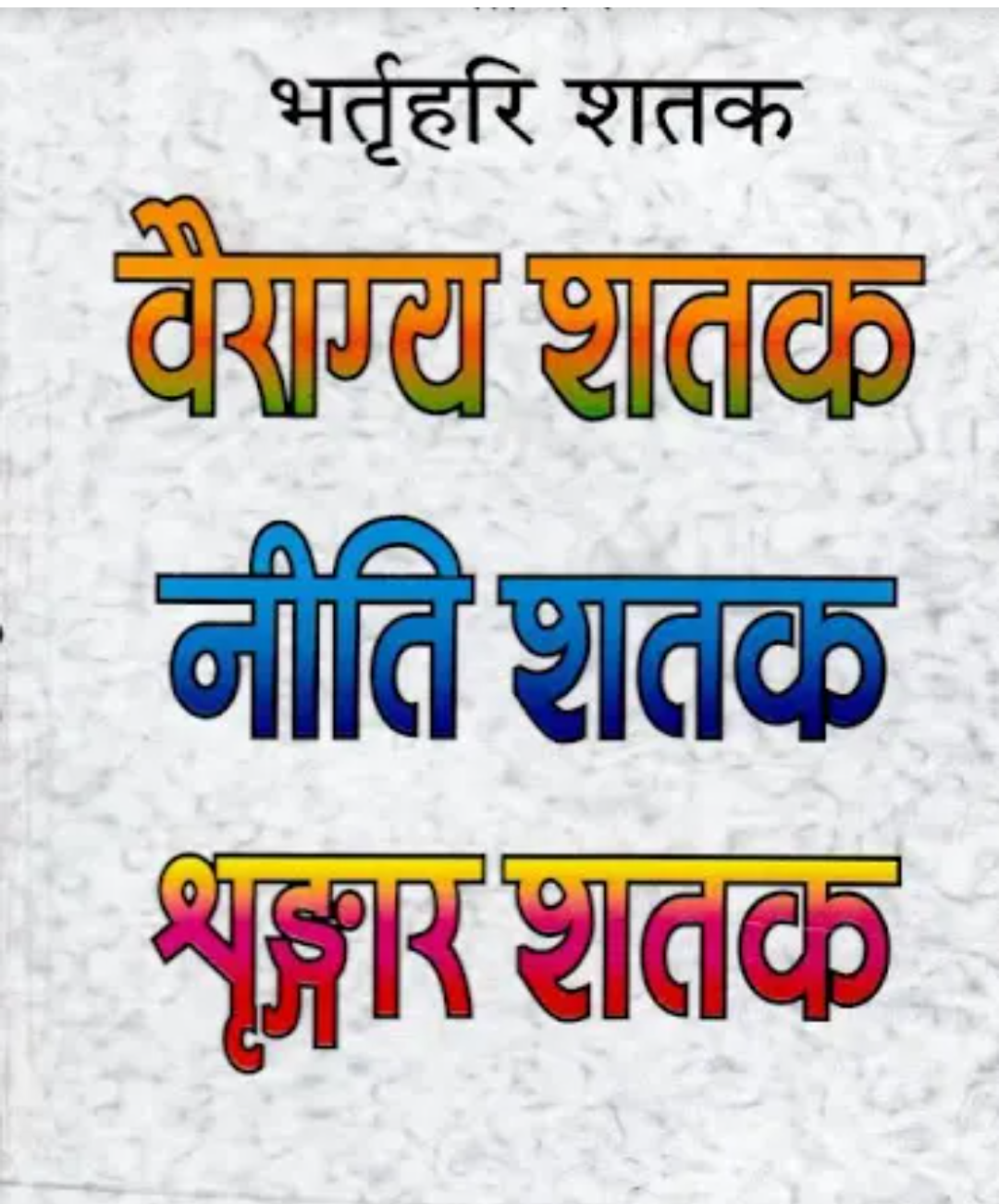
King Bhartrāhari was destined to greater heights. Vakyapadiya, a great treatise on sanskrit grammar is also ascribed to him.
ରମାକାନ୍ତ ମହାପାତ୍ର
 Dr Ramakanta's Ideas
Shrimadbhagwat Geeta has a word स्थितिप्रज्ञ with similar meaning.
Very nice story. Please keep shaing similar stories.
LikeLike