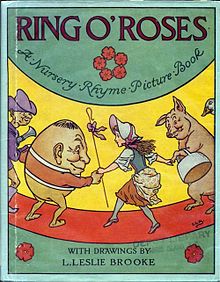
Ring-a-ring-o’-roses’
Ring-a-ring o’ roses,
A pocket full of posies,
A-tishoo! A-tishoo!
We all fall down…
This all time favourite nursery rhyme ‘Ring-a-ring-o’-roses’ reminisces about a begone days when a Pandemic Pneumonic Plague rampaged Britain and Europe.
Please read again with the meaning as given below.
( a link is given below)
- The ‘roses‘ are the red blotches on the skin of plague cases.
- The ‘posies‘ are the sweet-smelling flowers people carried to ward off the bad odour coming from plague cases.
- ‘Atishoo, Atishoo‘ refers to the sneezing fits of people with pneumonic plague.
- ‘We all fall down‘ refers to the large scale people died during the pandemic.
The Epidemic Diseases Act, 1897
It was enacted on the 4th February, 1897:
The Plague Pandemic entered Bombay from its trade link with Hong Kong via the dockyards of Mandvi port in the year 1896.( Hong Kong was already suffering its worst Plague epidemic in the year 1894.)
This pandemic would go on to kill 12 million Indians and led to promulgation of the harsh Epidemic Diseases Act on 4th February, 1897. This was reintroduced in 2020 by Government of India to combat Covid-19.
Effects of Epidemic act, 1897 on Indian Independence movement
Like today, In the 1890s, people in the Bombay presidency ( from Poona to Ahmedabad) started dying in hundreds. But unlike today, we did not know anything about the mode of transmission of Plague. Although rats were dying but doctors were not sure whether it was the Rats, Rat fleas or the Humans that spread the epidemic. Hence the government didn’t have hard science to back its plague initiative. When Indians were dying in millions, all the initiative of the Colonial Government was looked upon as anti Indian by the Swadeshi leaders.
Bombay was the textile capital of British empire. Country workers in the Textile mills of Bombay left for their village en mass. Mills were closed down. International community threatened to boycott trade with Britain unless they control plague in Bombay.
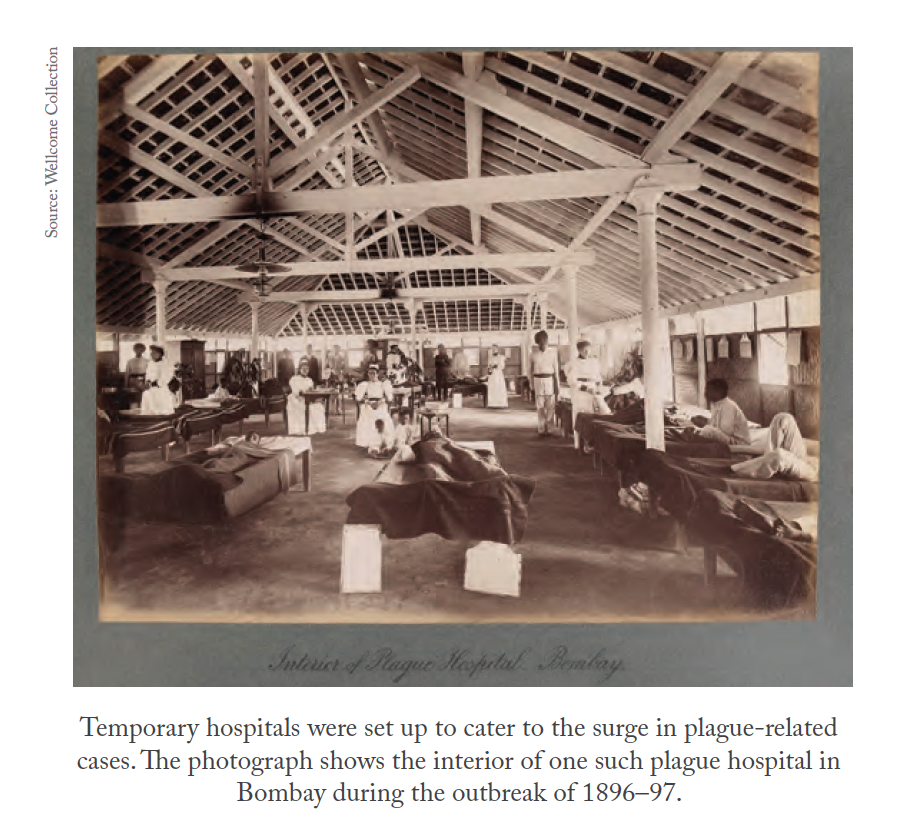
In desperation, the Colonial Government appointed W C Rand as the Municipality Commissioner of Bombay with sweeping power to control plague. People were body searched for Bubos ( Plague glands) in each entry point. Dead bodies were screened for signs of plague. If suspected positive, all contacts of such person were forcibly taken to make shift hospitals for isolation. Their houses were completely burnt down along with furnitures and the locality were sanitised by fire engines.
Resistance arose in the line of Community and caste. Muslims were dead against searching of ladies by British male officers. All communities were outraged by the insult to their dead. People would run to forest rather than be isolated in make shift hospitals.
Shops were shut down and the famous Ganesh puja of western coast was banned. It was rumoured that Ganesh puja was banned solely to insult Rat of the lord Ganesh.
When sanitary people came to disinfect wells, it was rumoured that the government is trying to poison the water.
In the course of protest, Commissioner Rand was shot dead. British government picked up one Gangadhar Tilak with charge of conspiracy and put him behind bars for a year. On release, Bal Gangadhar Tilak went on to revive the Ganapati Puja in grand scale in Poona and became a leader of Congress in the freedom movement.
In Ahmedabad
Plague spread to Ahmedabad a decade later. Sri Vallabh Bhai Patel, a member of Ahmedabad municipality was made the sanitary commissioner in charge of plague control. Sh Patel earned enormous popularity for his dedication and determination in squashing out the scourge in Ahmedabad. Later on when the plague epidemic inundated Valsad (Gujrat), it was Sh Patel’s initiative that saved the community and earned him a national stature. 30 years after, he went on to become the first home minister of the independent India.
In Punjab
The third major effect plague had was in Punjab. In 1898, Calcutta remained as the Capital of British India and the undivided Punjab including Delhi were under Lahore. Apart from usual resistance to the draconian Plague act, it was rumoured that the Colonial government wants to make Indians infertile by forcible vaccination. To make matters worse, 11 people died of Tetanus following a Plague vaccine in a camp. This accumulated anger against the British rulers culminated in the Jalianawala-Bag gathering in 1919.
To be Continued…
 Dr Ramakanta's Ideas
Wow that’s great
Wonderful we came to know about this rhyme
LikeLike
Waiting for the 2nd instalment.
LikeLike