THE STORY OF THE FIRST ANTI VIRAL DRUG; ACYCLOVIR
Penicillin, the first antibiotic has added 10 years to our longevity. Can Acyclovir lead us in our fight against viruses like penicillin did it in the 1940s ?

It was December of 1940.
Reserve constable Albert Alexander was a plant lover. One day he got a minor scratch on his face by a thorn of a rose bush. By the end of month, the scratch was badly infected and he was admitted. There was pus oozing from his whole face and one of his eyes had to be removed.
It was pre-penicillin days. If you get pus somewhere, the treatment was to cut that part and throw that part away before the pus can spread to other parts.
On 12 February 1941, Constable Alexander was given 200 units of Penicillin, a new thing that was being tried on mice but not on any humans till then. Within 24 hours, Alexander improved. But the lab ran out of its meagre stock of penicillin and Constable Alexander died on 15 march 1941.
That single molecule of penicillin was a game changer. Today No one dies of a simple bacterial infection. Penicillin alone has added 10 years to our life expectancy.
A deadly pandemic had infected 30% of the population of whole world and had killed 5% of all human beings living. In today’s scale that death toll is equivalent to a staggering 400 million deaths. Did we have had any drug for the scourge ? Not till then. But Why ?
Because Gertrude B. Elion was yet to be born when the virus struck.
Now fast forward by another 100 years.
Another century, Another pandemic.
In 2020, Covid-19 affects more than 200 million people. But the number of death is only few lakhs, 2%. If we limit our counting only to the developed nations, the proportion of death will be further less.
How could we achieve this ? One of the many reasons of this low death figure goes to a single anti viral drug; Remdesivir.
This is the story of discovery of a family of drugs ending with a ~VIR: Acyclovir, Gancyclovir, Remdesivir and also mercaptopurine, Azathioprin (AZT) drugs. They are active against Human Immunodeficiency Virus (HIV), Hepatitis B Virus (HBV), Hepatitis C Virus (HCV), Cytomegalovirus Virus (CMV), Herpes Simplex Virus (HSV) and Varicella Zoster (VZV) and many more.
After the control of most of the infectious diseases, Viruses have been our new nemesis. Unless we can figure out a Powerful, effective Anti viral Drugs just like the ones we have for Bactria soon, the whole humanity will be doomed.
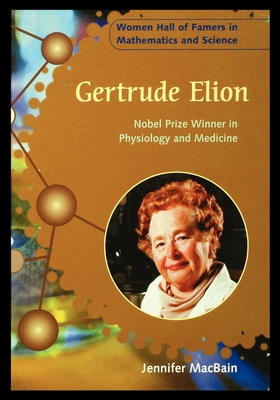
[ Gertrude B Elion is credited with creation of Acyclovir, the first anti viral drug we had.
She changed the ground rule of drug development from the age old “trial and error” method to a rational designing of drugs.
With clinical precision, she went on to discover 45 more drugs in her life time that are now used for conditions like malaria, leukaemia, arthritis, Organ transplant to Herpes and AIDS virus.]
Today, discovery of new drugs is not left to trial and error anymore, thanks to Gertrude Elion. Gertrude Elion was awarded the 1988 Nobel prize not for any single drug but for the “ process she discovered that has enabled us to discover more drugs with mathematical precision” .
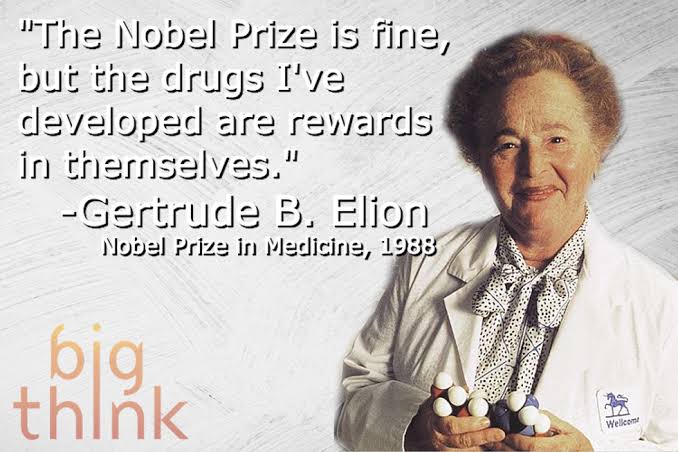
Gertrude B Elion was born in January, 1918. Two catastrophe shaped her future.
- First one was the 1929 Wall Street collapse which wiped out the total savings of her father. This forced the family to leave their apartment at uptown Manhattan to Bronx, a poor suburb of New York. She could only continue her studies in the free government schools. Though she wanted to study medicine but she could only afford to complete her Chemistry from the Hunter college which was the only free college for girl students. She would top her subject. But that was not enough for a PG seat. In those days of depression, colleges had reduced the number of financial assistances for higher studies. And absolutely none for girls. She could manage to get a job of dishwashing in the chemistry lab where she had topped the graduation. But she needed a job.
- Then the Second World War happened. All the young men were drafted for military duty. The then Burroughs Wellcome ( Today’s GlaxoSmithKline) Company was in acute need of a chemist due to the shortage of all its male chemists courtesy the World War. She gratefully accepted a research assistant job to George Hitching. This enabled her to save money for her and she wanted to continue her post graduate work at New York University in her spare time.
- Then the second catastrophe happened to her. One fine day her college refused to allow her to continue her doctorate study. ‘No part time doctorate, missus’ said the university. She was forced to chose either her job or a full time studentship for her Doctorate degree.
It was difficult time for Elion. She had not married in order to be able to continue her studies. She had fought poverty, gender discrimination to nurture the ambition of becoming a professor. But now she had to chose between a job and a PhD. Gertrude B Elion had only one viable option that day. She dropped her ambition of a PhD, sold her books and came back to George Hitching and Burroughs Wellcome for a chemist job. She continued there till she headed the section of Experimental Drug section of the drug in 1967 and finally retired in 1988.
( We shall come to “What happened to her ambition of a PhD ?” After discussing what Elion had discovered.)
( Part 2 of this article contains a technical details of how a virus multiplies in a human body ( prototype: Coronavirus) and at what point an anti viral can act. May please skip this section.)
What do Viruses do inside a human body ?
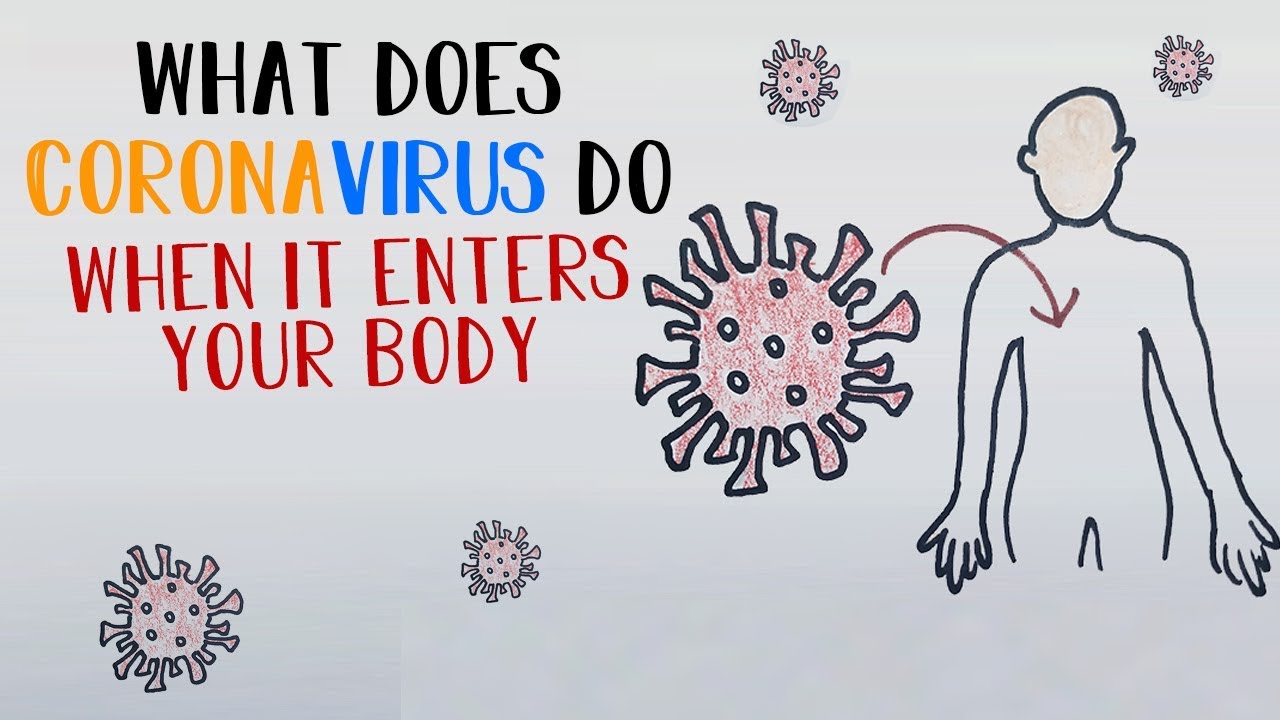
Viruses are light travellers.
They carry only three items in their travel kit.
Corona virus carries the following three items
- A fake I-card the Spike protein to enter our cell.
- A hand held stitching equipment ( the Polymerase) to manufacture its RNA.
- A scissor ( the Protease) to snip the polymers and leave the cell.

The SARS Corona virus carries only one spike(S) on the surface and two Proteases ( 3CL,PL) and one Polymerase ( RdRp) enzymes inside.
It seems Coronavirus sticks strictly to the Indian Railways advice to its passengers, “Travel light and reach safe“. They only carry those items that they cannot outsource on the way.
A virus is pretty sure about where it will stay in our body. For example, the hepatitis virus knows it can rent a cell inside a liver only. It is pretty sure that it will get everything inside a living liver cell to manufacture its arsenal. The virus packs only three items in its hand bag and starts on its journey. First one is a sort of I card. This is attached to the spike on its surface. After getting inside a human body, the SARS virus homes in to a lung cell. It makes a smooth entry by simply swiping the spike at the biometric of the ACE receptor at the entrance. No issues. Once inside the cell, there were abundant ammunitions for it to pick and choose. The ammunition the virus needs are only 4 nucleotides. they are famously known as the quadruplet A,U,G,C in molecular biology .

These are the four alphabets with which all the codes of the viruses are written. The virus opens its travel kit. There is only two more instruments. A stitching machine called the Polymerase. ( In pic a polymerase in action). the third item in its travel bag is a scissor called the Protease.
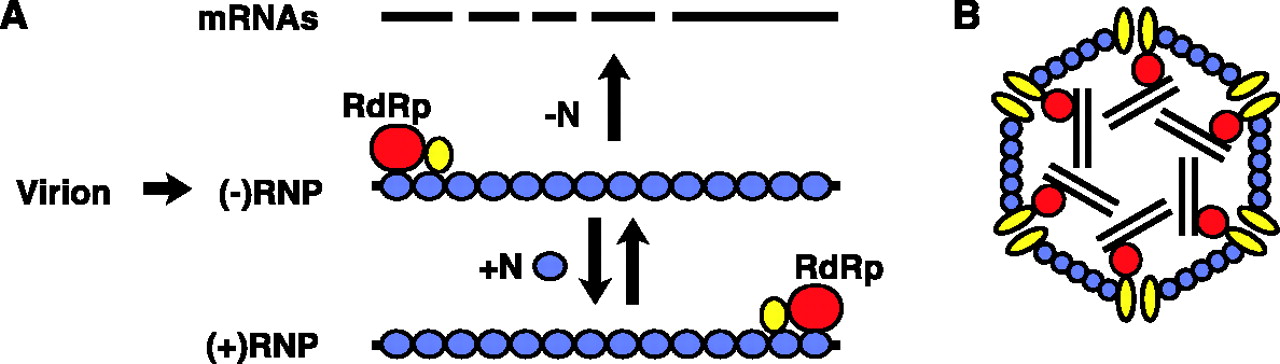
For the SARS virus the brand of polymerase is RdRp. ( RNA Dependent RNA Polymerase.)
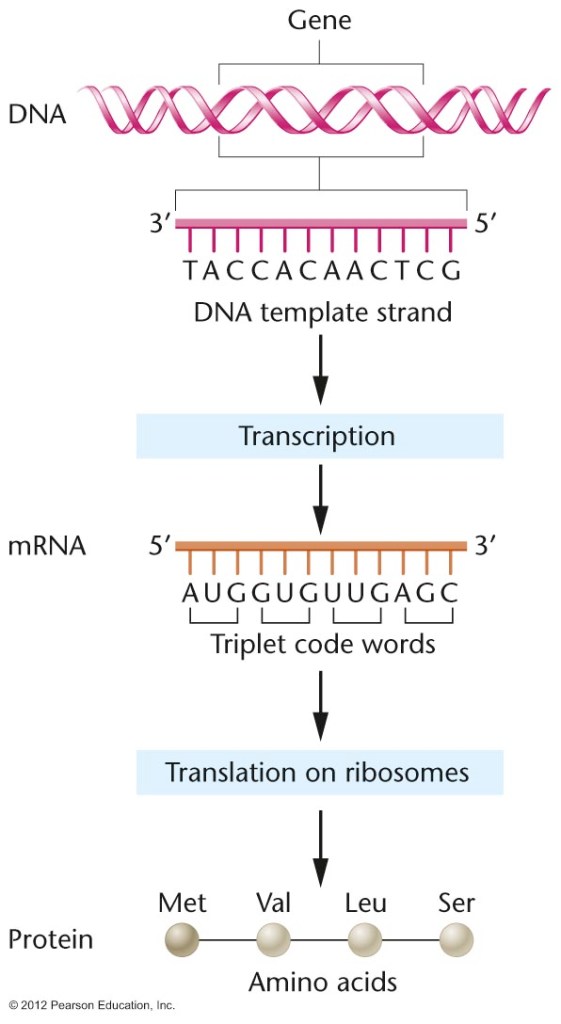
The RdRp immediately sets into action ie. “collecting the essential nucleotides from the cell store and synthesising long viral codes to be used for the daughter SARS viruses“. Once the genes are completed, they will auto assemble to form thousand more viruses. Soon they will blow the cell out and get out of it only to invade more new cells. This is the life of a virus inside our body. Simplified.
Broadly speaking viruses need a lot of nucleotides ( A,T,G,C) from our cell to build their genome. Gertrude B Elion had been able to identify the exact material needed by Herpes virus in her lab. Then she tweaked that nucleoside ( building block of Herpes virus DNA) into a fake nucleoside. The viral enzyme was unable to differentiate this from natural nucleoside and will take up it. This fake nucleoside becomes a decoy.
The Decoy.
Gertrude had formulated a synthetic nucleotide called the Acyclovir which is easily taken up by the viral enzyme. Once incorporated by the virus, It blocks the Polymerase enzyme from further functioning. The DNA chain is also terminated. The viral replication stops then and there. That spells the end of the herpes virus life inside a human cell. The drug acyclovir acts like a decoy. This is a simplified mechanism of the first anti viral drug.
Acyclovir is the first anti viral drug that we have. It is used against the Herpes virus.
These Drugs inhibit the polymerase enzyme of the virus hence are classed as the Polymerase Inhibitors. This revolutionary concept caught the pharmaceutical world in a wild fire. Scientists worldwide are now busy formulating newer polymerase inhibitors against other viruses. Then came Zidovudin, the first drug for AIDS. During the Ebola epidemic, another polymerase inhibitor was used to create a new drug. Gilead, the American Pharma major tested successfully this drug and found it to be safe for human use. It was used for Covid-19 instead. Remdesivir.
Today Gilead has earned a staggering $ 1.5 billion by using this drug in Covid-19 patients.
Gertrude B Elion, the woman who had led us in designing all these wonderful drugs was once not allowed to continue a doctorate degree. She became the first woman to win a Nobel in science without completing a doctorate degree. That seemed rather odd.
So at the ripe age of 70, Gertrude B Elion was awarded honorary doctorate degrees from several universities including the NYU and Harvard.
Sometimes universities feel honoured when they award a degree to a student.
Gertrude B Elion did not stop at Acyclovir only. She went on to discover 45 more drugs in her life time that are now used for conditions like malaria, leukaemia, arthritis, Organ transplant to Herpes and AIDS virus.
In a way, she had the independence to carry out her intelligent ideas without any interference as she was the head of the experimental drug section of a highly successful company like GSK. Had her luck not forced her to skip a PhD curriculum and forced her to continue in this company, we might not have got those wonderful drug formulae from her.
Moral of the story:
Loss of opportunity to pursue a PhD degree in her college career triggered Gertrude into a lifelong studentship.


Nice article
Scientific data are presented as fairy tale.
LikeLike