We need to be aware of zoonoses—which are usually the diseases that spread from animals to humans. Rabies is a well-known example of a zoonotic disease (an illness caught from the bite or scratch of a dog.). We have caught bird flu from the birds, Swine flu from the pigs and of course the COVID-19 from the bats.
Do you know that we have got measles from cattle ?
The first human who took a glass of milk from the udders of a cow also took a dose of Rinderpest virus. That name is a grim German warning: Rinder means cattle, and pest means plague. For centuries, this “cattle plague” was the scourge of the farm. It even crossed over into our pets, where we came to know it as Canine Distemper. Today, Rinderpest is eradicated in cattle, but it remains inside us under a new name: Measles. At their core, these viruses are genetically one and the same—a single predator wearing different masks.
The Timeline of Intimacy
Measles was the first great zoonosis of the pastoral era, but our “biological baggage” started much earlier. As primitive hunter-gatherers, we acquired lice and internal parasites millions of years ago.
Even our clothing tells a medical story. The day we began wearing furs and fabrics, the human louse split into two distinct lineages: Body lice and Clothing lice. But perhaps the biggest surprise is Malaria. We didn’t “invent” it in the tropics; we acquired the malaria parasite from prehistoric birds millions of years ago. We are simply the latest stop on its ancient journey.
From Campfires to Bedrooms: The Wolf’s Tale
We often romanticize the domestication of dogs, imagining a lone ancestor taming a wolf cub. The reality is more of a slow, mutual evolution. 30,000 years ago, wolves followed Sapiens tribes to scavenge leftovers and enjoy the warmth of our bonfires.
Our ancestors realized these wolves were dependable night watchers, warning them of predators. This “win-win” situation created an inseparable bond. Today, our canine friends have invaded our bedrooms with impunity, but this proximity is what exposed us to the Morbilliform RNA virus (Measles) and parasites like Tapeworm.
The Settlers: Cats and Cattle
While dogs were our nomadic partners, Cats and Cattle joined us only after we stood still.
- Cats: They entered our lives when we built granaries. They protected our grain from rodents, and in return, we gave them a home—along with the risk of Rabies and Cat Scratch Fever.
- Cattle, Sheep, and Goats: These were domesticated roughly 12,000 years ago along the great river basins of Mesopotamia, the Indus Valley, and China.
How can we be so sure the grain found in fossils was domesticated? The answer is in the stalk. Wild grain has a weak stem so the wind can scatter the seeds. Domesticated grain has a sturdy stalk that waits for human hands to harvest it.
The Cultural Friction: Cain and Abel
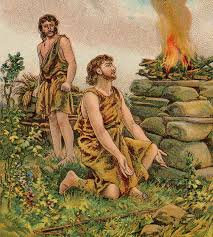
This transition created a “cultural lag”—a friction between our new technology (farming) and our ancient spirits. We see this in the story of Cain and Abel.
- Abel (The Shepherd): Represents the “pure” nomadic life. He offers blood and fat—the traditional sacrifice of the wanderer.
- Cain (The Farmer): Represents the settled tiller. He offers the fruits of the soil.
In the narrative, God favors the shepherd. This reflects an ancient anxiety: the “new” way of life felt like a corruption. Even our rituals preserved this; Unleavened bread (traveling food) was deemed sacred, while Leavened bread (the technology of the city) was seen as a fermentation or “spoiling” of the original grain.
The Three Transitions: Where We Stand Today
Our health history is divided into three major shifts, or Epidemiological Transitions:
1. The First Transition (10,000 Years Ago)
As we abandoned the nomadic life for the village, the major cause of death shifted from physical injury (animal bites, accidents) to communicable disease. Crowding and contaminated water led to the rise of Smallpox, Tuberculosis, and Malaria.
2. The Second Transition (20th Century)
With the discovery of Penicillin and vaccines, we gained the upper hand over infections. Death shifted again—this time from communicable diseases to Non-Communicable Diseases (NCDs) like Cancer, Diabetes, and Heart Disease, fueled by our sedentary lifestyles.
3. The Third Transition (The Present)
We are now in a “double-threat” era. We are seeing the re-emergence of infectious diseases like MDR-TB (Multi-Drug Resistant Tuberculosis) alongside the continued rise of NCDs.
The Epilogue: From the first sip of milk to the modern clinic, we are still navigating the crossroads Cain built. We have traded the wolf at the door for the virus in the veins. Understanding these ancient “jumps” isn’t just a history lesson—it’s the only way to prepare for the next bridge nature decides to cross.
 Dr Ramakanta's Ideas