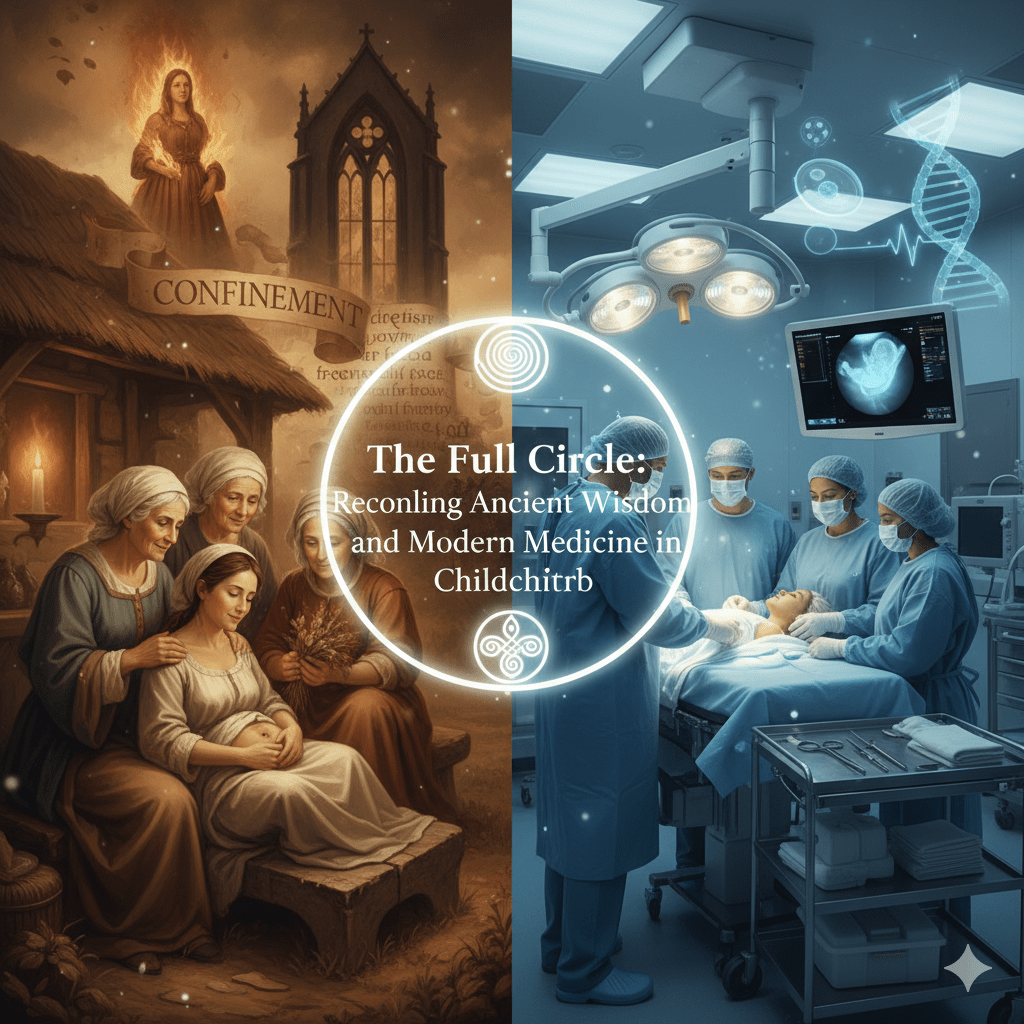
From Curse to Choice: Why the Future of Childbirth Lies in the Past.
- ANMs have become an extinct species
When I joined Indian Railways Health Services, 35 years ago, we had two categories of nursing staff in our hospital – ANMs and GNMs. (Auxiliary Nurse midwifery and General Nursing and midwifery). While the ANMs were elderly, blessed with the experience of years of service in railways, almost all the young and energetic nursing staffs were GNMs. Some of them even distanced themselves from the rest of the brood because they had a BSc Nursing degrees. It took me years to understand the differences between Midwifery and Nursing.
- What’s the difference between a Midwife and an Obstetrician ?
It took me few more decades to realise the differences between Obstetrics and Midwifery. Midwives are trained to conduct normal deliveries in a physiological childbirth. Obstetricians can also deliver a baby physiologically. Should there be a complication during the childbirth, they can operate and take out the baby in addition.
Whey ! Did you know that ? I didn’t though I have been assisting my Obstetrician friends to conduct safe childbirth for the last 35 years.
- The journey of human childbirth is a fascinating tale of changing societal roles, and groundbreaking medical advancements.
Interestingly, human childbirth, unlike that of our ape relatives, often necessitates assistance. While a monkey’s occiput posterior position allows the newborn to instinctively climb to its mother’s breast immediately after birth, human infants require a more guided entry into the world. This fundamental biological difference has shaped the need for skilled attendants throughout history, whether through traditional practices or modern medical interventions. The need for assistance in Homo sapiens delivery is primarily a result of our bipedal stance, which necessitated a narrower pelvic outlet than that of quadrupeds. Furthermore, the evolution of a large cranium to house our complex brain created a size mismatch with the birth canal, significantly complicating the delivery process compared to other animals.
- In the 16th Century Europe, Midwife were considered to be witched and were burnt on the stake.
Catholic Church considered that the pain during the childbirth was a divine punishment for Eve’s Original Sin. Any attempt to alleviate it as sacrilege. In the 16th century, women who served as midwives were often viewed with suspicion, sometimes even accused of witchcraft and tragically burnt at the stake. Between the 15th and 18th centuries, while total executions across Europe may have been 40,000–60,000, countless midwives were among the roughly 80% of victims who were women, with their traditional knowledge and even physical traits, like a hooked nose and long nails which they used to break the fore water for smooth delivery. it took none other than the Queen of England to change this inhuman practice.
- In 1853, Queen Victoria famously used Chloroform during the birth of Prince Leopold.
The moral and societal view on pain relief during the child birth finally began to soften when Queen Victoria, in 1853, famously used chloroform (dubbed ‘anesthesia à la Reine’) during the birth of Prince Leopold. This royal endorsement effectively silenced the religious and moral opposition that had long condemned pain relief in childbirth.
- Then barbers became Surgeons and the first Obstetricians
As the understanding of human anatomy and physiology grew, so did the medical community’s involvement in healthcare. Barbers by the very nature of their profession are authorised to use sharp instruments ( blades and razors ) on another human beings without any penalty. Some of the earliest surgeons emerged from the ranks of barbers, who, with their sharp razors and basic surgical skills, ventured beyond hair cutting to perform minor procedures
A significant turning point in obstetrics occurred with the development and use of the obstetrical forceps. Developed secretly by the Chamberlen family in the 17th century and kept as a guarded family secret for generations, the forceps were only universally adopted and widely known by the early 18th century.
The midwives were not permitted to use forceps.Thus forceps the first medical innovation, which allowed for the safe extraction of a trapped fetus, truly differentiated the medical field of obstetrics from the non-interventional practice of midwifery. The distinction between midwifery and obstetrics became clearer: midwifery largely remained focused on physiological birth processes, while obstetrics embraced medical tools and procedures to manage complications.
- Caesarean section did not get its name from Julius Caesar.
Another life-saving procedure that defined modern obstetrics is the Caesarean section. The widely accepted thought is that the procedure may have been named after a Latin term meaning “to cut”. Though one popular belief holds that the procedure is named after Julius Caesar (born 100 BC), who was supposedly delivered this way. This is highly unlikely to be true, as the procedure was invariably fatal to the mother at that time, yet Caesar’s mother, Aurelia, lived to see him lead his military campaigns.
In the ancient Buddhist lores, it’s said that the Maurya emperor Bindusar was born by this method. If so it was conducted a century before the birth of Julius Caesar.
A very plausible source is the Roman LexCaesarea (Imperial Law) mandated that a child be surgically removed from the womb of a woman who had died during labor, primarily to prevent the burial of a pregnant woman. The term became associated with the procedure over time, regardless of whether a Caesar was involved.
Though historically caesarean section is used mainly to save the baby when the mother died during labor. In modern obstetrics, the Caesarean section is a crucial, safe surgical intervention used to prevent serious complications for the mother or baby, saving countless lives globally.
- The Birthing Stones of Kūkaniloko in ancient Hawaiʻi.
The Birthing Stones of Kūkaniloko in ancient Hawaiʻi was considered to be a sacred site where high-ranking chiefs were born, ensuring their noble status. Here, a chiefess would lean against a large, smooth stone, supported by her attendants, while the community sounded sacred drums to herald the birth. This ‘birthing stone’ represented the earth’s steady, immutable strength, a palpable spiritual comfort believed to assist the mother and ease her pain without interference. This practice highlights the initial, universally sacred nature of birth and the ancient, spiritual trust placed in supportive figures—the precursors to today’s respected midwives. This gradual acceptance of the midwife’s supportive role, reinforced by modern science and royal precedent, has restored the dignity of compassionate care.
- Obstetrics has changed by leaps and bounds in recent years.
The 20th and 21st centuries ushered in an era of unprecedented technological advancements that have profoundly reshaped childbirth. The advent of ultrasonography (USG) allowed for detailed visualization of the fetus, transforming prenatal care and enabling early detection of potential issues. Following this, In Vitro Fertilization (IVF) offered hope to countless couples struggling with infertility, creating new avenues for conception. Today, fetal medicine continues to advance, with intricate procedures like laser surgery for twin-to-twin transfusion syndrome, pushing the boundaries of what is possible to ensure the health and survival of both mother and child.
- Midwifery- the lost art.
Today, Midwifery has become a lost art. In some institutions, delivery has seen 90% Cesarean section. While medical advancements have dramatically reduced maternal and infant mortality, the sentiment that the fundamental goal should remain to strive for physiological childbirth whenever possible is supported by several key reasons:
- Optimal Biology and “Seeding”: Vaginal birth facilitates the baby’s transition to life outside the womb. The physical squeezing through the birth canal helps clear fluid from the baby’s lungs, and, crucially, it exposes the baby to the mother’s beneficial bacteria. This process, known as microbial “seeding,” is vital for establishing a healthy gut microbiome, which influences immune system development and may have long-term effects on conditions like allergies, asthma, and possibly long-term mental health.
- Maternal Recovery and Bonding: Physiological labor and vaginal delivery typically involve a shorter recovery time for the mother compared to major abdominal surgery (C-section). This faster recovery facilitates earlier mobility, less pain, and a quicker establishment of skin-to-skin contact and breastfeeding, all of which are critical for the initial mother-infant bonding process.
While modern medicine offers undeniable safety and solutions, it is worth noting that midwifery, a lost art in many nations, represents a deep tradition of non-invasive, supportive birth. Midwifery like the birthing stone of hawai’i highlights the universally sacred nature of birth and the ancient, spiritual trust placed in supportive figures.
Our goal, therefore, should not be to reject medical intervention but to ensure that high-tech procedures are used judiciously as life-saving tools rather than as routine convenience, preserving the natural process when it is safe and healthy to do so.
- Our journey of childbirth from medieval days to modern ages has come a full circle
Today, many educated, expectant mothers feel that the standard hospital environment, despite its safety, treats birth process as an illness. This leads to high rates of interventions (continuous electronic monitoring, labor induction, episiotomies, instrumental delivery, and C-sections). Educated mothers are aware that such major surgeries may not be required for 90% of low risk pregnancies. No wonder, hospital staff use the word confinement for normal child birth process which implies that the mother once admitted is imprisoned to the delivery couch.
- Can we develop a system for planned home births in advance ?
A growing number of expectant mothers are deliberately forgoing high-intervention, institutional settings to pursue a planned home births with a certified midwife . Home allows for greater control over the environment (lighting, people present, movement, eating/drinking) and the entire process. This signifies a cultural pendulum swing: a determined effort to exchange maximum medical control for maximum personal autonomy
Midwifery at last–
Thus the journey, from the medieval sacrilege ( of burning the midwives on stake by royal order) to the current era of total reproductive control, reveals humanity’s endless struggle with nature. Yet, as we master the technology to create life in a lab and deliver it by the blade, we must confront a haunting truth: our quest for perfect control should not risk severing the very biological and emotional bonds forged in natural childbirth.
Conclusion
The ultimate triumph of medical science may not be in conquering the process, but in knowing when to humbly step back and let nature take its course.
 Dr Ramakanta's Ideas