
-1-
The Zone of Discomfort : The Kodak moment.
Do you remember the Kodak Moment advertisements ? It was a series of advertisements showing beautiful family pictures taken on Kodak camera rolls. Those were the days of Camera rolls. Before embarking on your photo shoot, you had to load your camera with a kodak film roll. But of course, you had to wait until the entire roll is finished- 30-35 shots before getting a glimpse of your pictures. Often it will take months before the full roll was exposed. Each shot mattered and you might have forgotten all the snaps you had taken. The trip to the photo lab was full of suspense and anticipation. The studio would hand a bulky album over to you which contained 35 printed pictures along with a set of negatives. Then you would come to realize with angst that the picture you had wanted most anxiously had been double exposed, hence lost. But nothing could be done. Camera rolls were big business in those days.
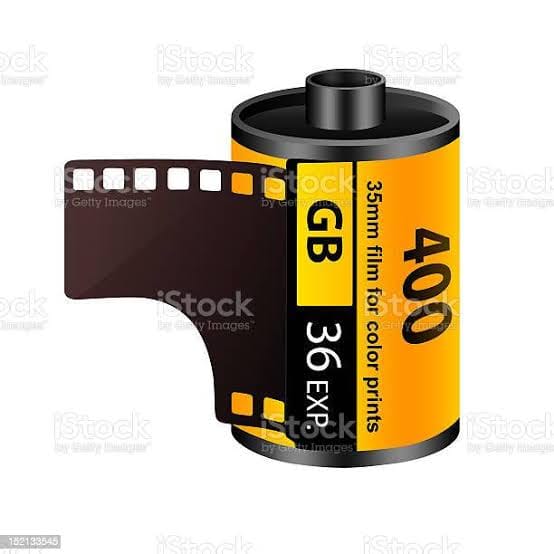
In 1975, Kodak was ruling over 70% of the world market share of camera rolls.
In the same year 1975, 24 years old Steven Sasson, an employee in the R&D department of Kodak invented the digital camera. But his digital image required a TV to be seen. TVs were black and white in 1975 and Sasson didn’t know how to Print them.
The technology was simply 20 years ahead of its time.
His bosses were not impressed either.
They said who would spend 1100 dollars to see a black & white image which they could not print. The image would eventually disappear just like that. In contrast you could print a super slick color print taken by a 100 dollar Kodak camera on a Kodak roll. You could hang it in your drawing room or place it inside a frame on your fireplace for your guests to see.
They closed the chapter with a famous comment, “People take snaps to keep them as golden memories. A digital camera will not be able to meet this goal.”
Kodak executives could not fathom a world without traditional film, their Zone of Comfort. They did not build a digital camera. Sony did.
Rest is history.
Kodak was of course entitled to keep the patent rights of the digital camera and sold it to Sony to develop a digital camera. The old boys at Kodak never wanted to leave their film roll business and move into a DISRUPTION.
Nobody wants to move into a ZONE of DISCOMFORT.
Once the 30 years period of patent was over, on January 19, 2012, Kodak, the inventor of Digital camera had to file for bankruptcy. At the same time Sony forged ahead to become the most valuable company in the photography business with the help of the technology developed by Kodak.
Once the 30 years period of patent was over, on January 19, 2012, Kodak, the inventor of Digital camera had to file for bankruptcy. At the same time Sony forged ahead to become the most valuable company in the photography business with the help of the technology developed by Kodak.
The Camera film rolls along with the mega company Kodak became history.
-2-
Of KODAK and NOKIA -Lessons to be learnt.
In the picturesque country side of Finland, by the river of NOKIANVIRTA, there was a small papermill.
Enormous loss in course of business forced its chairman Kari Kairamo to commit suicide in 1987.
In 1990, The young leadership dropped everything else to focus on mobile phones. It was a new venture and as such a gamble on the part of a losing business.
They named it NOKIA by the name of the town and the paper mill they had owned.
In 2001, it came out with the Nokia 7650, the first phone to feature a built-in camera.
🔹 In 2005 the company sold its BILLIONTH phone.
🔹In 2008 it sold more phone with camera than Kodak itself.
…
But whoever would’ve thought that consumers will swoon over a phone that may give you some poor quality DIGITAL images ?
Certainly not Kodak the giant of film rolls.
Of course Nokia phones are no match to Kodak in picture quality. But they’ve a single advantage. Their images could be easily shared to any where on the planet instantly.
Kodak who focussed on the quality of the printed pic, failed to grasp the advantage of sharing the ‘Aha moment’ of a digital image. Its management believed that a picture should be a memory that can be hung from the wall for guests to see. They couldn’t fathom the depth of digital media. Of course, it was the 90s.
The rest is history. Kodak the king of film roll, who also had invented the digital camera were unwilling to embrace this change and are wiped out totally.
…
But what happened to the Giant killer Nokia ?
The young and dynamic Leadership who had killed the Giant Kodak by sneaking in new technology, had just become complacent and had lost their nimbleness.
So when Touch-screen phones appeared in the horizon, they were a bit late. The leadership waited for just 3 years to gauge the viability of the new technology.
That was just enough to choke Nokia out of business.

Today still quite flows the river nokianvirta in the picturesque countryside of Finland. But the company that took off from its bank doesn’t.
“UNWILLINGNESS TO CHANGE WITH THE DEMAND OF TIME , sealed the fate of these two Giants in their domain.”
In the next part we shall discuss one company that went through the same fate of Kodak and Nokia. But it could pull itself out of oblivion. Let us examine its course.
-3-
The Life Cycle of XEROX -And my learning lesson from it.

Like all great businesses, Xerox did have a humble beginning. Then its fortune reached sky high only to fall flat. Here are t6he three stages of the life of Xerox.
1) The Stage of the Unbelievable
YEAR -1959:
In the fifties, people weren’t interested in copying documents because It was very costly.
So when Xerox launched its first plain-paper photocopier in 1959, nobody expected a high demand for the product. The company’s founders even did not want their friends and family to invest in the company.
Yet in just six years, the company’s revenues had skyrocketed to $500 million.
2) The Stage of Over-confidence
YEAR – 1964:
Along with the success came the overconfidence.
Xerox started investing heavily in philanthropy typical for an overnight success.
It also became the second-largest donor to the University of Rochester.
In 1964, they spent $4 million on a television campaign supporting the UN .
3) The Fall.
YEAR – 1965
Shortly after reaching the peak of its glory in 1965, Xerox ran into deep trouble. Cheaper copycat products left the company stranded. The company went into RED.
…
Here we should compare the story of XEROX with the stories of KODAK and NOKIA. All the three were once world leaders in their own field and were commanding more than 80% of the world’s demand in their field.
All three went through the 3rd phase. While KODAK and NOKIA never recovered, XEROX still holds its ground. Xerox did something different from Nokia and Kodak
Why and How ?
In stead of getting into the complacency of “We are the world leader, we cannot do anything wrong”, Xerox put down its head and carried on patiently through these difficult time and did a lot of introspection.
– It invested heavily in R&D. It collaborated with start-ups, universities to gain access to new technologies.
– It recognised the limitations of relying solely on the copier market. It entered into related areas like printing, document management software and digital solutions for the office.
– Unlike Kodak and Nokia, it embraced digital transformation and remained relevant even half a century after the 1965 setback.
It is still successful today.
This is the normal cycle of our life.
It depends while in the third phase, whether we quit or pull on with patience and perseverance. While Kodak and Nokia could not leave their zone of comfort, Xerox adapted to the changing technological and competitive landscape. This decided why Xerox still survives while Kodak and Nokia have perished.
 Dr Ramakanta's Ideas