We need to be aware of zoonoses—which are usually the diseases that spread from animals to humans.
“Rabies is a well-known example of a zoonotic disease (an illness caught from the bite or scratch of a dog.). We have caught bird flu from a bird, Swine flu from a pig and of course the COVID-19 from bats..
But do you know that we have caught the measles from the milk of cattle?
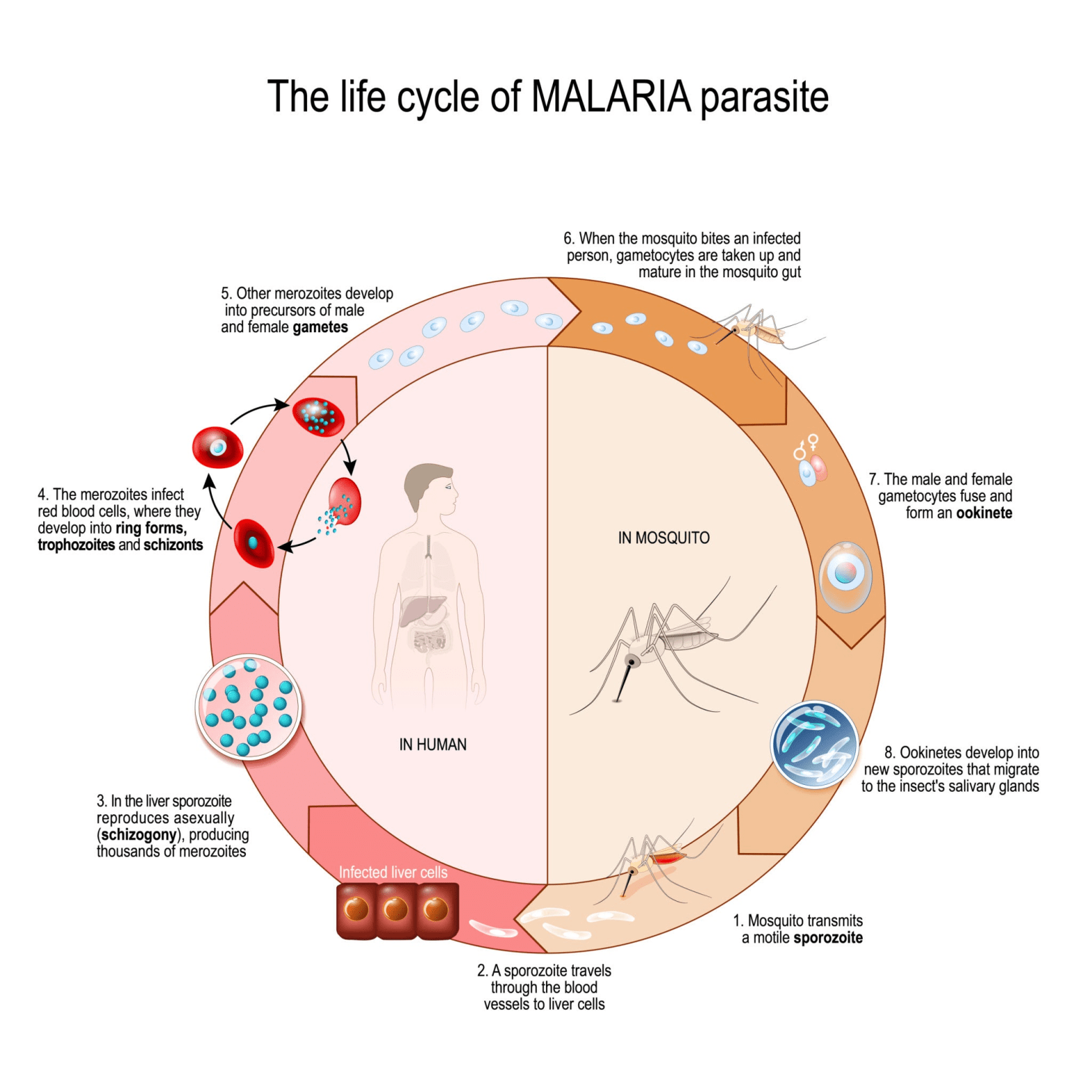
In a massive, ancient zoonotic leap, the malaria parasite jumped from the pre historic birds in the sky to the ancestors of humanity.
Malaria is the first Zoonosis that affected us.
For millennia, our survival has depended on our closeness to the creatures around us, but that intimacy has always come with a hidden cost. We didn’t just domesticate animals for food and labor; we inadvertently invited their diseases as well. The first human who took a glass of milk from the udders of a cow also took a dose of Rinderpest virus.“
The Viral Chameleon: From Cows to Humans
The name itself is a grim German warning: Rinder means cattle, and pest means plague. For centuries, this “cattle plague” was the scourge of the farm, devastating herds and toppling economies. It even crossed over into our pets, where we came to know it by a different name: Canine Distemper.
Today, we consider Rinderpest a ghost of the past. Thanks to a massive global vaccination effort, the virus has been officially eradicated from the world’s cattle. However, while the original version is gone, its legacy lives on inside the human body. Through a clever genetic “rebranding,” the virus adapted to us and became what we now know as Measles. At their core, Measles, Rinderpest, and Canine Distemper are not just relatives; they are genetically the same viral predator, simply wearing different masks to suit their host.
The Evolution of Our Unwanted Guests
While Measles stands as the first major “cattle plague” to leap into pastoral societies, our history with zoonosis actually began much earlier. Long before we were farmers, we were hunters and gatherers, and we never traveled alone. We carried a biological baggage of skin-crawling lice and internal parasites that adapted to us as we adapted to the world.
These parasites didn’t just live on us; they evolved with us. A perfect example is the humble human louse. For ages, it lived strictly on our skin, but the moment we began wearing clothes to survive harsher climates, the parasite seized a new opportunity. It split into two distinct lineages: the body louse, which stayed on our skin, and the clothing louse, which adapted specifically to live in the fibers of our garments.
From the lice in our first furs to the virus in our first glass of milk, the story of human progress is also the story of the hitchhikers who came along for the ride.
The Prehistoric Gift
While we often trace our medical history back to the first farms or the first cities, some of our most enduring enemies have been with us since the dawn of our species. We think of ourselves as the primary targets of nature’s most lethal killers, but sometimes, we are just the latest stop on a very long journey.
Take, for example, the deadliest parasite in human history: Malaria.
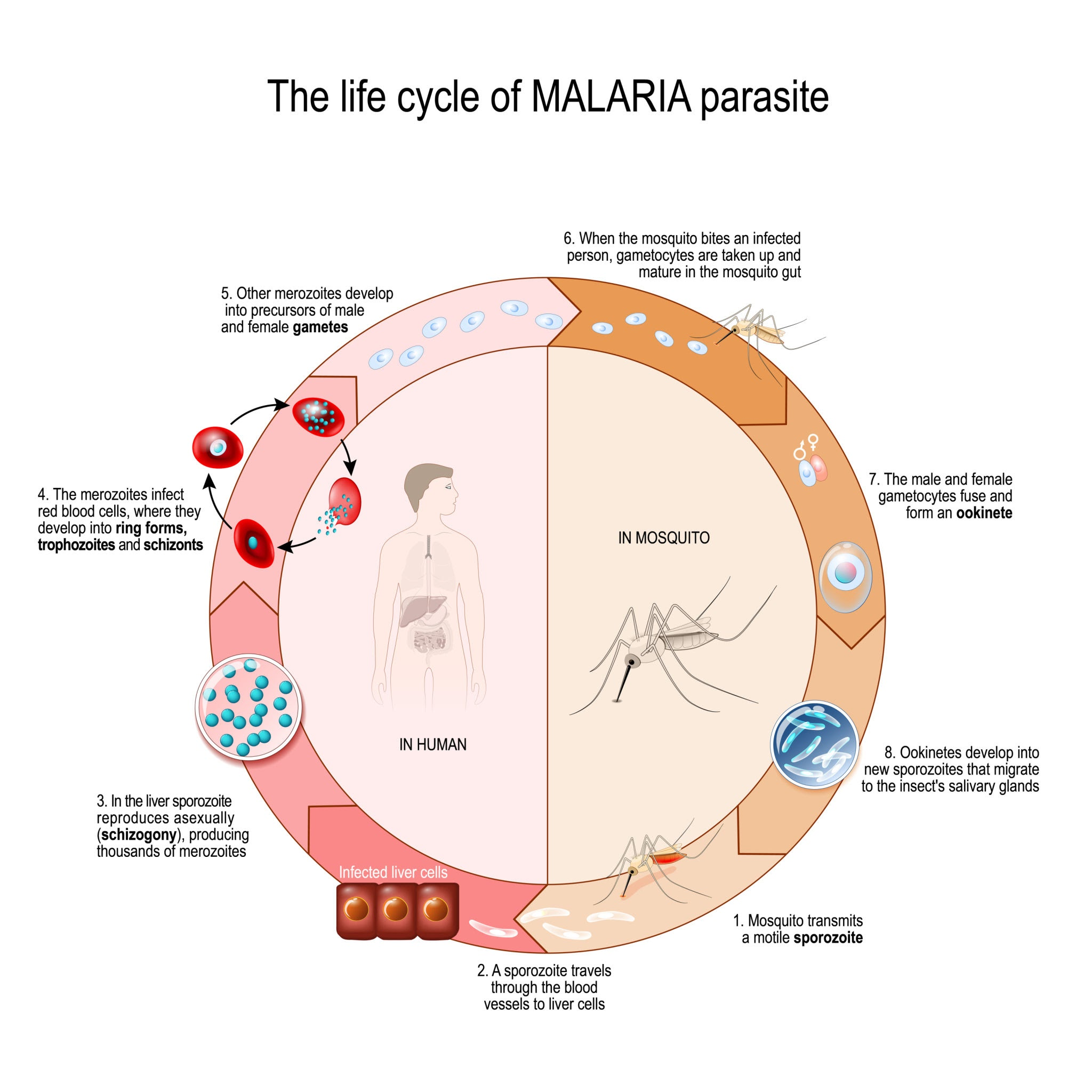
While we treat it as a modern human crisis, we actually inherited this “fever of the blood” from the animal kingdom millions of years ago. Long before the first human ever walked the earth, this parasite was perfecting its craft in the veins of prehistoric birds. In a massive, ancient zoonotic leap, the malaria parasite jumped from the wings of the sky to the ancestors of humanity, hitching a ride through the ages until it became the global scourge we recognize today.
It turns out that the buzz of a mosquito in a modern bedroom is actually an echo from a million-year-old avian past.
The Great Trade-Off: From Predators to Pathogens
Around 12,000 years ago, humanity made a world-altering choice. Our ancestors stepped out of the shadows of the forest and settled into the first permanent villages. By the banks of five great river basins, we transformed from wandering hunters into architects of the earth, tilling the soil for wheat, barley, and rice. We didn’t just invite plants into our lives; we brought in the animals, too—domesticating dogs, cats, cattle, horses, and camels.
But this new stability came with a hidden, lethal price tag. In the hunter-gatherer era, death was usually sudden and external: a fall from a cliff, a predator’s jaw, or a snake’s venom. However, as we packed ourselves and our livestock into crowded settlements, the “spectrum of death” shifted entirely.
The primary threat to human life was no longer the beast in the woods, but the microscopic passenger inside the barn. By settling down, we created the perfect “biological melting pot.” The very animals that provided us with milk, wool, and labor also provided us with something far more persistent: communicable diseases. Our villages became the birthplaces of the great plagues, as the germs of the herd learned to become the germs of the neighborhood.
The Unspoken Pact: From Campfires to Bedrooms
The popular image of a lone ancestor snatching a wolf cub and “teaching” it to hunt is a romantic myth. The truth is far more gradual—and far more intimate. Long before the first villages rose 12,000 years ago, a different kind of relationship was brewing in the dark. Around 30,000 years ago, packs of brave, curious wolves began trailing Sapiens tribes through the prehistoric forests. They lived on our leftovers and huddled near the edges of our bonfires—the only source of warmth and light in a terrifyingly dark world.
Our ancestors quickly realized these shadows at the edge of the light weren’t just scavengers; they were the ultimate alarm system. A wolf’s growl could warn a sleeping tribe of a prowling saber-tooth long before a human ear could detect it. This “win-win” survival strategy forged an inseparable bond. Over millennia, the wild wolf transformed into the loyal dog, moving from the outskirts of the camp to the center of the home—and eventually, into our very bedrooms.
But this ancient intimacy came with a biological price. By inviting dogs into our closest living spaces, we opened a permanent door for their microscopic passengers. This proximity exposed us to the Morbilliform RNA virus—the ancestor of Measles—and made us vulnerable to persistent parasites like the tapeworm. The same creature that once guarded our lives in the forest now unknowingly shares its internal “zoo” with us under the duvet.
The Silent Sentinels: Cats and the Granary
If the dog was a product of the campfire, the cat was a product of the warehouse. Cats entered the human story much later, appearing only after we had mastered the art of the harvest. As we began to store our cereals and millets in granaries, we inadvertently created a paradise for rodents.
The ancestors of our modern house cats saw an opportunity, moving into our settlements to hunt the pests that threatened our food supply. We welcomed them as silent protectors of our survival, and in return, they earned a permanent seat by the hearth. However, this new roommate brought its own biological baggage—from the sudden danger of Rabies to the lingering infections of Cat Scratch Fever.
The Settlers: Cattle, Sheep, and Goats
Unlike the nomadic dogs who followed us from forest to forest, our relationship with Cattle, Sheep, and Goats required us to stand still. This shift occurred roughly 12,000 to 10,000 years ago, a pivotal moment in the fossil record that unfolded simultaneously across the globe.
By the banks of the great rivers of Mesopotamia, as we domesticated the first grains of barley and wheat, we also fenced in the herd. These animals became the engines of our civilization, providing milk, wool, and muscle. But as we bound ourselves to the land and the livestock, we created a stationary target for disease. By living in such close, permanent proximity to these large mammals, we turned our farmsteads into the ultimate laboratory for the next generation of zoonotic “jumps.”
The Clue in the Stalk: How Grains “Chose” Us
How can we be so sure that the grains found in ancient fossils weren’t just wild plants? The answer is hidden in the strength of a single stem.
In the wild, a grain’s survival depends on being fragile. The “ear” of a wild stalk is designed to shatter at the slightest breeze, scattering its seeds to the wind. But the grains found in our ancient settlements tell a different story. These stalks were sturdy—tough enough to hold onto their seeds and wait for the swing of a human sickle. By selecting the strongest plants, our ancestors essentially “re-engineered” nature to wait for the harvest. It is an amazingly simple biological fingerprint of domestication.
A Global Revolution
This transformation didn’t happen in just one place. Around 10,000 years ago, the world underwent a simultaneous awakening:
- The Americas: Maize took root in the highlands of Mexico, while the Potato was perfected in the Andes of South America alongside the Llama.
- The East: Rice flourished along the great river basins of China and India.
- The Middle East: Camels became the “ships of the desert,” while Cattle, Sheep, and Goats became the backbone of the Indus Valley and Mesopotamian civilizations.
The Last Frontier: The Horse
The Horse was the final great addition, emerging from the vast, grassy steppes of Central Asia. More than just livestock, horses were a revolution in transport, commerce, and war. They allowed tribes from the plains of Central Asia to dominate the landscapes of Europe and Asia, forever changing the map of the world.
We see this reflected even in our ancient lore. In the story of Savitri, she is the daughter of Asvapathy—a name meaning “Lord of Horses,” typical of the Madra kingdom in the northwest. In the eastern folklores of India, you rarely find an Asvapathy; instead, you find the Gajapathis, or “Lords of Elephants.” Geography didn’t just dictate what we ate or what diseases we caught—it dictated the very titles of our kings and the themes of our legends.
….
The first Epidemiological Transition.* – (10,000 years ago.)
This brings us to a concept historians and scientists call the First Epidemiological Transition. It was, quite literally, the moment the “rules of death” changed forever.
About 10,000 years ago, as the nomadic hunter-gatherer lifestyle faded, the primary cause of human mortality shifted from physical trauma—like animal attacks or accidents—to infectious disease. By building permanent homes, we inadvertently built the perfect laboratory for germs.
The Perfect Storm for Plague
Three main factors turned our early villages into hotspots for infection:
- Crowded Settlements: For the first time, humans lived in high densities. In a wandering tribe, a virus might die out with the group; in a village, it has an endless supply of new hosts.
- The Animal Bridge: As we’ve seen with the cow and the dog, living under the same roof as livestock allowed animal pathogens to “practice” jumping into humans.
- Contaminated Water: Fixed settlements meant fixed waste. Without modern plumbing, our water sources became the primary vehicles for diseases like Cholera and Typhoid.
The Biological Legacy
This era gave birth to the “Big Four” of ancient history: Smallpox, Measles, Tuberculosis, and Malaria. These weren’t just medical issues; they were historical forces. They collapsed empires, dictated where armies could march, and even influenced which cultures survived to the modern day.
The Seed of Modern Ailments
The transition didn’t just bring “catching” diseases; it changed how our bodies functioned. Our ancestors shifted to a sedentary lifestyle and a diet heavy in grains and fatty red meat—specifically from fattened pork and beef.
While infectious diseases were the immediate threat, this shift laid the groundwork for the non-communicable diseases we struggle with today, such as heart disease and diabetes. By solving the problem of “where is my next meal coming from?” we accidentally created the problem of “what is this meal doing to my arteries?”
Why It Matters Today
Understanding this transition isn’t just about looking at fossils; it’s about recognizing that our modern health challenges are 10,000 years in the making. Every time a new virus like Bird Flu or Ebola makes headlines, we are seeing a modern echo of that first “cattle plague” jump.
This transition wasn’t just a change in diet or biology; it was a profound trauma to the human psyche. This friction created a “cultural lag”—a period where our technology (farming) moved faster than our spiritual and social understanding.
To make sense of this upheaval, our ancestors told stories. Perhaps the most powerful “cultural snapshot” of this friction is the biblical story of Cain and Abel.
The Quintessential Clash of Civilizations
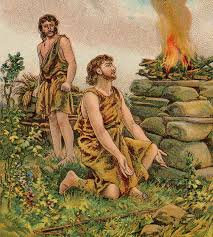
The conflict between the two brothers is more than a family tragedy; it is a symbolic map of the transition from the old world to the new.
- Abel, the Shepherd: He represents the ancient, nomadic way of life. His sacrifice is “pure” in the eyes of tradition—the blood and fat of the firstborn of his flock. This was the “clean” offering of the wanderer, a lifestyle that had sustained humanity for millennia.
- Cain, the Farmer: He represents the “tiller of the ground,” the pioneer of the agricultural revolution. He offers the fruits of the soil—the grain and the harvest of the settled village.
Why was Abel Favored?
In the narrative, God favors Abel’s offering over Cain’s. While theologians debate the spiritual reasons, from a historical and cultural perspective, this reflects the anxiety of the era.
To the early Sapiens, the “new” way of life—settling down, digging into the earth, and living in crowded, plague-ridden villages—felt like a corruption of a simpler, more “sanctified” past. The farmer (Cain) was seen as the disruptor of the natural order, while the shepherd (Abel) maintained the sacred connection to the wild.
The Mark of Cain and the Shadow of Progress
The tragedy ends with the farmer killing the shepherd. In a historical sense, this is exactly what happened: the agriculturalists eventually displaced or “killed off” the nomadic way of life because farming could support larger, more powerful (though more diseased) populations.
This story captures the deep-seated guilt and friction of that First Epidemiological Transition. We gained the granary and the city, but we lost the wandering freedom of the forest. We traded the predator’s bite for the invisible “mark” of the virus—a shadow that has followed us from Cain’s first harvest all the way to the modern clinic.
Even after we became farmers, our religions and rituals often looked backward with a deep nostalgia for the “pure” nomadic life.
The Sacredness of Unleavened Bread
The ancient preference for unleavened bread (such as Matzo) over leavened bread is a fascinating technological marker of this friction.
- The Nomad’s Bread: Unleavened bread is “traveling food.” It is quick, simple, and requires no permanent infrastructure. It belongs to the pastoralist era—a time when Sapiens were mobile, light, and unburdened by the complexities of the city.
- The Farmer’s Bread: Leavened bread requires yeast, stable temperatures, and, most importantly, time. It is a technology of the sedentary city-dweller. You cannot bake a sourdough loaf while fleeing a predator or moving a herd; you need a permanent oven and a settled home.
By labeling unleavened bread as “sacred” or “pure,” ancient traditions preserved a spiritual link to their nomadic roots. Yeast was often viewed as a form of “fermentation” or “corruption”—a literal representation of how “civilization” complicates and spoils what was once simple and natural.
3. The “Crossroad” Hypothesis
This brings us to a compelling conclusion. We often view human progress as a straight line upward, but the First Epidemiological Transition suggests it was a crossroads.
On one path, we had the Abel-like existence: nomadic, physically dangerous, but biologically “cleaner” and spiritually light. On the other path, we chose the Cain-like existence: stable, technologically advanced, but crowded, diseased, and burdened by the “corruption” of our environment.
When we look at the history of zoonosis, we aren’t just looking at medical data. We are looking at the scars of that crossroads. The Measles from the cow, the Tapeworm from the dog, and the Malaria from the birds are the biological tax we paid for our granaries and our cities.ginal grain—a literal representation of how “civilization” complicates what was once simple.3. The “Crossroad” Hypothesis
This brings our journey through human health to the present day. We have moved far beyond the first fires and the early granaries, but the “biological tax” of civilization continues to evolve. Scientists now categorize our history into three distinct chapters of life and death.
The Second Transition: The Era of Miracles
Following the discovery of Penicillin and the advent of modern sanitation and vaccines, humanity underwent the Second Epidemiological Transition. For a brief moment in history, it seemed we had “won” the war against the animal germs. Communicable diseases like Measles and Smallpox were pushed to the sidelines, and our lifespans skyrocketed.
However, as we stopped dying young from infections, we began to live long enough to encounter a new set of enemies: Non-Communicable Diseases (NCDs). The sedentary lifestyle and dietary shifts that began 10,000 years ago finally caught up with us, making heart disease, diabetes, and cancer the primary causes of death in the modern world.
The Third Transition: The Re-Emergence
Today, we are entering the Third Epidemiological Transition, and it is perhaps our most complex challenge yet. We are now fighting on two fronts simultaneously:
- The Return of Old Foes: Through antibiotic resistance, diseases we thought were conquered—like MDR-TB (Multi-Drug Resistant Tuberculosis)—are returning with a vengeance.
- The Modern Leap: In our hyper-connected, globalized world, new zoonotic “jumps” are happening faster than ever. From Bird Flu to emerging respiratory viruses, the bridge between animal and human remains wide open.
Closing Note: The Unbroken Circle
From the first breath of Rinderpest in a prehistoric stable to the complex drug-resistant strains of today, the story of Zoonosis is the story of our relationship with the world around us. We cannot have the comforts of the village, the companionship of the dog, or the resources of the farm without also accepting the biological intimacy that comes with them.
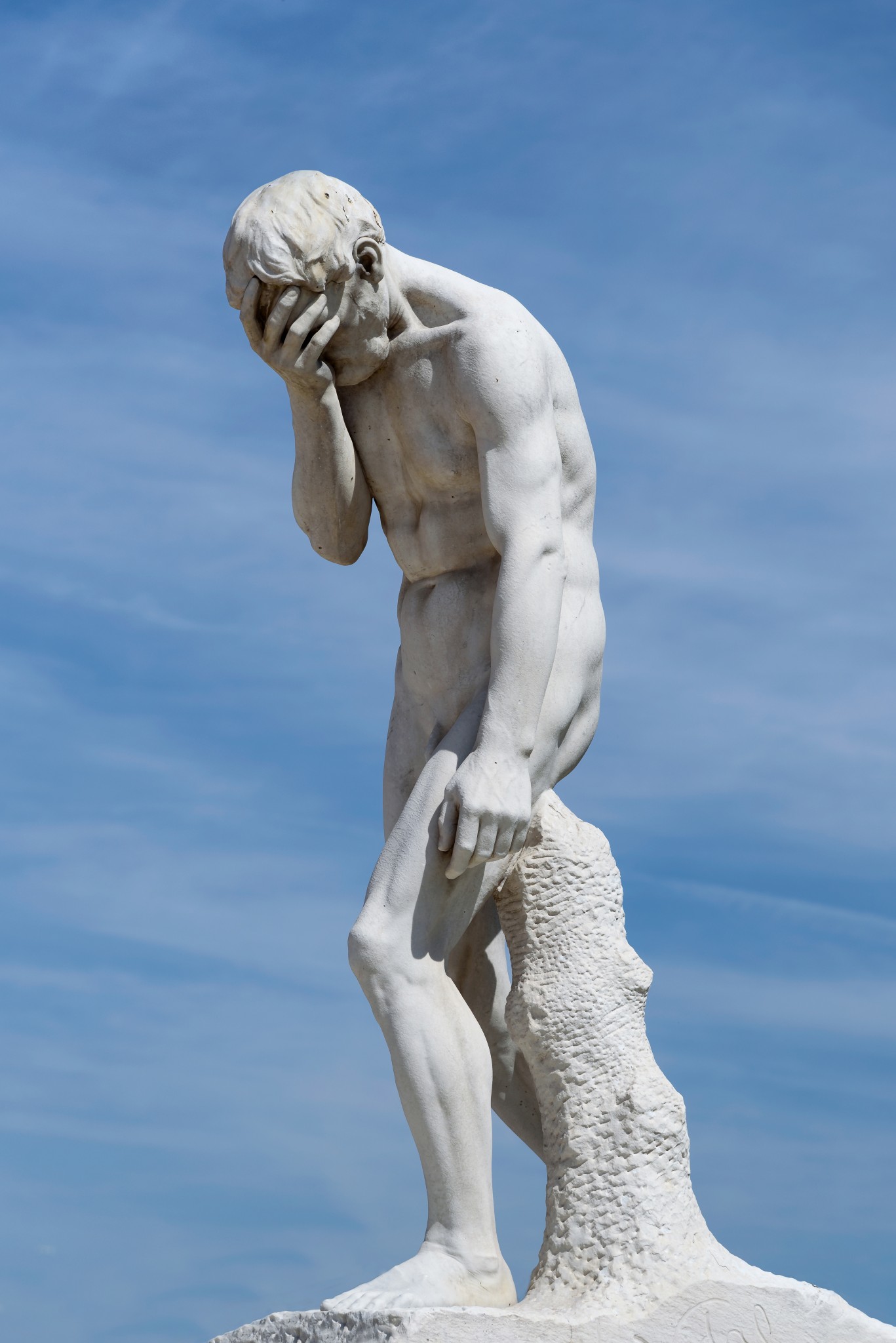
We still carry the “Mark of Cain”—the burden of a sedentary, global civilization—but we also carry the knowledge to protect ourselves. Understanding these ancient transitions isn’t just a history lesson; it is a survival manual for the future. As we navigate this third phase, our best defense remains the same as it was 10,000 years ago: respect for the boundaries of nature and a vigilant eye on the “invisible hand” that connects all living things.
 Dr Ramakanta's Ideas