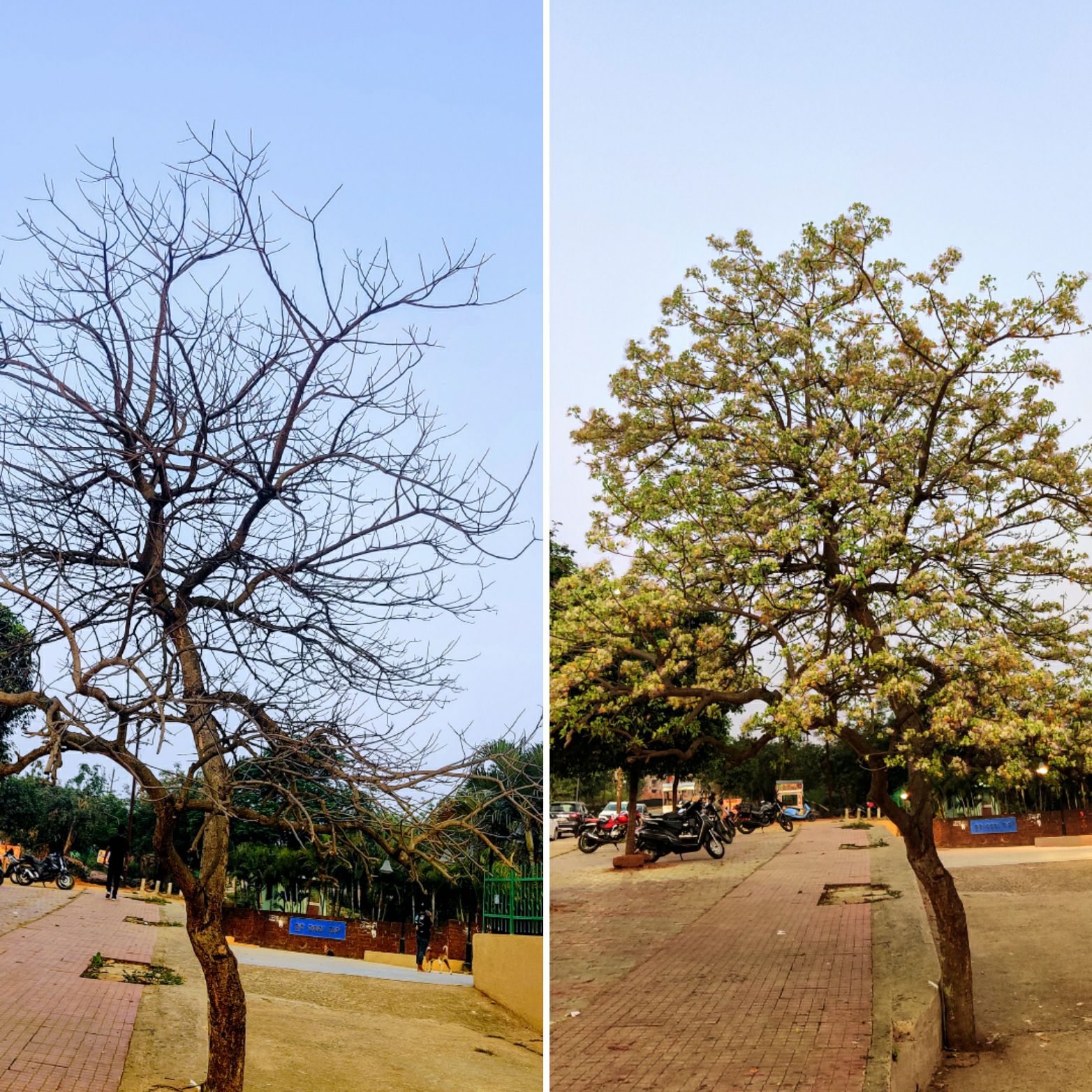
( Our health is like a beautiful tree. If properly nurtured, it will have a luxurious growth. If neglected, it will wither into a collection of dry twigs.)
( Our health is like a beautiful tree. If properly nurtured, it will have a luxurious growth. If neglected, it will wither into a collection of dry twigs.)
Today we shall discuss three B vitamins which form a triplet. B6, B9 and B12.
While these three vitamins are important for our brain and mental health, the last two, B9 and B12, namely Folic acid and Cobalamin are needed for formation of Blood.
B6, B9, B12 are required by our body for synthesis of three important chemicals: Serotonin, Dopamine and Nor-epinephrine. They are called Neuro transmitters. Our brain consists of billions of nerve cells that carry signals from our skin, eye and ear to brain and back. This enables us to see, hear, feel and give commands. A Neuro transmitter is an intermediary that caries the signal from one brain cell to another. That is important for the integrity of signal transmission in our brain. Serotonin, dopamine particularly work in the mental circuit. Serotonin and Dopamine keep us happy and feel good. A shortage in these chemicals can lead to depression, a feeling of melancholy and suicidal ideas.
A shortage of iron makes our RBCs small and hemoglobins low. We call it the Iron deficiency anemia. This is quite common in the pregnant mothers and children of third world countries. Iron supplements can readily cure it.
In 19th centuries another form of anemia was seen in the affluent countries of Europe. Here the RBCs are larger than normal but died early. This is called megaloblastic anemia and was life threatening. The 1934 Nobel prize was awarded for the discovery of vitamin B12 as the cause of the pernicious Anemia. We store our extra B12 in our liver. So animal liver was the best source of B12 and is used for treatment of pernicious anemia.
Working in Bombay, a British doctor found out that Megaloblastic Anaemia was quite common in the poor pregnant women of the mill workers in Bombay. Most of them are vegetarian and will not take Liver or liver extract. She used brewer’s yeast ( marmite) to cure them. She has published her paper in the 1931 issue of the prestigious British medical Journal, BMJ. Of course, the Nobel committee of Sweden are least interested in the health problem of a third world country. But physicians appreciated the importance of this factor in prevention of anemia and called it the Wills factor after the name of the British haematologist working in Bombay, DrLisa Wills. Half a century later, it was found that Dr Lisa Wills was correct. Today, we know this Wills factor as Folic acid. As an irony, in 1998 exactly 100 years after the birth of Lisa Wills (1898), USA mandated that all the food grains should be fortified with Folic acid. Today, every woman in the world who is pregnant or is even planning for a child is taking a supplement of Folic acid.
While liver is the best source of all the three Neuro vitamins, after the age of 50s it is difficult to absorb the three vitamins from food alone. Lack of stomach acid, abuse of anti acid drugs, Use of medicines and various digestion problems reduce the absorption of B12 in our intestine. A sub optimal level of the three vitamins B6, B9 and B12 in our body compromises our memory and mental health. It can lead to forgetfulness, dementia and may be one of the cause for Alzheimers.
Most often, these three vitamins are available in multivitamins. They are also available as Pyridoxine, Folic acid and Methyl Cobalamin. A regular supplement of these three vitamins along with B1 ( thiamine ) is needed for all those above 50 persons with failing memory, mood swings, and depression etc.
Most often, these three vitamins are available in multivitamins. They are also available as Pyridoxine, Folic acid and methyl cobalamin. A regular supplement of these three vitamins along with B1 ( thiamine ) is needed for all those above 50 persons with failing memory, mood swings, and depression etc.
 Dr Ramakanta's Ideas