What is the relationship between
Qutub Minar and
Konark Temple ?
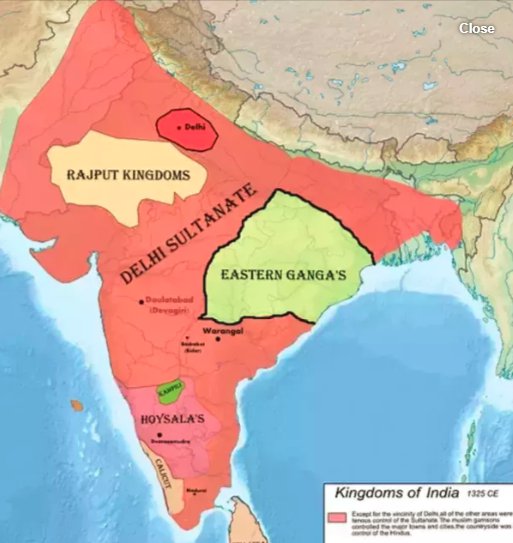
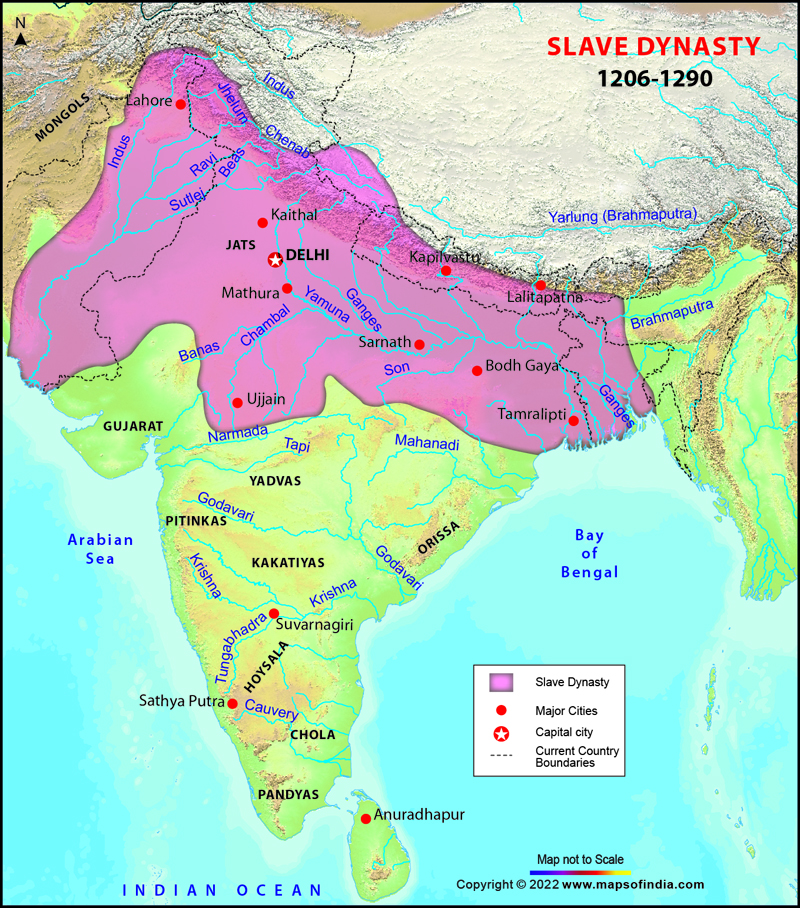
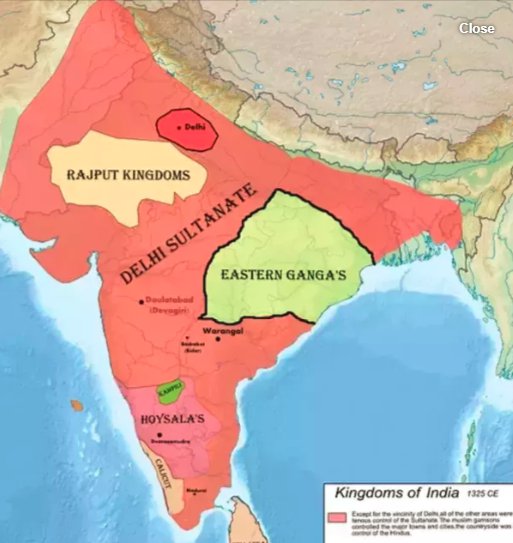
While the Qutub represents the Muslim win of the North India in 12th century, Konark celebrates the total rout of Delhi sultanate of Bengal by the Ganga Kings Odisha during the same period.

A. Construction of the Qutub Minar:
– Qutubuddin Aibak of Slave Dynasty.
Construction of Qutub Minar was started by Qutubuddin Aibak in the year 1199 in Celebration of the Muslim victory over North India.
1192
Aibak was instrumental in the victory of Ghori against Prithviraj in the Second Battle of Tarain.
1194-1199:
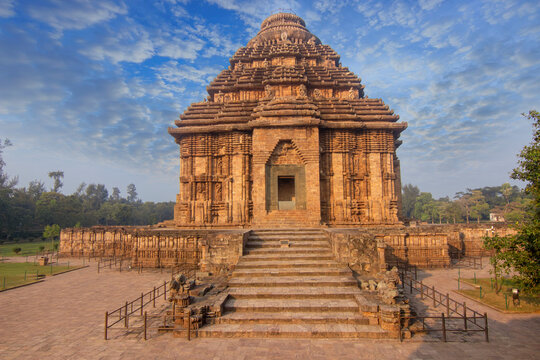
Aibak captured Kannauj and Varanasi in 1194. By 1196, he had occupied Ajmer, Punjab and Sindh. By 1199, the Sultanate had won over Bihar and Bengal ( up to Nadia).
1199- 1220:
The Ghurid empire had conquered the whole of North India stretching from Afghanistan to Nadia in Bengal. In celebration of this victory, the the Qutub Minar was completed in 1220.
Why did this islamic war machine stopped at Nadia, Bengal after 1220 ?
But then, no historian writes why it took the Delhi Sultanate another 300 years to advance from Nadia to Cuttack.
It took them 300 years to break the border of Odisha. Of course the Gangas and Gajapatis were too powerful for the Delhi Sultanate. Details given in the next section.
But Nobody in Indian History has asked this question ever ?
…
The golden period of Odia empire existed between 1100 to 1500. In 300 years, three big temples of Puri, Bhubaneswar and Konark were built.
B. Construction of the Konark temple:
Narasimha Dev of Ganga Dynasty.
The victory of Narasimha dev over the Muslim in Bengal and capture of their vast wealth and the capital of Gauda inspired the construction of Konark Temple.
1238
The most famous king of eastern Ganga dynasty, Narasimha Dev I ( Lingual Narasimha) ascended the throne of Odisha in 1238 CE.
1243
Narasimha Dev led his army into southern Bengal, plundered various muslim settlements and captured the Afgan capital of Gauda Desha.
So powerful was the Narasimha Dev’s military success that it halted the Delhi Sultanate’s expansion into south-eastern India for the next 300 years.
He earned titles like “Yavanabani Ballabha” (“conqueror of Yavana” or Muslim kingdom) and “Hamira Mada Mardana” (“vanquisher of the Muslim Amirs of Bengal”)
*The wealth of and victory over Muslim Bengal inspired the construction of the Konark Temple.*
We always read that the huge army of Alexander the Great were so afraid of the Nanda Empire of Magadha that they were reluctant to cross the Jhelum. But nobody tells us that the Ghori army which has conquered all the land from the Hindukush Afghanistan to the Bay of Bengal were demolished by the Ganga King Narasimha Dev in 1243 ACE. The Gangas and Gajapatis of Odisha struck so much of fear in the heart of the Afgan empire of Bengal that they had to wait 300 years, till 1568 to venture beyond the river Mahanadi.
Our children know so much about the duel between Prithviraj and Ghori. Nobody teaches them that the Slave dynasty which subjugated Bengal in the east and Golconda in south could not breach the borders of Kalinga. Odisha stood like the Rock of Gibraltar between the Muslim rulers of Bengal and Golconda for more than 300 years.
Therefore, most of the great temples of Odisha still stand erect today. Nowhere you will find a mosque within their premises.
NB:-
Varanasi was completely destroyed by the islamic forces by 1199. The famous shiv temple was desecrated. Qutub Minar was built.
the fact remains that in 1211, the Ganga king Ananga Bhima created a new town ship on the banks of Mahanadi. He named it the New Varanasi, Abhinav Varanasi Katak. Why ?
Certainly, the Eastern Gangas who were controlling an huge empire from the Ganges to Godavari were very much aware of the fate of Varanasi in the hands of the Ghurid empire.
I wonder if Is it the reaction to the desecration of the icon city of hindus- the old Varanasi !
 Dr Ramakanta's Ideas