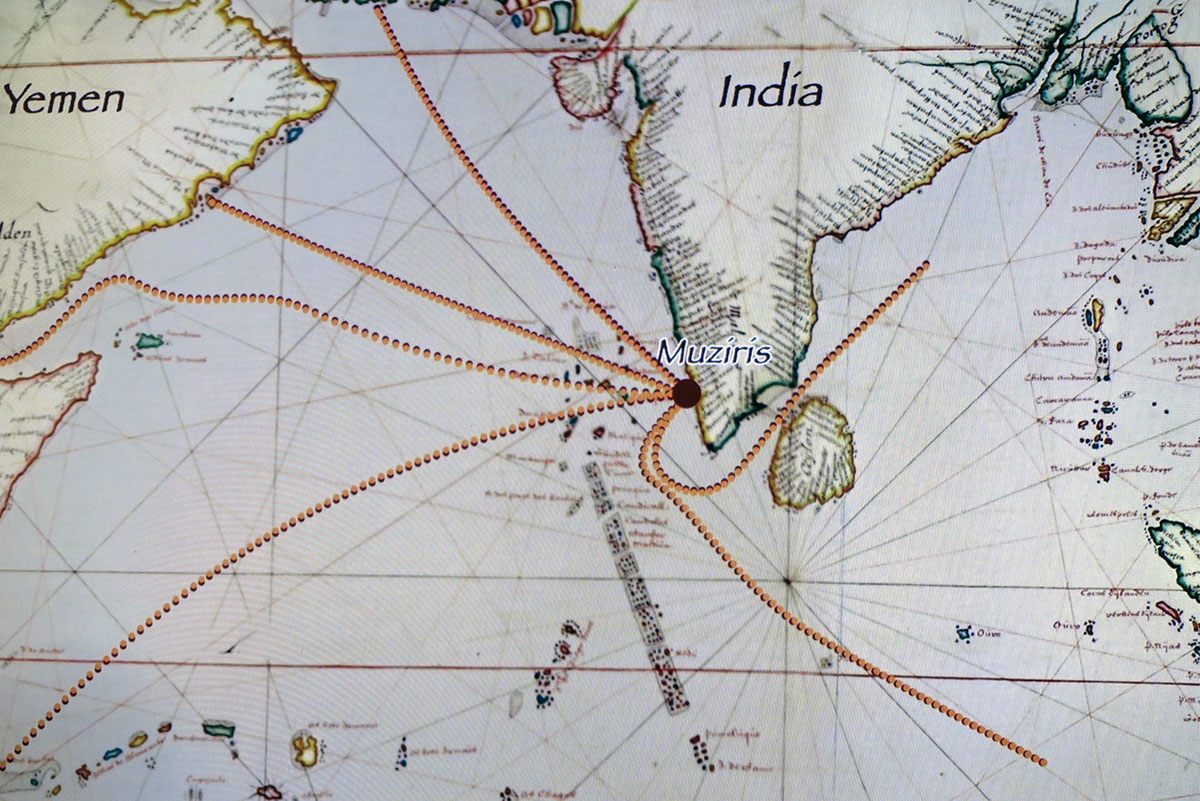
Homo sapiens have always migrated towards east ?
Out of Africa, the earliest migrants came to Asia, not to America. Out of the Steppes, they marched towards the Hindukush and Iran and colonised the Ganges valley. No wonder, the early Indians of the eastern coast of India have huge maritime relationship with java, Sumatra, Bali but not with Gandhara, Taxila and Punjab.
We have multiple sources of evidence that the invasion of Alexander the Great has led to Greek occupation of the entire land on the west of the Indus river. That was 300 years before the birth of Christ. Then came the Scythians ( Sakas), the Kushanas and Kaniska, the Huns, the Mahmud of Gazanavi, the Ghors of Afganistan, the Mongols from Bukhara, the Moghuls from Samarkand and great war lords like Timurlane and Nadir shah. All have travelled from from west to east through the Hindukush mountains. In Puranas these invaders are called the Yavanas. Lord Krishna of Dwaraka had defeated such Yavana kings known as Kalanemi. He has also retrieved the son of his Guru Sandipani from the clutches of such Yavanas and returned him to his Guru as a token of his Guru Dakshina. The descendant of all such invaders have gradually settled down on the western front of India and are known as Rajputs. We also read the accounts of Megasthenes, Fahiyen and Huen-sang all of whom had travelled from west to east through the Khyber and Bolan passes. I don’t remember any travelogue by one who had crossed India from East towards west.
What does the recorded history tells us about ancient India ?
Horse was first domesticated in the steppes by the Caspian Sea, chariots were built. This increased the mobility of Homo sapiens. Hordes of them drove through the Hindu Kush mountains and settled in Iran, Afganistan and in the rich valley of the 5 rivers- the undivided Punjab. Our great Epics and oldest Puranas tell us the stories centred around Gandhara, Taxila, Kekeya, Madra, Sivi, and recounts the stories of Asvakan and Asvapatis. Asvapati is the father of the puranic Savitri who ran after Yama, the God of death. Camboja was famous for its horses. Camboja is on the north west and often confused with Cambodia in the east. ( pic below)

What happened to this rich land ?
Then great Climatic changes led to drying up of prosperous rivers like the Sarasvati. Indus also frequently changed its course time and again. The great civilisation of the Indus Valley was forced to move east ward to settle by the Ganges leading to new cities like Kashi, Kaushambi, Hastinapur and Mathura. Our Puranas are now populated with stories of Kashi, Koshala, Saketa and Magadha. That will be 300 BCE. Recorded history was available only after the discovery of numerous rock edicts of Ashoka ( post 261 BCE). Here kalinga was mentioned. ( The two line of Kalinga mentioned in the hundred thousand shlokas of the great epic Mahabharat speaks of a Janapad called Kalinga whose capital is stated to be Rajagriha. Rajgriha is in the present Bihar. It certainly is not referring to the present Kalinga as we understand today. The hostile Chotnagpur mountains and the difficult Sundarabans have made eastern coast inaccessible to the seers of those Epics.
Asvapatis are glorified in Puranas what about the Gajapatis ?
Alexander has rode on his horse Bucephelus conquering nations all the way from Macedonia. The greek army was stopped by Chandragupta, who defeated Seleucus, married his daughter Helena and gifted him 500 war elephants. These war machines were new things to the Greeks. It is said Seleucus used them in his western front and could win his war against Macedonia. The Indian elephants now had turned the tides on Macedonia. What a great reversal !
What about the coastal India in ancient times?
All these time, what exactly was happening in the huge coast lines of the Indian Peninsula ? From the Sundarbana through the Kalinga to Malabar coast. Are they inhabited by uneducated monkeys and bears and boars and rakhasasas ? Had they no civilisation? Our great epics and earlier Puranas have kept a profound silence on this.
Do we have any records from other parts of world ?
Of course Plenty. We have to open our eyes and see them.
Saint Thomas, one of the twelve apostles of Jesus Christ had landed in Muziris on the Kerala coast in 52 AD, shortly after the crucification of Jesus. Today we have 5 million Syrian Christians in Kerala.
Jews have also arrived at the malabar coast ahead of them. It is said when the Solomon’s temple was destroyed in 600 BCE, some of the exiles had arrived in Muziris and stayed there. All these jews in exile have returned to Israel after the formation of a separate jewish state.
Long before the invasion of the Mahmud of Ghazni and Ghories, Islam had arrived in the malabar coast along with the traders and merchants. They were peaceful traders who had stayed on and are known as the son in laws ( Mappila)
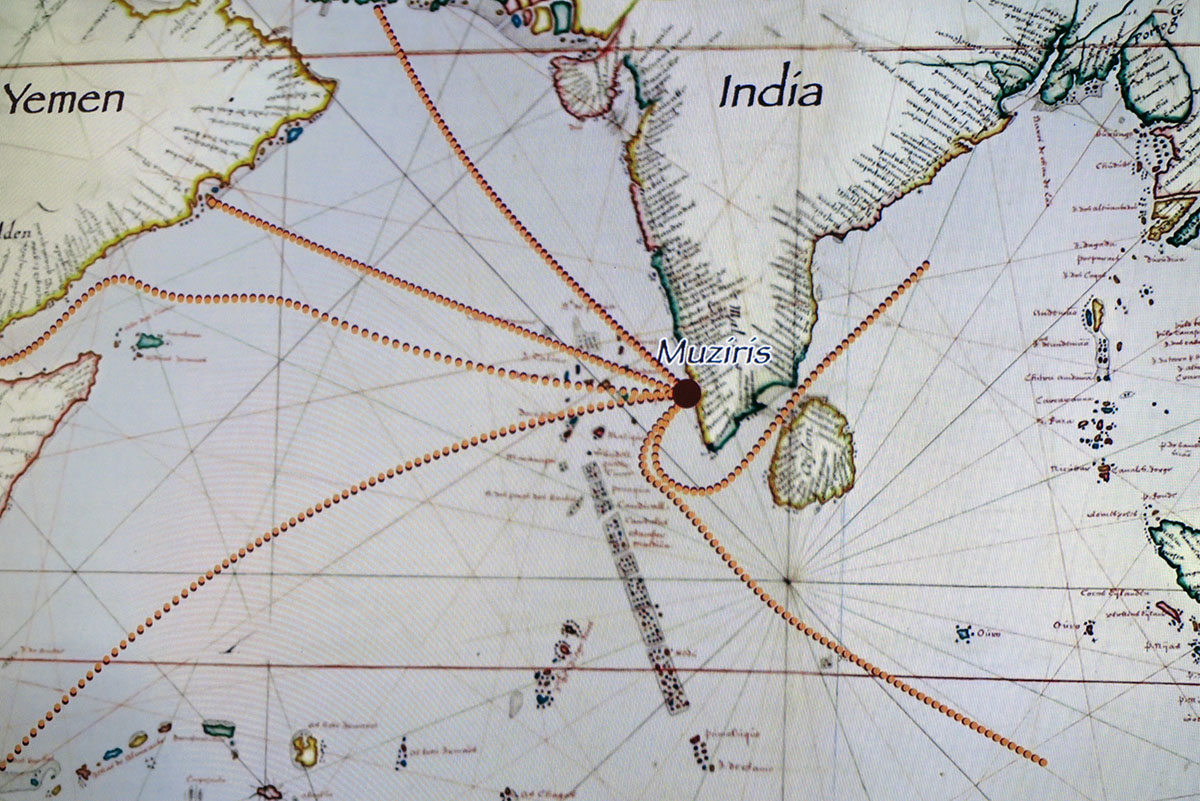
All these early westerners- the jews, the christians, Saint Thomas and pre Islamic traders have turned up in the malabar coast because malabar coast and Muziris were great maritime hubs of the world even before Alexander and Ashoka. The story of Muziris starts from early 3000 BC when Babylonians, Assyrians and Egyptians came to the Malabar Coast in search for the spices. For details click the link below.
https://www.muzirisheritage.org/history.php
When the epics were getting written eulogising the Sodasha Janapadas in the north India, there were much prosperous and commercial hubs thriving in the southern and eastern coast of India. We have never thought of them.
In search of the Sun
Is it not a coincidence that Homo sapiens have always migrated towards east ? Out of Africa, the earliest migrants came to Asia, not America. From the north east tip of Asia, they crossed the narrow Bering strait which was a land bridge once upon a time. So also, Out of the Steppes, they marched towards the Hindukush and Iran. In the same way, the early Indians off the eastern coast of India have huge maritime relationship with java, Sumatra, Bali but not with Gandhara, Taxila and Punjab. As if the migration has followed in the direction of the rising sun only.
No wonder our epics have maintained total silence on the achievements of such great coastal Indian towns like Murachipatanam, Machalipatanam and Kalingapattanam. As we in the east, read a lot of stories about Aryans, Mahmud and Nadir shah from the west, so also stories of Kalinga, Mahendravarman, Suryavarman are narrated frequently in the eastern kingdoms of Indo-China till Korea and Japan.
Unfortunately, we have failed to remember the great achievements of our coastal ancestors and those maritime glories of coastal Indians like Andhras, Kalingas and Varmans.
Tamilnadu has remembered them and revived the great history of Cholas in to the main stream history of India. After all a great history is the best glue to keep a nation tight and secured. But what about the great Kesharis, Gangas and Gajapitis, the Maha Megha Vahanas ? Unfortunately they lack able successors to narrate their great stories to the present world.
Some of the great port cities of India are Barygaza — Bharuch; Syrastrene — Saurashtra; Suppara — Soppara; Muziris — Pattanam; Colchi — Korkai; Camera – Puhar (Poompuhar); Poduca — Puducherry; Sopatama — Marakkanam; Maisolia — Masulipatnam; and Dasarna — Orissa. How come these populous places have totally failed to impress the great epic writers.
Who will tell the great stories of those ancient Mariners of eastern coast of India, who had tamed the great Ocean of Bengal and had set up prosperous trade empires in such distant lands during the Ramayana and Mahabharata times ? Those distant lands have remembered them, but we have forgotten them our own ancestors.
Our great icon the Konark Wheel dates to 1200 AD only. Are we exactly barbarian before the 12th century ? – Mlechcha as narrated in our Epics and Puranas. We may not know. But Time knows about our great ancient history.
Who will narrate our history for the posterity ?
ରମାକାନ୍ତ ମହାପାତ୍ର
** Further read- Muziris the Center of Ancient Maritime World .
 Dr Ramakanta's Ideas