The Vedas:
We all know that the great sage Veda Vyas compiled all the mantras conceived by the sacred river of Saraswati and arranged them into four Samhitas: the Rig, Sama, Jajus and Atharva. He taught them to four of his principal disciples: Paila, Jaimini, Vaishampayana and Sumantu.
Vyas can be a title.
In sanskrit, it means one who compiles and arranges. We understand that there are several Dwaparas and several Vyasas. Each Yuga has its Manu, its Vyasa and so on like that.
Yajurveda:
Unlike the other three vedas, Yajurveda has two versions: The Krishna Yajurveda and the Shukla Yajurveda. They are not black and white. The knowledge in the Krisna Yajurveda is not clear and well defined. As in the twilight, the things are not clear hence it is called Krishna Yajurveda.. In the Shukla Yajurveda, thoughts are well organised and clear. The line between the Samhita and Brahmanas are well demarcated. They are clear as in broad daylight hence the epithet- Shukla.
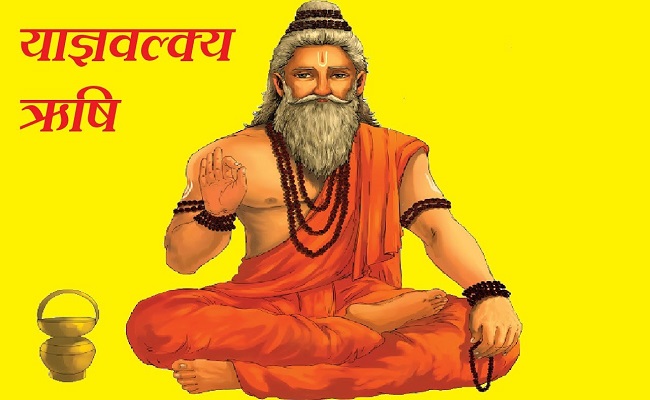
One man is responsible for this difference between these two. He is the great sage Yagnavalkya.
Yagnavalkya, Shukla Yajurveda and Taittiriya Upanishad:
Yagnavalkya was a disciple of Rishi Vaishampayana who was the keeper of the Yajurveda.
One day, there was a difference of opinion between the Guru and the Shishya. The sage has committed some grave sin.
( By that time, the sacred knowledge of the pristine Samhitas were getting replaced by Karma Kanda. In Karma Kanda, you can atone for any of your sin simply by performing a prescribed Yagna, in exchange of a Dakshina. You can be blessed with a son, or kingship by arranging for yagnas to be performed on behalf of you, of course at a price: Dasharath did it to beget sons, Parikshita did it (Sarpa Yagna) to take revenge. In the Uttara-Vedic period, Yagnas were prescribed for anything and everything but at a price. But they are not accessible to the common man.)
Those who have money and means can get away with anything by arranging appropriate rituals. Yagnas were prescribed for each and every ills. Thus the poor have no means but to suffer while the rich may not.
Yagnavalkya did not believe in such practices. When the Guru wanted to perform a Yagna to absolve himself from his sin, he said that was not the solution. His Guru had to face the consequences of his sin anyway. Enraged, Vaishampayana banished Yagnavalkya from his ashram. He ordered him to return all the knowledge of Yajurvedam that he has acquired in the ashram before leaving it for ever.
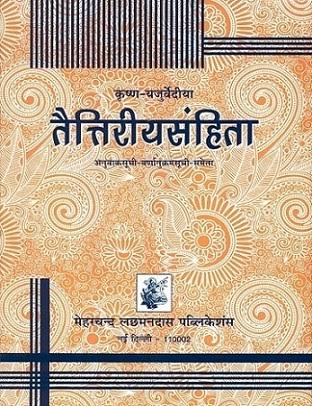
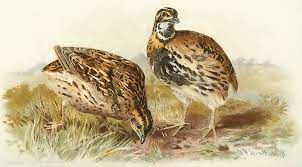
Then in one of the most vivid imagery in the history of written records, the great Yajnavalkya vomited out all the knowledge learnt by him. It was the display of one of the greatest feast of knowledge in the whole of Brahmavatra. The disciples of Vaishampayana could not let this knowledge go waste. They took the form of Tittiri birds ( partridges ) and picked up all the knowledge revealed by the great sage. The collection of this knowledge came to be known as *Taittiriya Samhita* from tittiri. It forms the main part of Krishna Yajurveda. The book lacks clarity as in the Shukla version.
Vajasaneyi Samhita:
Away from the Ashram, Yajnavalkya now had no Guru. So he propitiated the ultimate proponent of Vedas – The Sun God.
As the Lord declares in the 1st shloka of Ch 4 of Bhagawad Gita:
Bhagawad Gita
“In each Yuga, Vivaswan transmits this knowledge unto Manu.“
श्रीभगवानुवाच |
इमं विवस्वते योगं प्रोक्तवानहमव्ययम् |
विवस्वान्मनवे प्राह मनुरिक्ष्वाकवेऽब्रवीत् || 4.1||
The Sun God appeared in the form of a *Vaja* ( horse) and the knowledge gleaned from him were compiled into the *Vajasaneyi Samhita*. This forms the part of the Shukla Yajurveda. In accordance with the trade mark of Yagnavalkya, the mantras are well organised and neatly arranged in this Samhita.
[ Author’s note:]
Yagnavalkya was a strong critique of the prevailing decadence in the commercialisation of Yagna rituals. I place him in the 700 BCE. This was also the time when there was a thought revolution in all the major civilisations around the world. Around 600 BCE, we had Confucius in China, Zoroaster in Persia, Thales, Socrates and Plato in Greece all questioning the traditional practices based on mythological stories.
In India we had sages like Yajnavalkya, Buddha and Mahavir at the same time in the same place. While Yajnavalkya propounded the knowledge revolution remaining within the vedic folds, Buddha and Jain went out to preach different religions. That was 600 BCE.
600 years after, Jesus of Nazareth, who belonged to the important Jewish *tribe of Judah* found fault with the commercialisation of the priestly practices in Jerusalem and wanted to reform them. This resulted in Christianity.
Another 600 years after that, prophet was born in the *Quraysh tribe*, the powerful keepers of the then Mecca, and wanted to reform their social practices. That resulted in a new religion. ]
 Dr Ramakanta's Ideas