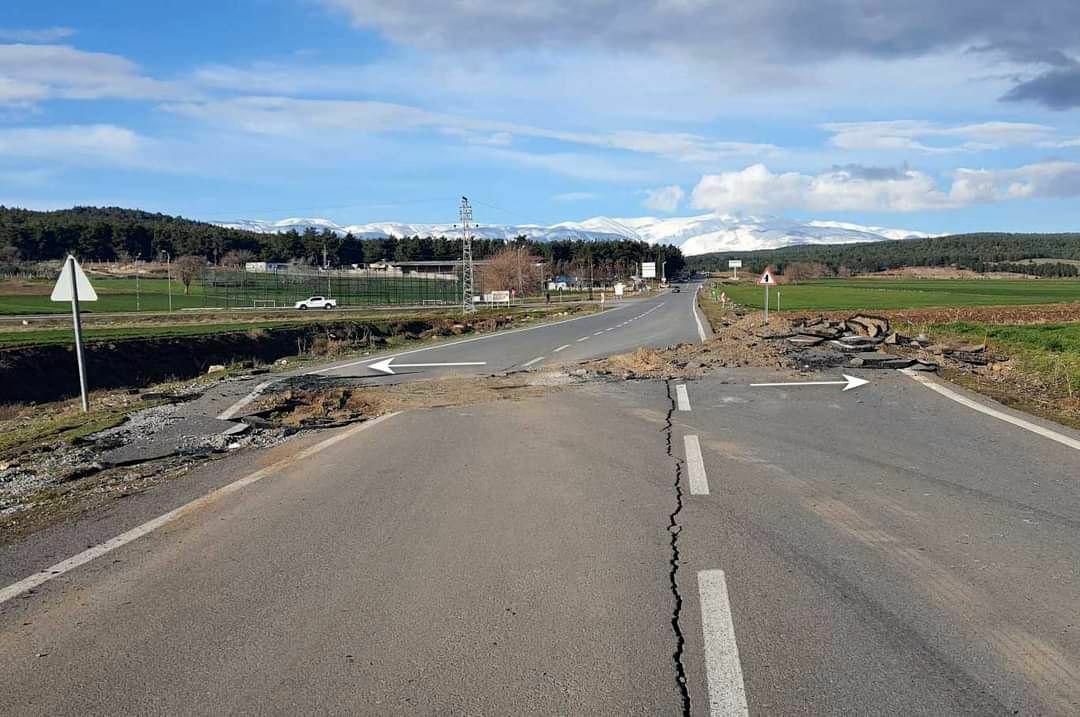
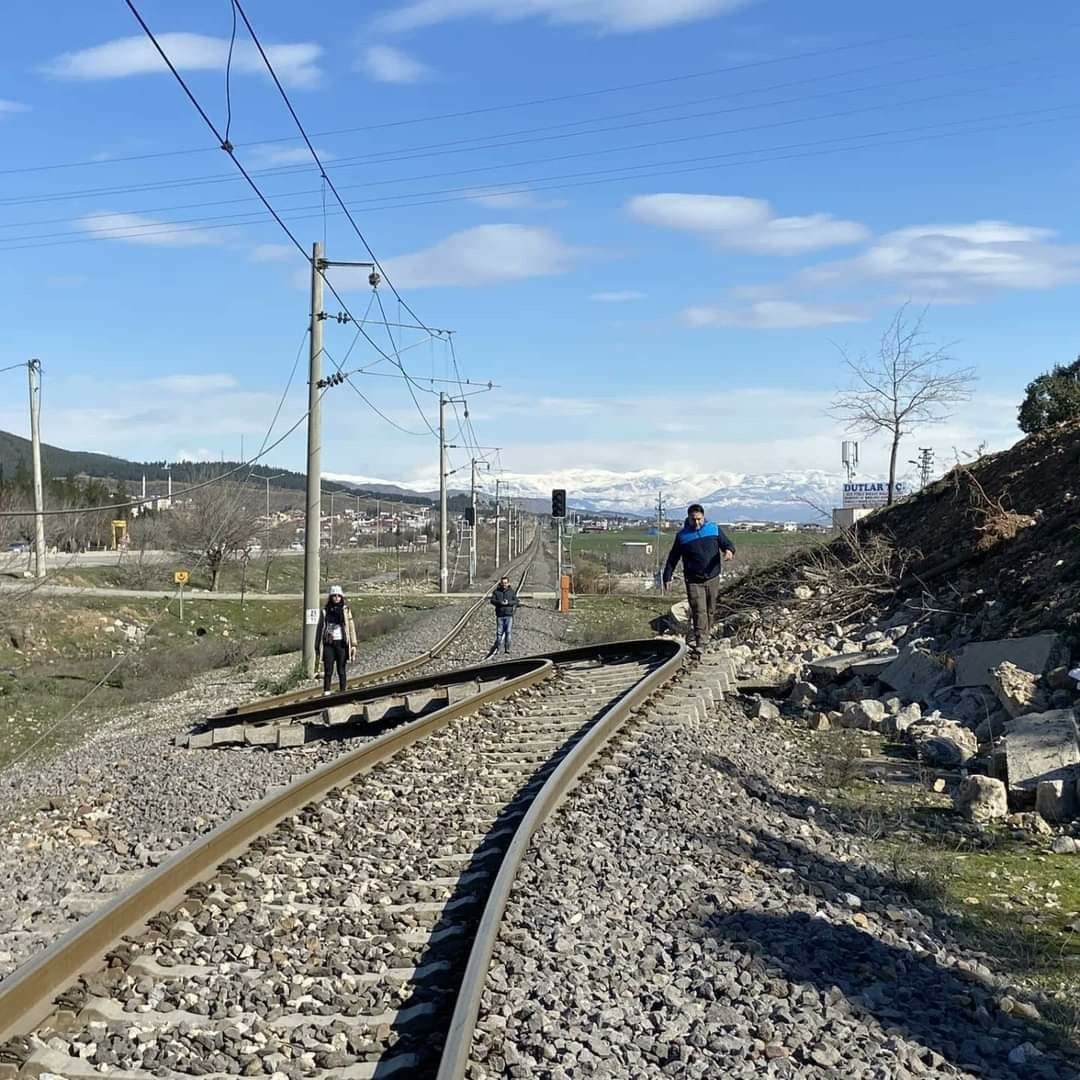
In the Early hours of the 6th February ,2023, A devastating earthquake hit Turkey. Seismologist claim the earthquake moved Turkey 3 meters away from Syria. (Pic below) That leaves a 225 km stretch of fault that has appeared in the underground tectonic plates in that split moment.
1819 Kutch Earthquake:
The 1819 Rann of Kutch earthquake occurred at about 18:45 pm local time on 16 June.
Prior to the earthquake, the river Kori used to flow through this area irrigating a beautiful fertile land. River Kori or Nara river is identified with the terminal part of the Vedic Sarasvati river. There was a fort called Sindri fort on the bank of the river Kori.
Allah bundh.
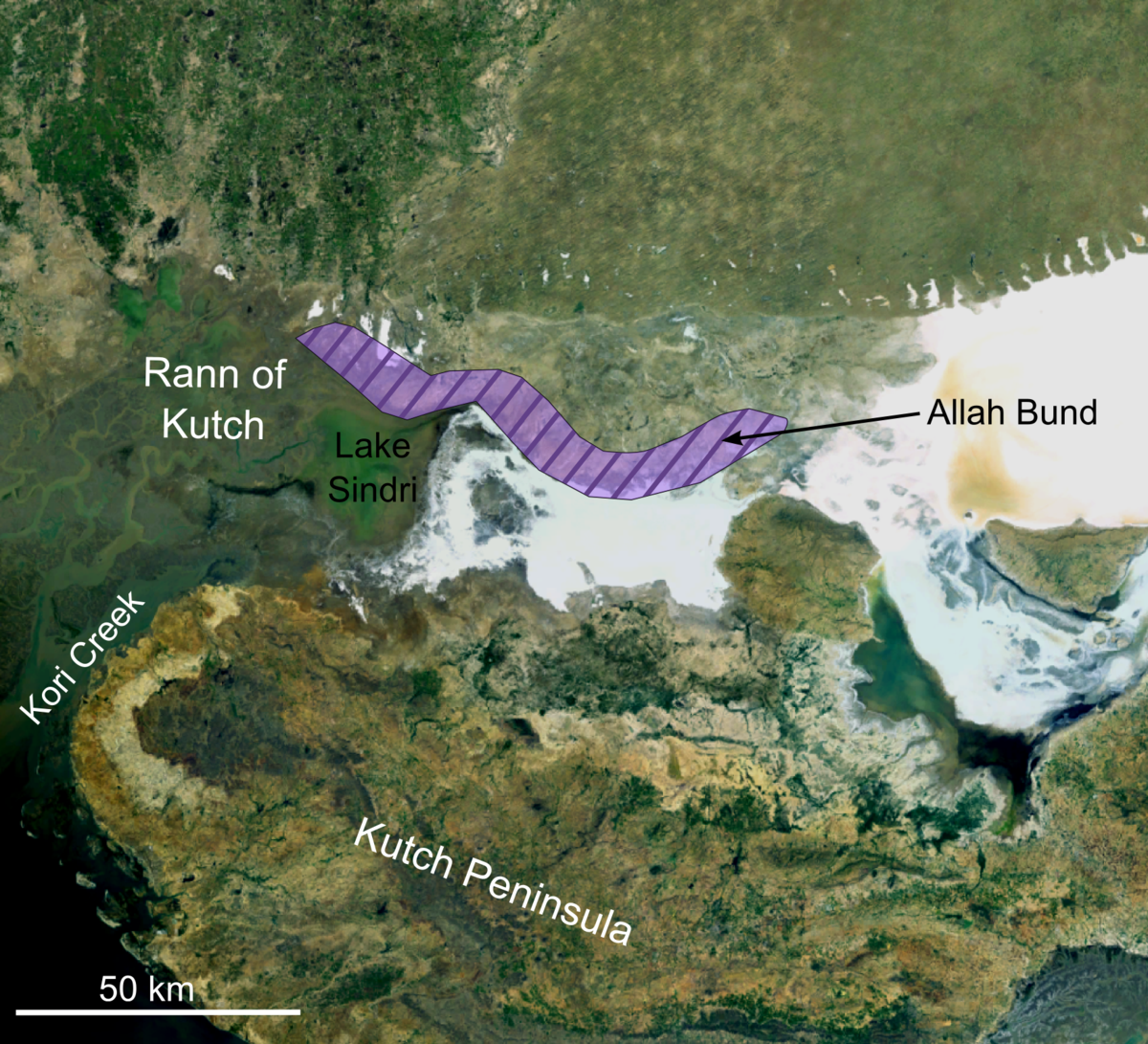
In one moment, the fort of Sindri caved in creating the Sindri Lake. Proximal to the lake earth lifted and piled up to form a Bundh (Dam) of about 80 km long, 6 km wide and 6 m high. People called it the Allah Bundh ( Dam of God)
In that one moment, the river was blocked by this natural dam. All the fertility of the land beyond the dam was killed on that day. Sea water rushed in to fill the Sindri Lake. Today , layer of salt gives it a surreal white gleam. This has become the part of the Rann of Kutch.
As if a huge snake 80 km long and 6m high suddenly dammed up and blocked the flow a mighty river to convert a fertile land into a salt desert.
4000 years ago Arya Rishis composed the hymns of Rig Veda by the river of Sarasvati. It was sitting on the foot hill of a young Himalayas that was busy growing up. In the process the tectonic plates underneath were moving frequently. This would give rise to frequent Earthquakes that would change the course of vedic rivers in the Brahmavarta. Brahmavarta is the place where most of the hymns of Rigveda are conceived. This would result in unpredictable drought in one place and flooding of another.The vedic folks had a difficult time in negotiating such sudden change of course of river. it is now established that such a change of course of river Yamuna and Sutlej finally led to drying of the great river Sarasvati. Sarasvati was formed by the joining of west bound Yamuna and East bound Sutlej 4000 years back. Around 3200 years back, Sutlej suddenly turned away west ward ( The bend exists near Ropar, Haryana) to join the Indus River system. Yamuna moved away from Sarasvati eastward to join the ganga. The great Sarasvati dried up and broke down into lakes ( Sarasa in Sanskrit). the Rishis on the banks of the great river moved east ward towards Kashi and Prayag. But their collective memory carried the image of the great mother river and metamorphosed into a water dripping, swan surrounded goddess Sarasvati.
The Rig Veda records this struggle between the our ancestors and the drought nicely in its 32nd Hymn. Here drought is personified into a demon –Vritra. Like a huge snake it lies in front of water bodies and covers them. “वृ” as in आवरण in sanskrit means to cover up. Then Indra the Arya lead would ride on his elephant Airavat and would start a long fight against this snake demon. Finally he would divide the trunk of this snake by his powerful Vajra and kill him. Then the water would flow up and around Vritra. This would make the barren unploughable land ( Ahalya : Hala means plough) fertile. hence Indra is called as Ahilya-yara- one who made Ahalya fertile once again.
On to Rig Veda, Book One Hymn 32.
Vritra the Snake demon of Rig Veda.
Vritra (Sanskrit: वृत्र, vṛtrá, lit. “enveloper”) is a Vedic serpent or demon in Hinduism, the personification of drought, and adversary of Indra.
In the Rig veda, Indra stands as the top ranking figure among gods. He was the king of gods who leads them in their wars with his thunderbolt, the celestial Vajra in his hand.
Indra’s most notable exploit as chronicled in several places of the Rig veda was his battle with the Asura VRITRA who had blocked the water and had made land barren and infertile for the mankind.
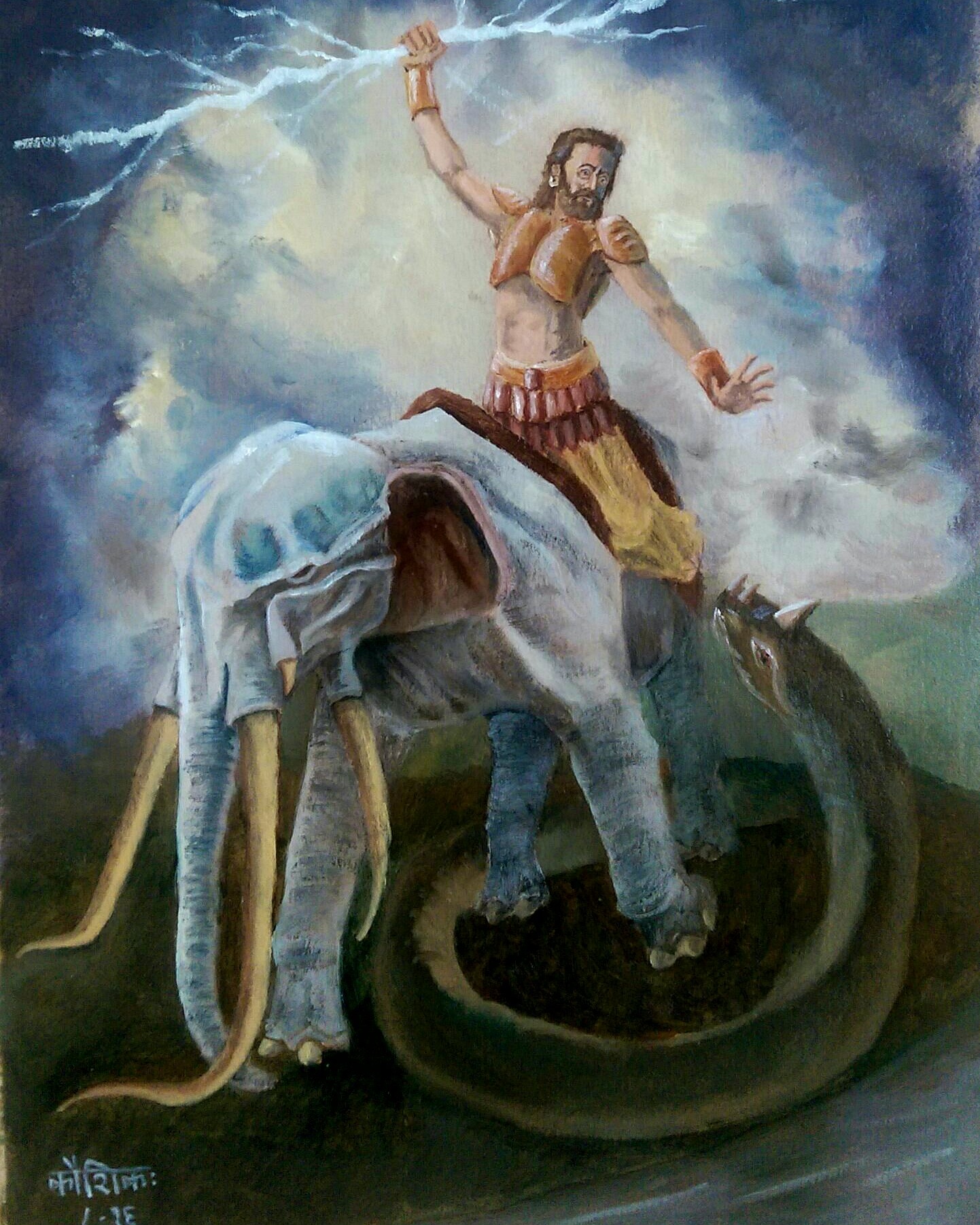
The 32nd Sukta of Book 1 of Rig Veda describes the war between Indra and a hand less, footless snake ( अपादहस्तो अहन्नहि) that had blocked the waters. Indra with his Vajra killed the snake and divided his body so that the river (water) could be released to make barren wasteland fertile.
Rig Veda Book 1 Hymn 32 ( 1.32)
The summary of the 15 shlokas in this 32nd Sukta that vividly describes the duel and fall of Snake Demon Vritra in the hands of Indra is given below. It is followed by English translation of individual shlokas of the Hymn.
Indra’s most notable exploit was his battle with the Asura VRITRA. Vritra is described in the Rig veda as Ahi: a snake demon that took the form of a mighty snake and had blocked all the water in the world. Indra rode forth to meet the terrible Vritra. He consumed great amounts of Soma to give him the strength needed to fight such a demon. Indra smashed through Vritra’s Ninety nine fortresses, and then came upon the demon. After a long battle Indra ripped Vritra apart with his mighty Vajra. Vritra has been keeping the earth in a drought. The land has become un-ploughable. ( A-Halya, Hal means plough) But when Indra split open the demon, the waters again flowed merrily and the land became fertile again. Thus Indra got the name Ahalya-Yara, the one who made Ahalya fertile.
Rig Veda 1.32 Translation in English
The English translation is taken from the website quoted below:
https://www.wisdomlib.org/hinduism/book/rig-veda-english-translation/d/doc829265.html
- In Sanskrit
- इन्द्रस्य नु वीर्याणि प्र वोचं यानि चकार प्रथमानि वज्री ।
- अहन्नहिमन्वपस्ततर्द प्र वक्षणा अभिनत्पर्वतानाम् ॥
Indrasya nu vīryāṇi pra vocaṃ yāni cakāra prathamāni vajrī |
Ahann ahim anu apas tatarda pra vakṣaṇā abhinat parvatānām ||
English translation:
Anu Ahan Ahim- After killing the snake
Parvatanam Vaksana Abhinat- Opening up the bosom of mountains.
“I declare the former valorous deeds of Indra which the thunderer has achieved;
After Killing the Snake and opening up mountains, he cast the waters down (to earth).”
- In Sanskrit
- अहन्वृत्रं वृत्रतरं व्यंसमिन्द्रो वज्रेण महता वधेन ।
- स्कन्धांसीव कुलिशेना विवृक्णाहिः शयत उपपृक्पृथिव्याः ॥
Ahan vṛtraṃ vṛtrataraṃ vyaṃsam indro vajreṇa mahatā vadhena |
Skandhāṃsīva kuliśenā vivṛkṇāhiḥ śayata upapṛk pṛthivyāḥ ||
English translation:
“With his all destroying thunderbolt, Indra struck the darkling mutilated Vrtra.
The Snake lies prostrate on the earth like a tree that is chopped from its trunk by an axe .
- In Sanskrit
- अपादहस्तो अपृतन्यदिन्द्रमास्य वज्रमधि सानौ जघान ।
- वृष्णो वध्रिः प्रतिमानं बुभूषन्पुरुत्रा वृत्रो अशयद्व्यस्तः ॥
apād ahasto apṛtanyad indram āsya vajram adhi sānau jaghāna |
vṛṣṇo vadhriḥ pratimānam bubhūṣan purutrā vṛtro aśayad vyastaḥ ||
English translation
Apadhasto- Without foot or hand.
The Snake demon did not have hand or foot. Indra struck him with his thunderbolt on his mountain like shielder. Now he lies mutilated.
- In sanskrit
- नदं न भिन्नममुया शयानं मनो रुहाणा अति यन्त्यापः ।
- याश्चिद्वृत्रो महिना पर्यतिष्ठत्तासामहिः पत्सुतःशीर्बभूव ॥
nadaṃ na bhinnam amuyā śayānam mano ruhāṇā ati yanty āpaḥ |
yāś cid vṛtro mahinā paryatiṣṭhat tāsām ahiḥ patsutaḥśīr babhūva ||
English translation
“ As the Vratra lies on the earth, The waters flow over him, bursting through its broken backs). Ahi has been prostrated beneath the feet of the waters, which Vrtra by his might, had obstructed.”
- In sanskrit
- दासपत्नीरहिगोपा अतिष्ठन्निरुद्धा आपः पणिनेव गावः ।
- अपां बिलमपिहितं यदासीद्वृत्रं जघन्वाँ अप तद्ववार ॥
Dāsapatnīr ahigopā atiṣṭhan niruddhā āpaḥ paṇineva gāvaḥ |
apām bilam apihitaṃ yad āsīd vṛtraṃ jaghanvām̐ apa tad vavāra |
English translation:
“The waters guarded by Ahi, stood obstructed like cows inside the cave. By slaying the Vritra, Indra set open the cave that had confined them.”
This story is carried on to the Brahmanas of next generations
Shatapatha Brahmana 1.6.3
इन्द्रो अस्माँ इरदवज्राहुरपाहन्वृत्रं परिधिं नदीनाम्.” -ऋ.‚ 3.33.6
( ऋग्वेद में इन्द्र की महिमा का गान 250 सूक्तों में हुआ है. इंद्र के पराक्रम का मुख्य कार्य है घेरे हुए जल को निकालना और इस जल को रोकने वाले वृत्र नामक दैत्य का वज्र से संहार करना.
ऋग्वेद में बार-बार इन्द्र द्वारा वृत्र का संहार करके जल को मुक्त कराने का उल्लेख मिलता है)
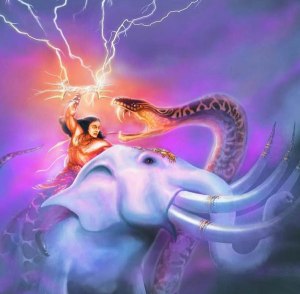
The story of the fight between Indra and Vritra is the story of man overpowering the natural calamities like drought and floods throughout ages. 4000 years ago, the aryan by the river Sarasvati were a farming and pastoral community. They were solely dependent on the flowing water of rivers and rivulets. The challenges thrown by a natural calamity like earthquake would bring out extreme valour in the great leaders like Indra to overcome it and lead the common man into peace and prosperity. The seers would record these stories of such valour and bards would narrate them in the evening by the side of fire. That is how the first book of human history the Vedas were conceived on the bank of the ancient rivers of Brhamavarta.
This is one such narration of the eternal fight between Debraj Indra and the calamity named as Vritra. This is the story narrated by our earliest ancestor in the Book one of their earliest memory- the Rig Veda.
 Dr Ramakanta's Ideas
2 thoughts on “Vritrasura”