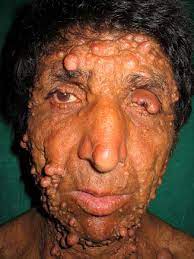
Von Recklinghausen Neurofibromatosis is a disease characterized by pebbles under the skin. It is present since birth.
The little boy was crying. His eyes were red.
Every time there was a family get-together, all the kids in the house would gather and enjoy, the little boy would be depressed.
Their father, the great emperor would sit on his big throne. The palace would be decorated, Coloured lamps would be lit, court dancers would dance, guests would feast on exotic foods, the sadness of the boy would be unfathomable. He had a big family, three mothers and 99 brothers all vying for the attention of their father, the great emperor. His step mothers would present their children in their best dresses to the royal court, suddenly he would suffer from severe cramps in his stomach. He would put his face on the pillow and cry.
This time also.
Shubhadrangi his mother came to his room.
“Get up and get dressed. It is your father’s birthday today. All your brothers have joined the party with their beautiful gifts for the emperor. Aren’t you joining them ?”
The boy looked at his skin. It was rough with pebbles under his skin. His father the great emperor disliked his ugly appearance. His 99 brothers make fun of his skin. The boy has come to dread these get togethers. He didn’t join the funs and frolics of other princes. He hated them. His fist was clenched tight around his sword. Instead he jumped on his horse and rode on blindly. A deep anger razed like a fire inside his small bosom. Among the 99 brothers, none can match him in swords or on a horse back. Yet he felt so alone, angry and depressed.
Why should the bodhisatwa have to do this to him?
His mother knew the anguish and distress razing inside the bosom of her kid son. But what could she do? After all she was only one among the concubines of the great emperor Amitraghata ( The nemesis of all Enemies). She did not have royal parentage even. She was but a brahmin girl among the royal queens. And the emperor even had white queens from the land of Bactrian Greece. Their sons had blue eyes like the deep sea, skin like the white milk and nose like the gods of Greece. And her son was short, thick and stubby with pebbly skin.
She had consulted the fortune teller from her village Champa. He was a great scholar in Buddhism. He had told her a ghastly story. In the earlier birth, the child had insulted the exalted Bodhisatwa the enlightened one. He had put pebbles in place of alms in his hands. Now in this birth, his son had pebbles under his skin throughout his body. His skin was rough like that of a crocodile and he had a hump which had cut two inches from his height. He had also inherited white patches on his skin since birth from his father.
She looked at the child sobbing with his head buried on a pillow.
How could the kind buddha do this to her ?
She was an extremely beautiful brahmin girl. The emperor had married her only for her beauty. She did not have a royal ancestry. The royal queens would always look down upon her. Together they would make her do things that no queen should do. She was treated like a pariah dog. When a son was born to her, she thought all her Shoka would vanish.
She had named the boy Ashoka.
Shubhadrangi put her arms around Ashoka, picked up the boy in her bosom and coaxed, “ Get dressed, Ashoka. Today is a great day. The Great ajivika: PingalaVatsa the Royal astrologer is coming to bless all the royal children. Please my son, get up.”
Ashoka also knew that today is a great day. The royal queens had invited the Great Ajivika to read the horoscope of all the princes and propose the one that would succeed to the throne of Magadha, the future Maurya emperor.
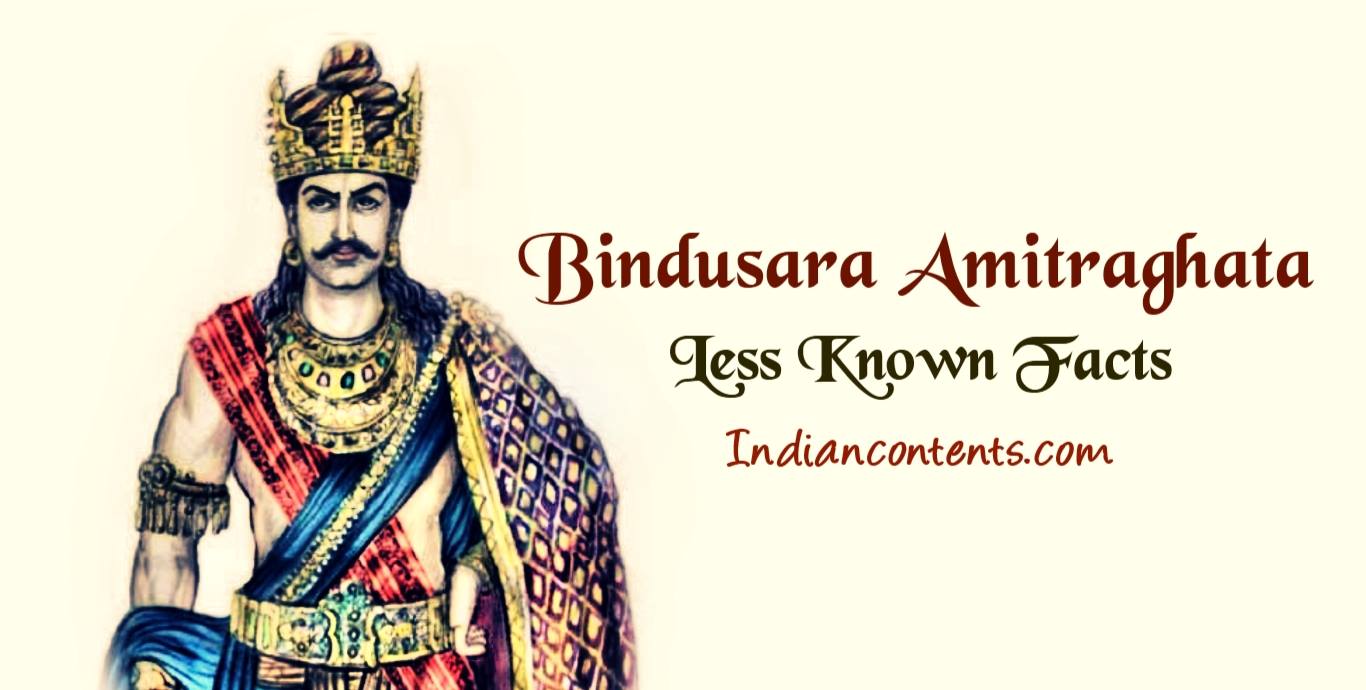
The Greek historians would call him Amitrochates. It was the transliteration of Sanskrit Amitraghata ( Nemesis of all enemies) The illustrious son of the Chandragupta Maurya who had spread the maurya empire from Balochistan and Afganistan in the west to the Bay of the Bengal in the east., from the Mountains of Himalaya in the north till the Mysore in the south. Before the invasion of Alexander, it was the biggest territory that one king had held. In sanskrit he was called the Amitraghata, nemesis of all enemies. In Pataliputra he was fondly called as Bindusaar, the king with spotted ( bindu) skin. Those spots on his skin were present since his birth.
Minister Chanakya used to mix small but increasing doses of poison to the daily food of Chandragupta. This was a process by which Chanakya had bred up an army of Vishkanyas ( poisonous girls). These girls can kill any common man by their bare teeth during kissing them or scratching them. The process is known as desensitisation of a toxin and still followed in modern medicine. One day the king shared his payasam with his pregnant wife. She was only weeks away from her delivery at that time. Chanakya entered the room just as the queen partook the first morsel and collapsed. He immediately cut open the womb of the dead queen with his sword and took out the unborn child. A Cesarean section. But this took place 300 years before Caesar in Rome would officially allow surgery of woman dying during the childbirth.
A premature prince was born. Buddhist legends say that for the next seven days, Chanakya would place the foetus in the womb of a freshly killed Goat till the baby was strong enough to cry loudly. The poison left white patches on the whole body of the prince. He was named Bindusara, because his body was spotted with drops of goat blood.
Shiubhadrangi knew Ashoka had inherited the patches from the great emperor. But there was a difference. While Bindusar was born to the Maharani of the powerful Maurya king, She was only a brahmin girl whom the emperor had loved and picked up. She didn’t have a royal ancestry. The palace was not pleased. The royal queens would make her do chores that no queen should do. It was her duty to do the barber work for the king. But she did it so efficiently that soon the king would sleep with her and Ashoka was born. She thought her days of sorrow were over. But not yet.
Oh Buddha, the enlightened one, how much pain can you heap on a woman ?
Ugliness had led to a difficult childhood of anger and rejection. Ashoka was ridiculed by the whole place for his disfigurement. He spent his entire childhood away from the royal court practising with his horses and his favourite sword. He would never play with other princes, neither go to the royal courts. He would dread meeting the emperor. he could not bear the despise and derision in the eyes of his own father for him. Instead he would bang the sword stronger and stronger on wooden war horses killing them with a single blow.
The empire of their father Bindusara now stretched from Balochistan, Afganistan in west to Bengal and Assam in the east, from Himalayas in north to Mysore in south. Everybody knew that no man was born in this empire ( neither in the earth) that can challenge Prince Ashoka with a sword in hand or on a horseback. No one would dare to face prince Ashoka’s legendary anger.
The emperor also knew. But somehow he could not look at his sons disfigured face. This son reminded him his own scars. Instead he would send him to the distant Taxila to suppress rebellion and to the troubled Ujjain as a governor. Ashoka did suppress the revolts in Ujjain and Takshasila ruthlessly.
But on that auspicious birthday of the Emperor Bindusara, Shubhadrangi knew that Ajivika Pingalavatsa had been specially invited to study the horoscope of all the princes and select the future king of Aryavarta. It is important that Ashoka should attend the function.

Ajivika Pingalavatsa was tall and thin like a Shamana who is habituated to days of fasting. His burning eyes scanned through the 99 sons of the Emperor as they presented their gifts to the emperor one by one. They were all the spoiled brats of the richest king on the earth. He was thoroughly disappointed at them and closed his eyes to pear into the future of the great Magadh. In his vision, he could see a resplendent Magadha, gilded throne and lions. But how could it be possible with these inefficient lots, he wondered. Then he saw him in his vision. The son on the throne, the future emperor, a short, hunched back ugly prince. As he opened his eyes, the last of the royal prince had just stepped in, a short, hunch back, ugly one with pebbly skin and coarse features, the ugliest of them all. Unlike his other brothers his eyes were down cast. His face was sombre. There was sheer anger oozing from his person. Anger against the fate that has made him the most unequal among the 99 princes. An anger that gave a defiant swag to his gate-up. The swag that shouted at everyone: “Just don’t go by my external look. These thick shoulders have suppressed tough revolts in Ujjain and Taxila. These arms were capable to raise the great maurya empire into even greater heights in the history of mankind.” Suddenly it dawned on the Ajivika that Posterity for 2000 years will be astounded by the achievement of this ugly one walking meekly toady.
Pingalavatsa knew who will be the future king of the Bharat. At the same time he looked up at the eyes of the emperor on the throne. The emperor had a mixture of self pity and deep disgust in his eyes. Disgust because of the ugliness and Pity because he had sired such a prince. In this exquisitely decorated Maghadhan royal court, Ashoka was the most ugly piece and did not fit in.
As everyone waited with baited breath for the seminal decision of the Ajivika, Pingalavatsa regretted his position. He could see that only Ashoka deserved the throne of Magadha after Bindusar. In the same breath, he could feel that Ashoka was the least favoured son of the Emperor. Neither did he have a powerful mother of royal ancestry. Bindusara adored his eldest son SuShima. The all knowing Ajivika vikshu did not want to utter any falsehood. Instead he adopted mauna brat on that day.
Ajivika Pingalavatsa left Pataliputra without opening his mouth. As a shaman, it is not unusual to undertake maunabrata on his part. But before he had departed the royal gates of Pataliputra, vanishing from the landscape of Indian history forever, he had spelt his prediction to the only woman for whom it mattered the most, Queen Shubhadrangi.
Shubhadrangi knew, her son would grow up one day to get rid of the shoka of his unfortunate mother. Therefore she had named her Ashoka, ugly may he be.
Now she was sure.
Today’s science speculates that Emperor Ashoka was probably suffering from von Recklinghausen disease (Neurofibromatosis Type 1), which could explain his skin condition, episodes of loss of consciousness (probably epilepsy) and other bodily deformities.
pubmed article
https://pubmed.ncbi.nlm.nih.gov/25657467/
 Dr Ramakanta's Ideas