
( Yesterday, I took my guest from Delhi for a visit to Dhauli hills, Shanti Stupa for a visit)
Like each and every tourist does, we went up to see the more famous Shanti Stupa ( Peace Pagoda) built by the Japan- Kalinga Buddhist association. It is hardly 50 years old and helped ourselves to a picture as a memory. Everyone was doing and we followed suit.
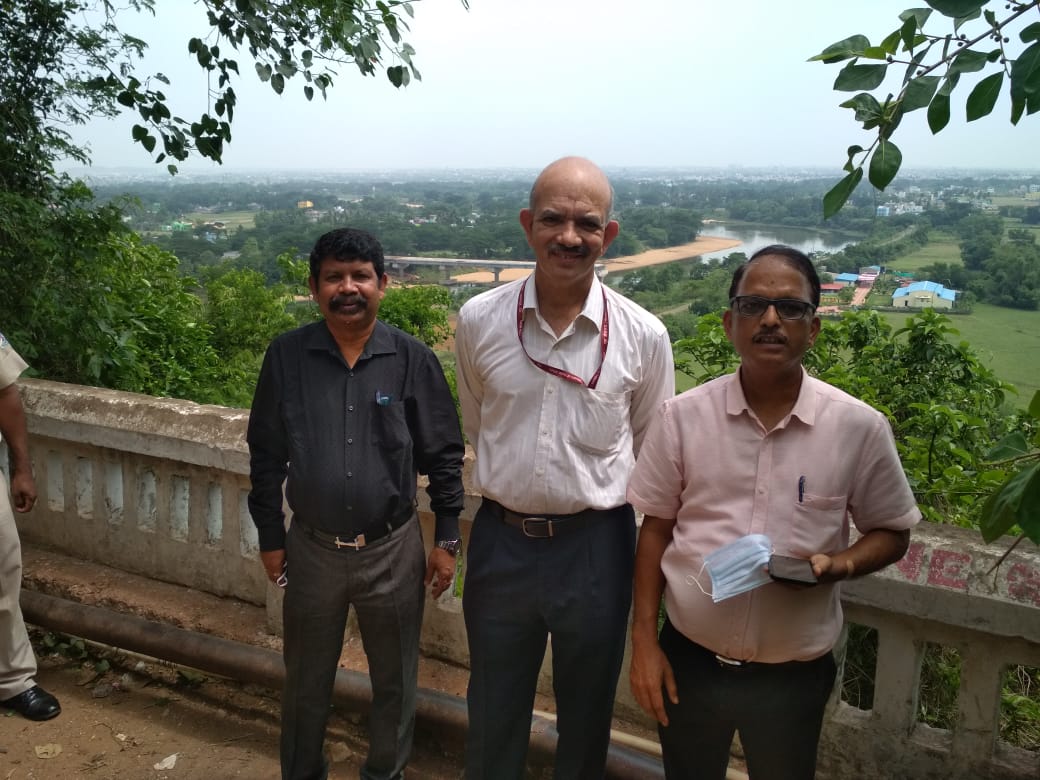
Behind us the meandering Daya lazily snakes around the white hill of Dhauli .
It is difficult to think that 2500 years back 250,000 soldiers were slain here. The Kalinga War was fought between Mauryas of Patliputra and the Artistic citizens of Ancient Kalinga and ended in the year of 261 BC.
Unlike the Mauryas ruling Pataliputra ( Patna), Kalinga was a democracy with no single named leader. It was prosperous, independent, artistic and was always coveted by the powerful Mauryas. But the people of the democracy always resisted.
The war has started from 321 BC, from the date of Chandragupta Maurya and remained the only unconquered territory for the Mauryas in the eastern India.
( Incidentally, Chandragupta has ended Brahmnical rule of Nandas and had been converted to Jainism. So was Kalinga. The last Nanda king has taken the Kalinga Jina which was brought back by Kharavela in the first century AD. Khandagiri and Udaygiri display the rock cut caves meant for Jaina arhatas.)
my personal note
On the 8th year of his ascension to the throne of Magadha, Ashoka the Merciless went all out for realisation of his childhood dream.( the saga of Karubaki may be another reason though history is yet to acknowledge its truth.)Ashoka and his brute force met the Kalinga artisans here on the bank of the river Daya, under this white hill.
…
As the evening sun turned red, the waters of the river turned muddy red with human blood, the blade of Ashokas sword was caked red with the dried blood.
Ashoka the merciless had finally completed his mission of 3 generations and had emphatically won the 60 year long war. Now he was also Kalingadhipati.
There he sat down exactly on this particular stone, tired and famished and suddenly EMPTY.
The win did not give him the unrequited Joy he had been living with since his childhood. He had now become the undisputed monarch of the four directions that his tired eyes can see. The death of a quarter million Kalingans had just make it appear vacant.
..
At that very moment, among the dead bodies strewn everywhere, there appeared a man draped in red ( safron), Upaguta the shamana.
What happened in that precise moment I don’t know.
But like the Krishna on the battlefield of Kuru, transmitting the essence of the 700 shlokas of Bhagwad Gita in an instant to Arjun, the Serenity of the Shamana in Saffron changed the desolate man sitting in front of him.
This magic moment is the GREATEST TURNING POINT in the history of humankind.
In that very moment, Chandashoka became Dharmashoka and adopted Buddhism. The fabric of world religion was dyed with a new colour; Saffron of Buddhism.
This SINGLE EVENT catalysed the spread of Buddhism from ODISHA to SHRILANKA and from CHINNA and JAPAN across the sea.
Although later on, Buddhism was wiped away from its own cradle- the Heartland of North India, it still grows and spreads among its million followers in China and the far East.
The story of the Pallav Prince of Kanchipuram who is instrumental in the spread of Buddhism in China and the Far East
The fact that Buddhism today counts as a major world religion, owes it to the magic of that single rock 2500 years old.
On our way back home, we stopped again to search for the original Rock cut engravings of Ashoka in Prakrit language and the Brahmi lipi.
So we turned back again. We have not taken any guide with us. After a few futile searches, we hit the target. Frankly, although I belong to this place, I have never bothered for those scripts. A tour to Dhauli is often limited to the magnificent Peace Pagoda built by the Nippan Kalinga association.
..
Here👇 they are still fresh and eloquent containing the 2500 years old wisdom of Buddha in the words of Ashoka chiseled by an artisan of Kalinga on the rock of Dhauli.
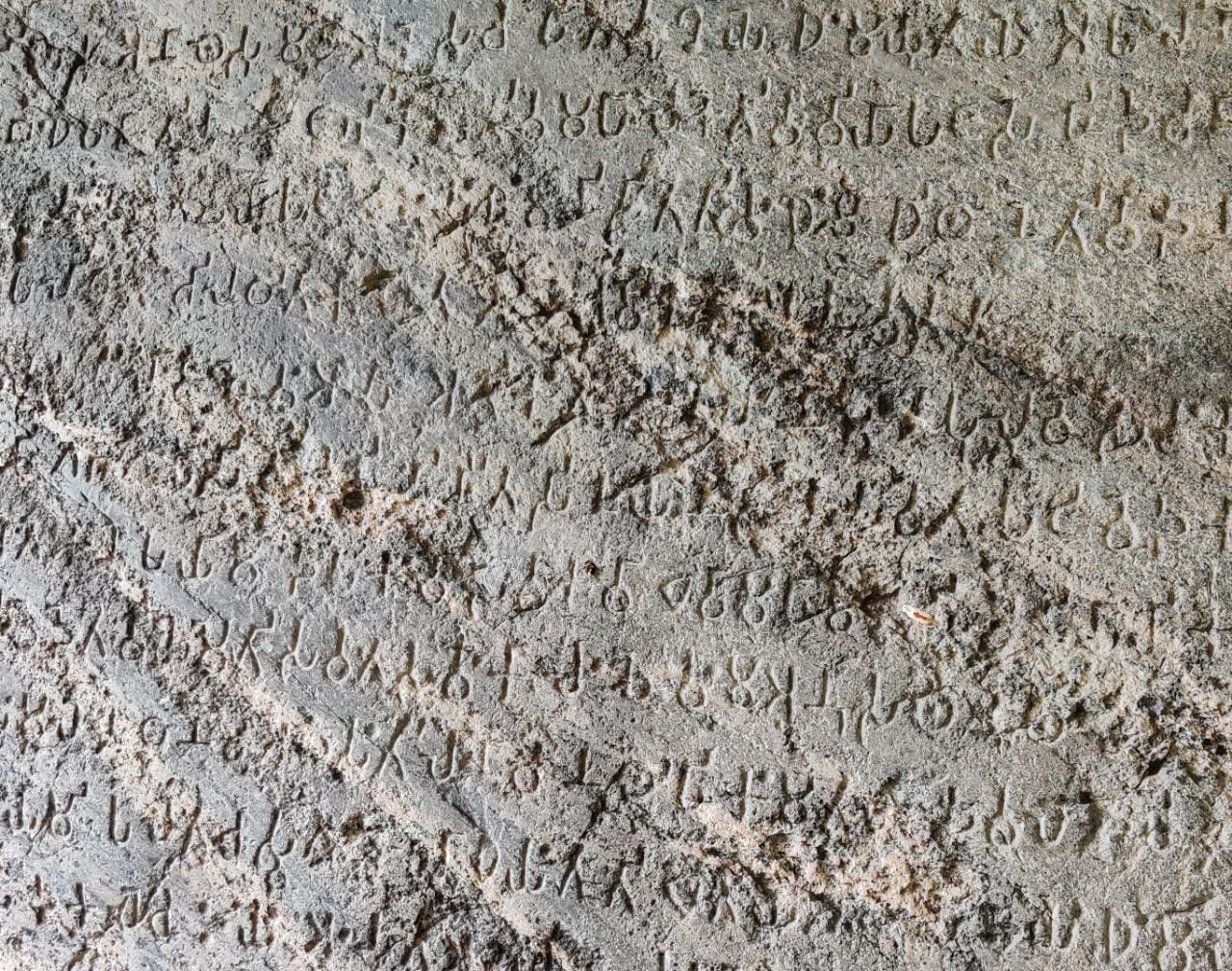
The concept of engraving data on the rocks by ancient humans still remains the most durable data storage device despite all our digital advancement.
Here we are two humans of 21st century looking at a piece of information created 2500 years ago, but still young and fresh as if it is published yesterday.
 Dr Ramakanta's Ideas